
Key Takeaways
Find compact, tiered and statement options in our Plant Stands for Australian homes.
- Monsteras grow large and heavy - the pot, soil, and plant combined can weigh significantly more than most people expect, so weight capacity is the first thing to check in any stand.
- A wide, stable base is essential for monstera plant stands because the broad leaf spread creates a top-heavy profile that can make narrow-based stands prone to tipping.
- Height matters for monsteras: a stand between 20cm and 50cm typically elevates a mature monstera to a striking visual position without pushing it into the ceiling.
- Natural timber and bamboo stands suit the organic aesthetic of monstera plants particularly well, though metal stands with wide bases are also a practical option.
- Metro Elegance stocks a range of plant stands suited to larger indoor plants, with free shipping across Australia.
If you own a monstera, you already know the plant has a personality. It grows in all directions. It takes up space unapologetically. Its broad, fenestrated leaves are visually dramatic in a way that most other houseplants simply are not. A mature monstera deliciosa in a good-sized pot is not a background plant - it is the focal point of whatever room it lives in.
All of which means the stand it sits on matters more than it would for, say, a small pothos or a compact succulent. The wrong stand - too low, too narrow, too lightweight - either undersells the plant or creates a practical safety problem when the top-heavy weight of a large monstera in a substantial pot creates tipping risk. The right stand elevates the plant in every sense: it presents the monstera at a height and angle that makes the most of its natural drama, holds it securely, and complements the organic quality of the plant with a material and design that feels considered rather than accidental.
This guide covers what to look for in a plant stand for a monstera specifically - weight, height, base stability, material - and which formats tend to suit large tropical plants best in Australian homes.
Why Monsteras Need a Different Approach to Plant Stands
Most plant stand guides can treat all plants more or less equally. For monsteras, a few specific characteristics make the selection criteria different from what you would apply to smaller houseplants.
Weight
A mature monstera in a ceramic or terracotta pot with moist potting mix can easily weigh 10 to 20 kilograms or more. This is substantially heavier than most small to medium houseplants, and it means the weight capacity of a stand is not a minor specification to glance past - it is the first thing worth checking. A stand rated for 5 kilograms is not appropriate for a large monstera regardless of how well it fits aesthetically.
When checking weight capacity, factor in the weight of the pot itself, the soil (wet, not dry), any drainage material in the pot base, and the plant. Terracotta pots are significantly heavier than plastic equivalents at the same size. If you are not sure of the combined weight, erring on the side of a stand with a higher stated capacity gives a reasonable safety margin.
Pot Diameter
Monsteras are typically grown in pots ranging from 25cm to 40cm in diameter at maturity, and the tier or platform of the stand needs to accommodate this. A stand with a small circular platform designed for a 15cm pot will not safely support a 35cm pot regardless of its weight rating. Checking the platform dimensions against your pot size before purchasing is a step that saves a lot of inconvenience.
Growth Habit and Top-Heavy Profile
Monsteras grow outward as well as upward. Their large leaves extend significantly beyond the pot, which creates a top-heavy profile when the plant is placed on a stand. This makes base stability more important for monstera stands than for compact, upright plants. A stand with a narrow base or a small footprint relative to its height is more likely to tip when a large monstera leaf is brushed by a passing person or catches a draft near an open window.
Wider bases, heavier lower sections, and stands with cross-bracing or structural supports between legs all contribute to the stability that a monstera-sized plant requires.
What Height Works Best for a Monstera Plant Stand
This is a question that deserves a direct answer rather than vague guidance.
For most Australian living rooms with standard ceiling heights, a stand between 20cm and 45cm is a practical range for a mature monstera. This range elevates the base of the plant enough to create visual presence and improve air circulation around the pot, while keeping the total height of the plant-plus-stand combination within a manageable ceiling clearance.
A 20 to 25cm stand is suitable for a monstera that is already a significant size - one that is 80cm or taller from the soil surface. Adding too much height to a large plant risks the upper leaves touching the ceiling, which is both aesthetically awkward and can affect growth.
A 35 to 45cm stand suits a medium-sized monstera that still has significant growing potential. The extra height creates immediate visual impact while leaving growth room above.
For smaller monstera plants - younger specimens in 20 to 25cm pots that are still developing their characteristic fenestrated leaves - a taller stand of 50 to 70cm can be a good choice, bringing the plant up to a height where its developing leaves are visible and prominent rather than lost at floor level.
Our post on choosing the right plant stand size and height for your plants covers the sizing decision framework in detail if you want to work through the specific dimensions for your monstera and room.
The Best Plant Stand Formats for Monstera Plants
Single-Platform Pedestal or Low Stand
For a large, mature monstera, a single-platform pedestal or low stand is often the most practical format. It provides a stable, wide platform for the pot without the complexity of a multi-tier design, and the structural focus on holding one substantial pot means the construction can be built with the stability and weight capacity that a large monstera requires.
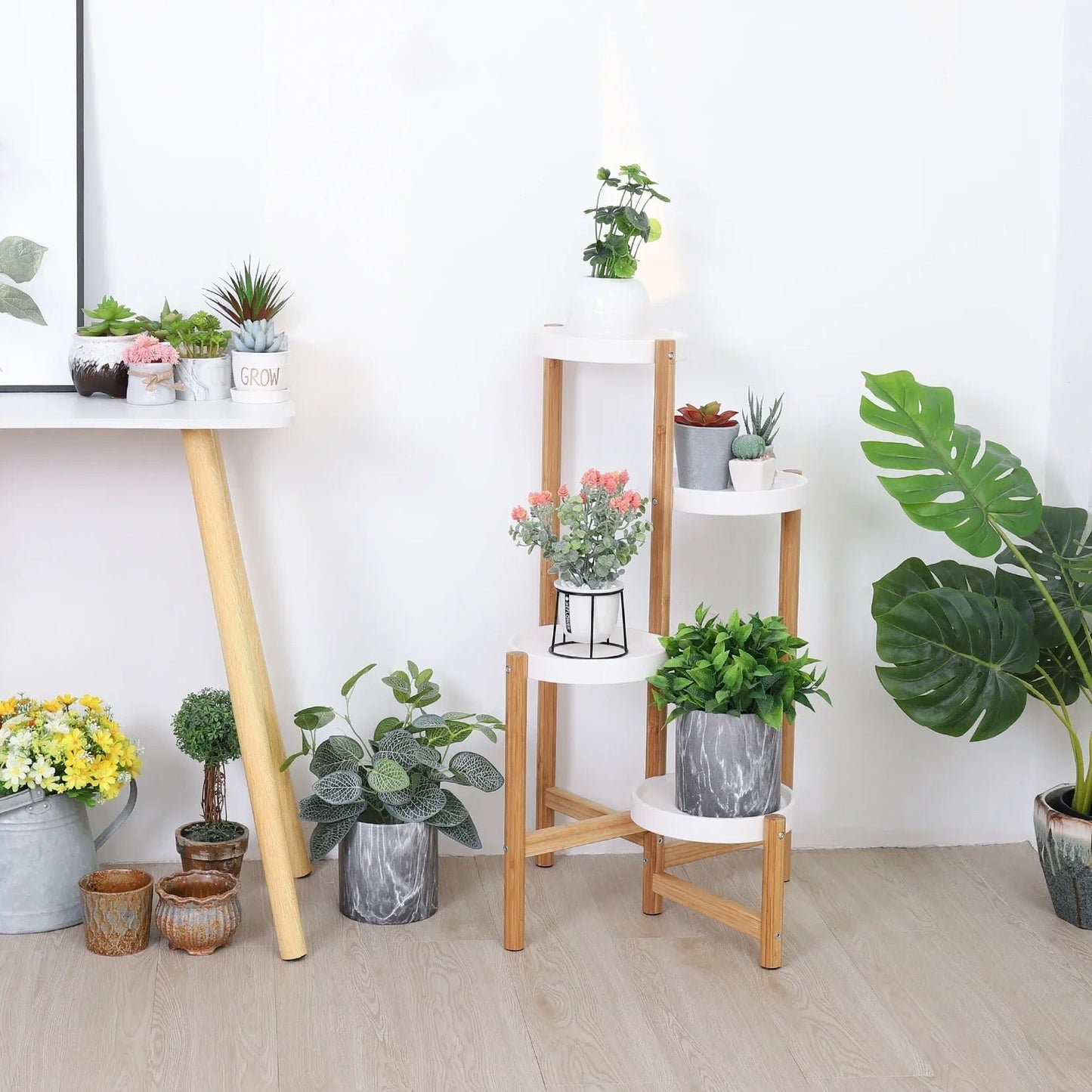
This format also suits the visual priority of a large monstera - the plant itself is the feature, and a simple, well-proportioned stand presents it without competing for attention. A three-legged round timber stand, for example, creates a natural, organic base that complements the tropical character of a monstera without adding visual clutter around it.
Thecompare the available levels with your planned display from Metro Elegance represents this format well. While the individual platforms suit small to medium pot sizes, the three-legged timber construction demonstrates the kind of stable, organic format that suits natural plant display - and paired with appropriate pot sizing, this style of stand creates a clean, considered presentation for a developing monstera.
Solid Timber Corner Stand
For a monstera positioned in a corner - one of the most effective placements for a large tropical plant, where the corner provides wall support and the plant's spread is contained on two sides - a solid corner stand with a wide, stable base and a low to mid profile is a strong format choice.
Corner placement is particularly effective for monsteras because the corner gives the plant two walls against which its leaves can spread without obstruction, and the L-shaped footprint of the corner stand provides stability from two directions. A monstera in a well-chosen corner position with a solid stand can become the most compelling visual element in the room with minimal additional styling effort.
Wooden Platform Stands and Display Racks
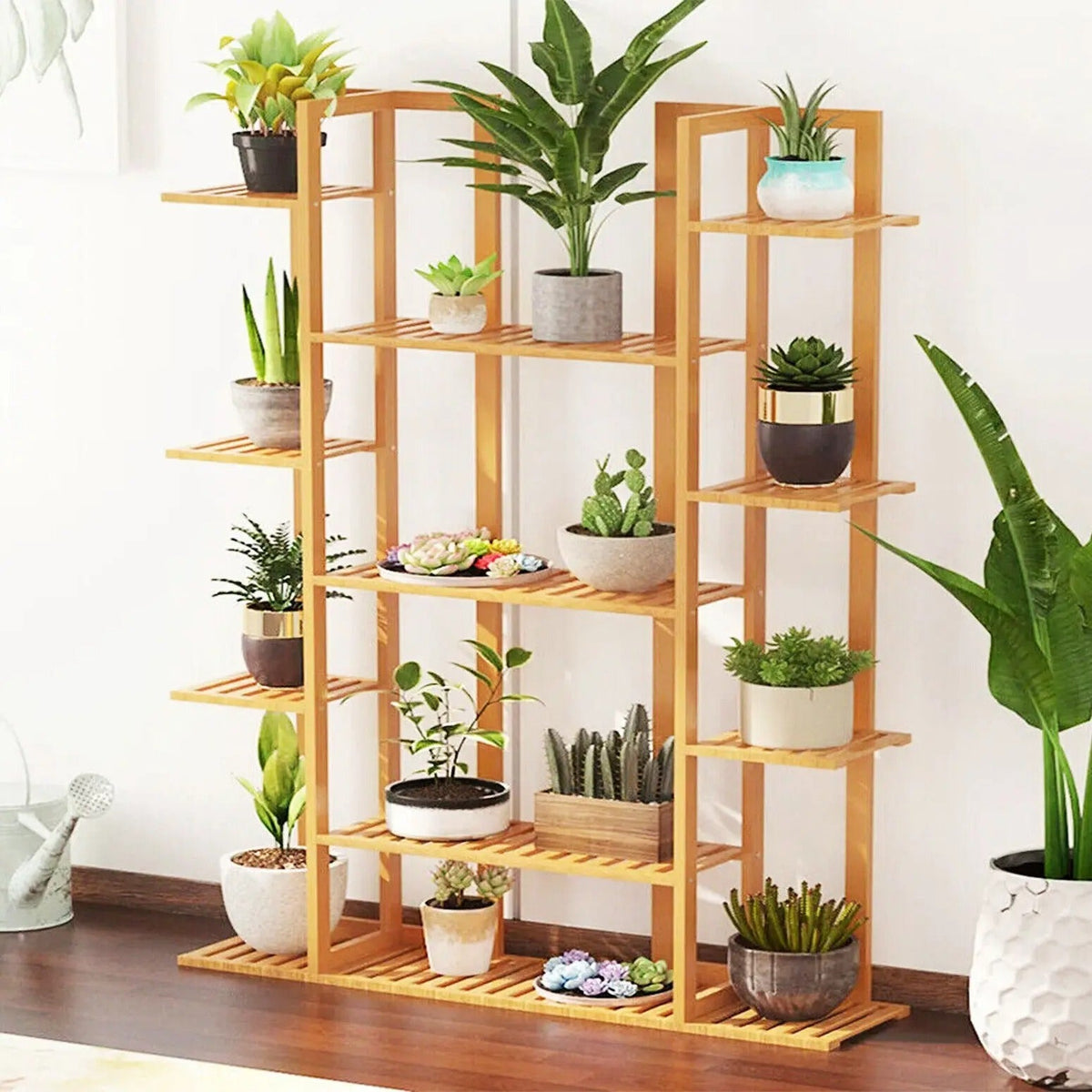
Multi-pot display racks are generally less suited to a single large monstera than a purpose-built individual stand. However, some wider wooden display stands with a broad, solid lower shelf can serve as a monstera platform provided the shelf dimensions accommodate the pot size and the structure is built robustly enough to handle the weight.
Thesee how this layout could support a tiered display from Metro Elegance offers a broad, flat display surface and a solid timber construction that makes it one of the more versatile options for larger pot sizes. Its open format allows for generous pot accommodation, and the natural timber finish suits the organic aesthetic that monsteras call for.
Material Considerations for Monstera Plant Stands
Timber and Bamboo
Natural timber and bamboo are the most visually complementary materials for monstera plant stands. The organic, natural quality of wood grain sits comfortably alongside the dramatic tropical foliage of a monstera in a way that creates visual cohesion rather than contrast.
Timber also has the structural properties needed for heavy pot support - solid construction, strong joints, and the ability to distribute load across a wide base without flex or wobble. Bamboo, while lighter than most solid timbers, handles the weight of medium-sized monsteras in well-constructed designs with multi-leg or wide-base formats.
For large, heavy monsteras in substantial ceramic or terracotta pots, solid timber construction is generally more reliable than bamboo for the weight capacity required. Checking the specific weight rating of any bamboo stand before using it for a large monstera pot is important.
Metal
Powder-coated metal plant stands suit contemporary and industrial-style interiors and can handle significant weight loads when constructed with welded joints and a wide base. For monstera owners whose interior leans modern or minimalist, a clean black metal stand with a wide circular platform is a practical and visually appropriate choice.
The structural advantage of metal for large plant support is its rigidity. Unlike timber, which has some flexibility, well-constructed metal does not deflect under heavy pot loads, which is relevant when a mature monstera creates a genuinely substantial weight on the stand platform.
For a full comparison of how timber and metal perform across different plant display contexts, our post on wooden versus metal plant stands for Australian homes covers the practical differences in detail.
Placement Tips for Monsteras on Stands
Where you position a monstera in a room, and the stand that elevates it, affects both how the plant grows and how it reads visually in the space.
Near indirect light. Monsteras thrive in bright indirect light. In most Australian homes, a position within two to three metres of a north or east-facing window provides enough light for healthy growth without the risk of direct summer sun scorching the leaves. A stand that allows the plant to be positioned at the right distance from a light source - rather than being fixed in a corner with inadequate light because that is where the stand looks best - is the more practical starting point.
With clearance around the plant. A monstera on a stand needs room for its leaves to spread without constantly brushing against walls, furniture, or doorways. Positioning the stand where at least one to two metres of clear space is available in the primary direction of leaf spread allows the plant to grow naturally rather than being repeatedly disturbed.
Away from air conditioning vents. Cold or hot air from air conditioning can stress monsteras. Positioning the stand away from direct vent exposure - particularly in Australian homes where air conditioning runs for extended periods - reduces the risk of leaf stress and browning at the edges.
At a height that shows the fenestration. The distinctive split and perforated leaves of a mature monstera are most visible when the plant is at or slightly below eye level for a seated person. A stand that positions the mid-canopy of the plant at roughly 70 to 90cm from the floor achieves this in most Australian living rooms.
Our post on creating a layered indoor plant display using stands of different heights has useful guidance on how to position a statement plant like a monstera within a broader plant display, which is relevant if you are building a more complete indoor plant arrangement rather than displaying the monstera in isolation.
Styling a Monstera on a Stand
A monstera on a well-chosen stand does not need a lot of additional styling to make an impression. The plant does most of the visual work. A few principles that help the overall composition:
Let the pot complement the stand. A terracotta or natural stone-finish pot pairs naturally with a timber or bamboo stand. A white ceramic pot suits a clean metal stand or a pale timber design. Matching the pot material and tone to the stand material reduces visual complexity and lets the plant be the focus.
Keep the surrounding floor space relatively clear. A large monstera on a stand benefits from clear floor space around it rather than being crowded by adjacent furniture. The visual drama of the plant and its elevated position is reinforced by negative space at its base.
Consider the backdrop. Monsteras read most strongly against a plain, light backdrop - white or neutral walls, light timber flooring. Against a busy wallpaper or a heavily patterned rug, the leaf detail of a monstera can get lost.
Shop Plant Stands for Large Indoor Plants at Metro Elegance
Atplan a practical refresh for an everyday room, we stock a range of plant stands in solid timber, bamboo, and metal finishes suited to a variety of pot sizes and plant weights. Ourplan a plant zone around light and easy access includes designs with the structural quality and platform dimensions needed to support larger indoor plants, all available with free shipping across Australia.
Whether you are styling a single statement monstera or building out a full indoor plant display, Metro Elegance has designs that combine practical construction with the natural, considered aesthetic that suits tropical plants well.
Have a specific monstera or plant display in mind? Get in touch with the Metro Elegance team and we will help you find the right stand for your plant, your pot, and your space.
Frequently Asked Questions
What size plant stand do I need for a large monstera?
For a mature monstera in a substantial pot, look for a stand with a platform or surface that matches or slightly exceeds your pot diameter, a weight capacity that covers the realistic loaded weight of pot, soil, and plant combined, and a height between 20 and 45cm depending on the size of the monstera and the ceiling height of the room.
How much weight can a plant stand hold for a monstera?
This varies by stand design and construction. A large monstera in a 30 to 35cm terracotta pot with moist soil can weigh 15 to 20 kilograms or more. Always check the manufacturer's stated weight capacity and choose a stand rated above the realistic loaded weight of your plant and pot combination. Stands without a stated weight capacity should be approached cautiously for heavy pot applications.
What material is best for a monstera plant stand?
Solid timber and bamboo suit the natural, organic aesthetic of monsteras particularly well and are practical materials for indoor plant stands. For very heavy mature monsteras, solid timber or welded metal construction provides more reliable weight support than some lighter bamboo designs. The right material also depends on the interior style of the room.
Can a monstera sit on a tiered plant stand?
A large monstera is generally better suited to a single-platform or pedestal stand than a tiered display rack. Multi-tier stands are designed for multiple smaller pots rather than one large, heavy specimen. Some wider lower tiers of robust display racks can accommodate a medium-sized monstera pot, but checking the platform dimensions and weight capacity of that specific tier is important before using it for a large plant.
Where is the best place to put a monstera on a stand in a living room?
A position within two to three metres of a north or east-facing window, with clear space around the plant for leaf spread, and away from direct air conditioning vents is generally well suited to monstera care in an Australian living room. A corner position is effective because it contains the plant's spread on two sides and provides a backdrop for the plant's visual drama.
Do monsteras need a heavy plant stand?
A heavier, more structurally substantial stand with a wide base is generally more appropriate for a large monstera than a lightweight or narrow-based design. The weight of the pot combined with the top-heavy leaf spread of a mature monstera makes stability a practical priority. A heavier base on the stand itself also contributes to overall stability, particularly on smooth floor surfaces.
How tall should a monstera plant stand be?
For a mature monstera that is already 80cm or more in height from the soil surface, a stand of 20 to 35cm is typically appropriate. For a smaller or younger monstera with growth still ahead of it, a stand of 40 to 70cm brings the plant into a more prominent visual position while still leaving ceiling clearance for future growth. Matching stand height to the current size of the plant and the specific room proportions gives the most considered result.