
Key Takeaways
See our indoor and outdoor plant stands before choosing a design for your space.
- Outdoor plant stands need to handle Australian sun, wind, rain, and humidity - material choice is critical.
- Metal and treated timber are the most durable options for exposed balconies and patios in most Australian climates.
- Tiered and corner designs make the most of limited outdoor space, particularly in apartments and townhouses.
- Matching stand height to your railing height and sun exposure will determine how well your plants actually grow.
- Metro Elegance stocks a curated range of outdoor plant stands suited to the full range of Australian outdoor environments, from coastal balconies to shaded garden patios.
Balconies and patios are some of the most used outdoor spaces in Australian homes, and yet they are often the last to be properly styled. Furniture gets chosen carefully. Rugs, cushions, and lighting get considered. Then the plants arrive in their nursery pots and end up sitting directly on the floor tiles with no thought given to height, grouping, or presentation.
A good outdoor plant stand changes that equation quickly. It introduces structure, lifts plants into better light, and turns a collection of mismatched pots into something that looks considered. The challenge is knowing which type of stand will actually hold up outdoors in Australia, where sun intensity, coastal salt air, and unpredictable rain can be genuinely hard on furniture and accessories.
This guide covers what to look for, which materials perform well in different Australian climates, and which styles are best suited to balconies, patios, and small outdoor spaces.
Why Outdoor Plant Stands Are Worth the Investment
The practical case for outdoor plant stands is straightforward. Pots sitting directly on concrete or tile surfaces can leave stains, restrict drainage, and overheat in direct sun - a genuine problem during an Australian summer. Elevating them on a stand improves drainage, allows air to circulate around the root zone, and reduces the risk of heat stress from reflected surface heat.
The aesthetic case is equally compelling. Varying plant heights on a balcony or patio creates the same layered, designed quality that interior stylists achieve indoors. A single tall stand with a statement plant, paired with a tiered rack holding smaller specimens, gives the eye somewhere to travel and makes even a modest balcony feel like a genuinely intentional outdoor space.
For a deeper look at why elevation matters, our post on how plant stands improve drainage and air circulation is worth a read before you buy.
What to Look for in an Outdoor Plant Stand
Not every plant stand sold online is suitable for outdoor use. Some are designed primarily for indoor environments and will deteriorate quickly when exposed to direct sun and moisture. Before purchasing, check a few things:
Weather resistance - Look for powder-coated metal, galvanised steel, or treated and sealed timber. Untreated raw wood will warp, crack, or develop mould in outdoor environments, particularly in humid coastal areas.
Stability - Wind is a real factor on balconies above the ground floor. A stand with a wide base or a low centre of gravity is less likely to tip in a gust. Heavier pots on top of a narrow-legged stand are a combination worth avoiding.
Weight rating - Wet soil is significantly heavier than dry soil. If you plan to keep larger pots on a stand, check whether the frame can carry that load safely.
Rust resistance - For coastal homes in particular, this matters. Powder-coated steel holds up better than raw or lightly finished metal when exposed to salt-laden air over time.
Our post on choosing weather-resistant outdoor plant stands for different Australian climates goes into this in detail, with guidance specific to different regions.
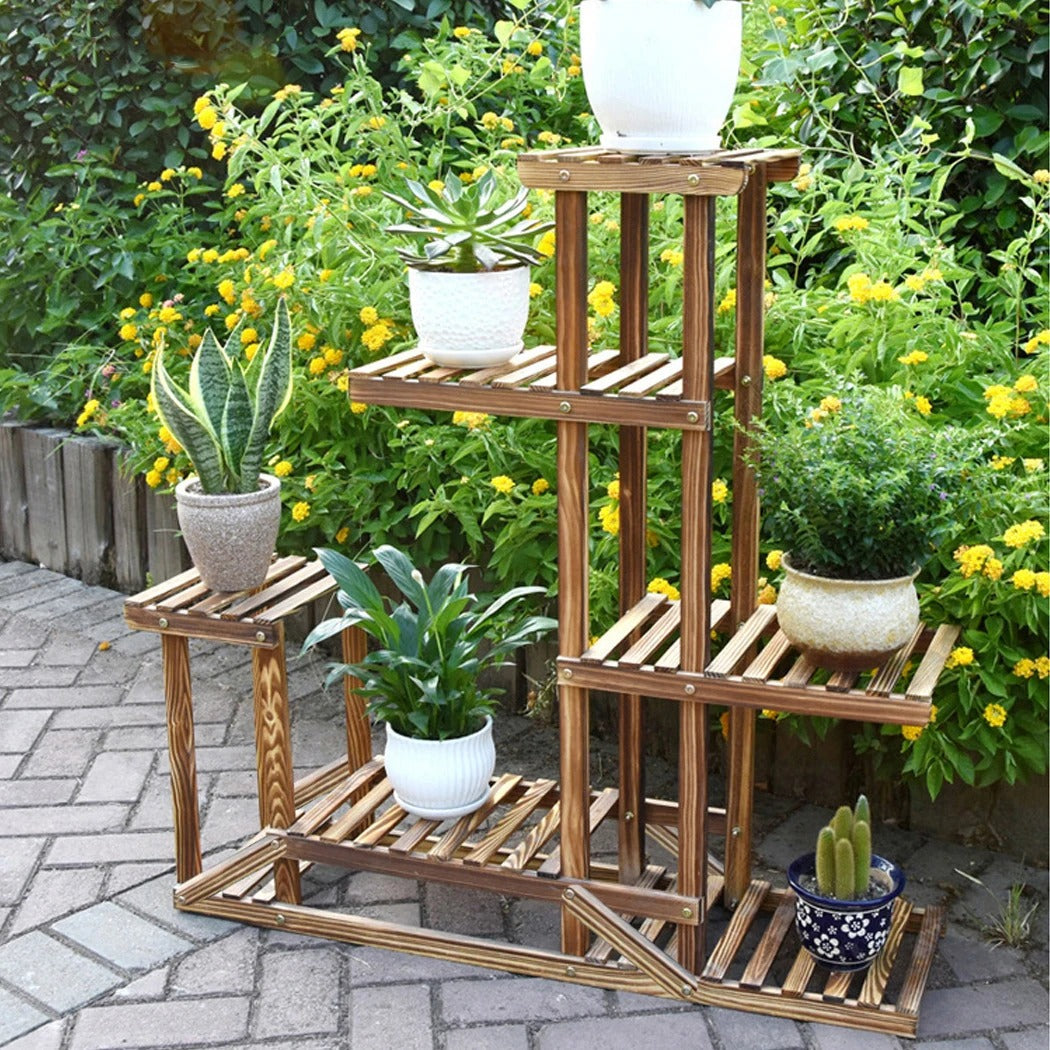
The Best Materials for Outdoor Plant Stands in Australia
Powder-Coated Metal
Powder-coated steel is the go-to material for outdoor plant stands in modern Australian homes, and for good reason. It handles UV exposure without fading as quickly as painted surfaces, resists corrosion when the coating is intact, and suits a wide range of outdoor aesthetics - from industrial to contemporary to minimalist.
Black powder-coated metal stands in particular are extremely versatile. They pair well with terracotta pots, white ceramics, and woven baskets, and they hold their visual sharpness even after months of outdoor use.
Metro Elegance stocks a number of metal designs well suited to outdoor conditions. Theconsider this option for a more organised plant setup is a practical option for balconies - compact enough not to overwhelm a smaller space, sturdy enough to hold a meaningful collection of pots at multiple heights.
Treated Timber and Bamboo
Timber and bamboo bring warmth and natural texture to outdoor spaces that metal alone cannot replicate. For patios that are partially covered or protected from direct rain, treated timber stands work well and complement garden settings naturally.
Bamboo is worth particular attention for Australian outdoor conditions. It is naturally moisture-resistant compared to many softwoods, less prone to warping in humidity, and visually lighter than solid timber, which suits the relaxed aesthetic of most Australian outdoor spaces.
The key caveat with any timber or bamboo stand used outdoors is maintenance. Applying a UV-protective sealant annually will significantly extend the life of the piece in sun-exposed environments.
Best Outdoor Plant Stand Styles for Balconies and Patios
Tiered Rack Stands
Tiered stands are the most space-efficient format for outdoor use. A five or six-tier rack can display a dozen or more pots in the footprint of a single chair. For apartment balconies where floor space is measured in square metres rather than square metres squared, this is a meaningful advantage.
They also create the kind of vertical layering that makes a balcony look genuinely styled rather than functional. Trailing plants on upper shelves, fuller bushy plants in the middle, and ground-hugging herbs or succulents at the base - this kind of arrangement is simple to achieve with a tiered stand and looks significantly more considered than pots lined up at floor level.
Thecompare the design with your preferred plant grouping from Metro Elegance is designed with exactly this use case in mind. Its generous capacity and durable metal frame make it a solid choice for patios or balconies where you want a real display, not just a few scattered pots.
Rolling Plant Stands
Rolling stands - those fitted with lockable wheels - are particularly practical for outdoor spaces that receive inconsistent sun. If one corner of your balcony gets morning sun and another gets afternoon sun, being able to move a stand full of plants with minimal effort makes a real difference to how your plants grow.
They are also useful for anyone who needs to bring plants inside during extreme weather events, which are more common in parts of Australia than many homeowners account for when first setting up an outdoor garden.
Corner Plant Stands
Just as corners are underused indoors, the same is true on balconies and patios. A corner is often the most sheltered part of an outdoor space - protected from wind on two sides - which makes it an ideal spot for a corner plant stand.
Corner stands designed for outdoor use tend to have a triangular or L-shaped footprint that maximises the dead corner space while leaving the main flow of the balcony open for furniture and movement. This is particularly relevant for narrow balconies where a straight rack would block access to the railing or door.
Metro Elegance's range offind a setup that keeps greenery easier to arrange includes several options suited to corner placement on covered patios and balconies. It is worth filtering by size and material when browsing to find what works best for your specific outdoor layout.
Single-Pot Pedestal Stands
Not every outdoor space calls for a large tiered rack. Sometimes the right choice is a single, well-placed pedestal stand holding one statement plant - a large fiddle leaf, a mature rubber plant, or a trailing monstera that deserves to be seen properly rather than lost among a crowd of pots.
A slim pedestal stand beside an outdoor chair or at the end of a garden path creates focus and a sense of intention. These designs tend to work best when the stand itself is simple, allowing the plant to be the visual feature.

Placement Tips for Balconies and Patios
Getting placement right is as important as choosing the right stand. A few principles that apply consistently across most outdoor spaces:
Consider sun arc, not just current sun - Where the sun hits in the morning is different to where it hits in the afternoon. Position your stand where it will receive the right amount of light for the plants you plan to grow on it, not just where it looks good at the moment you are setting up.
Allow clearance from walls - Stands placed flush against rendered or painted walls can trap moisture and damage both the wall and the stand over time. Even a few centimetres of clearance helps.
Anchor or weight stands in exposed positions - On high-rise balconies or in areas prone to afternoon gusts, a stand that feels stable at ground level can be vulnerable when the wind picks up. Choose a heavier base or place heavier pots on lower shelves to lower the centre of gravity.
Group by watering frequency - If you are placing multiple stands on a patio, grouping plants with similar watering needs together makes maintenance easier and reduces the risk of overwatering drought-tolerant plants or underwatering thirsty ones.
For more ideas on how to arrange multiple stands across a larger outdoor space, our post on arranging outdoor plant stands on patios, balconies, and decks has practical guidance worth bookmarking.
Matching Your Stand to Your Outdoor Style
The outdoor aesthetic of most Australian homes falls into one of a handful of categories, and it helps to match your plant stand material and finish to the broader style you are working with.
Coastal or Hamptons - Natural timber tones, white powder-coated metal, and woven textures all suit this aesthetic. Avoid heavily industrial or overly geometric designs.
Contemporary or minimalist - Clean-lined black metal stands work well here. The simpler the stand design, the better, letting the plants and pots carry the visual interest.
Rustic or garden cottage - Timber and bamboo with a more open, handcrafted feel suit this style. Aged finishes and multi-tier wooden ladder stands fit naturally into lush garden patio settings.
Industrial - Raw or dark metal, straight lines, and heavier-gauge frames all work. This style suits urban terraces and balconies with a more architectural quality.
Why Shop at Metro Elegance
Atfind pieces for a more considered home layout, we stock outdoor plant stands across a range of materials, sizes, and styles, all with free shipping Australia-wide. Our range is curated with the Australian climate and Australian outdoor living in mind - which means you are choosing from designs that have been selected to perform well in local conditions, not just to look good in a catalogue photo.
We are an Australian-owned and operated business, and our team is available to help you find the right stand for your specific outdoor space, plant collection, and aesthetic.
Ready to style your balcony or patio properly? Browse our full outdoor plant stand range or get in touch with the Metro Elegance team and we will help you find the right option for your space.
Frequently Asked Questions
What is the best outdoor plant stand material for coastal Australian homes?
Powder-coated steel is generally the most practical choice for coastal environments because it resists salt air corrosion better than untreated metal or raw timber. Look for stands with a full powder-coat finish rather than a painted or lightly sealed surface for longer outdoor life.
Can bamboo plant stands be used outdoors in Australia?
Bamboo stands can be used outdoors in sheltered or partially covered positions, such as under a pergola or covered patio. They are less suited to fully exposed environments where they face direct rain and intense UV without any cover, as this accelerates surface degradation over time.
How do I stop an outdoor plant stand from tipping over on a windy balcony?
Choose stands with a wider, heavier base, and place heavier pots on the lower shelves to reduce the centre of gravity. On very exposed balconies, you can also use pot clips or cable ties to secure individual pots to the stand frame.
How many plants can a tiered outdoor plant stand hold?
This depends on the stand's size and weight rating. A five or six-tier metal rack can typically hold between eight and twelve pots, depending on pot size and the spread of each tier. Always check the manufacturer's stated weight capacity before loading a stand with heavy ceramic or terracotta pots.
What plants grow well on outdoor balcony stands in Australia?
Succulents, herbs (basil, mint, rosemary), petunias, geraniums, and small ferns are all popular choices for balcony plant stands in Australia. Sun exposure and wind exposure at your specific level will influence which varieties thrive.
Do outdoor plant stands need any maintenance?
Metal stands benefit from occasional inspection for chips or scratches in the coating, which can be touched up to prevent rust. Timber and bamboo stands should be resealed or retreated periodically, particularly if exposed to direct sun and rain. The frequency depends on local weather conditions.
Are rolling plant stands suitable for outdoor use?
Some rolling plant stands are designed for outdoor use with weather-resistant frames and lockable wheels. Check the product specifications - wheels with rubber or nylon castors tend to hold up better outdoors than uncoated metal wheels, which can rust or leave marks on tiles.