
Key Takeaways
Explore the complete plant stand range to compare dimensions, materials and placement.
- Australia's outdoor conditions - high UV, humidity, salt air, and temperature extremes - are genuinely demanding on plant stand materials, and the wrong choice will show quickly.
- Powder-coated steel is the most practical choice for fully exposed outdoor positions, particularly in coastal and high-humidity regions.
- Treated timber and bamboo are well suited to sheltered outdoor positions such as covered patios and undercover balconies, with appropriate surface treatment.
- Climate zone matters: what works well in a dry inland climate may not hold up in a coastal or tropical environment without adjustment.
- Metro Elegance stocks outdoor plant stands in both metal and natural timber finishes, with options suited to the full range of Australian outdoor environments and free shipping Australia-wide.
Choosing an outdoor plant stand in Australia is a different exercise from choosing one in most other parts of the world. The outdoor conditions here are not gentle. UV radiation is intense across most of the country. Summer temperatures regularly push materials to their limits. Coastal regions add salt air to the mix. Tropical and subtropical areas in Queensland and the Northern Territory bring sustained humidity and significant seasonal rainfall. And in southern states, temperature swings between seasons can be considerable.
All of this means that a plant stand that looks good in a product photo may perform very differently depending on where in Australia it is being used and how exposed it is. The material it is made from is the single biggest determinant of how well it holds up.
This guide works through the main material options for outdoor plant stands - powder-coated metal, timber, bamboo, and mixed materials - with honest assessment of how each performs across different Australian outdoor environments. The goal is to give you enough information to make a decision that suits your specific situation rather than a generic recommendation that may or may not fit your balcony, patio, or garden.
Why Material Choice Matters More Outdoors Than Indoors
Indoors, the environment is relatively stable. Temperature is regulated, moisture exposure is controlled, and UV light reaches most indoor stands only indirectly. In this context, material durability is still relevant, but it is not the primary challenge. Both metal and timber perform adequately in standard indoor conditions with basic care.
Outdoors, the variables multiply significantly. A stand placed on an open second-floor balcony in Sydney faces direct UV for several hours a day, wind-driven moisture, and potential salt aerosol from ocean proximity. A stand on a covered patio in suburban Melbourne faces more moderate conditions but still deals with rain splash, temperature fluctuation, and seasonal UV. A garden stand in far north Queensland handles sustained tropical humidity and heavy wet-season rainfall.
Each of these scenarios places different demands on materials, and a stand built for one may not hold up well in another. Understanding the specific outdoor conditions of your home - not just "outdoors in Australia" in the general sense - is the starting point for choosing the right material.

Powder-Coated Steel: The Most Versatile Outdoor Material
Why It Works
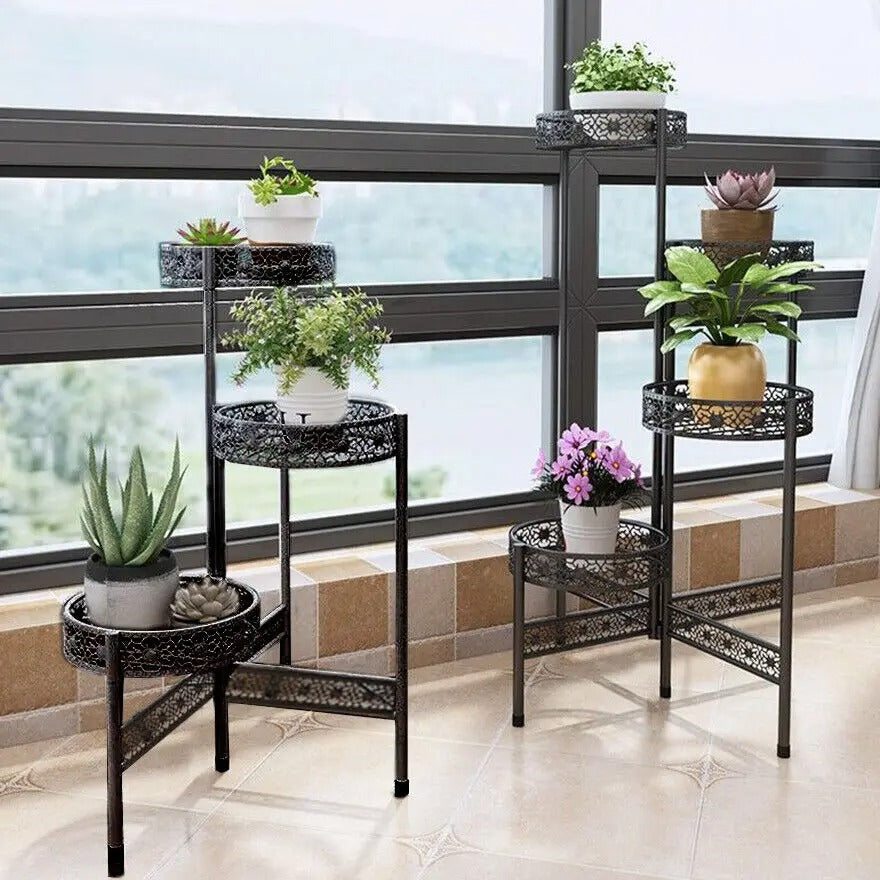
Powder-coated steel is currently the most widely recommended material for exposed outdoor plant stands in Australia, and the reasons are practical rather than trend-driven. The powder-coat process applies a fused polymer finish to the steel surface that resists moisture, UV, and surface abrasion more effectively than painted or bare metal. Unlike liquid paint, which can bubble, peel, and fail when moisture gets beneath the surface, powder-coating bonds directly to the metal at a molecular level during the curing process.
The result is a finish that holds up well in rain, resists fading from UV exposure, and does not require regular retreatment to maintain its protective properties. For a buyer who wants low-maintenance outdoor plant stands that hold their appearance over multiple seasons, powder-coated steel is the material most likely to deliver that outcome.
Performance in Different Australian Climates
In dry inland climates - parts of South Australia, Western Australia, and inland New South Wales - powder-coated metal performs particularly well because the lower ambient humidity reduces the risk of moisture-driven corrosion. UV is still a factor, but the powder-coat finish handles this effectively in most quality products.
In humid coastal and subtropical environments, the protective quality of the powder-coat finish matters even more. Salt aerosol from nearby ocean air is corrosive to exposed metal, and the powder-coat layer provides meaningful protection against this. It is not absolute protection - chips and scratches in the coating expose the metal beneath, and in coastal environments those exposed points can rust relatively quickly. But a well-maintained powder-coated stand, with any chips touched up promptly, can have a serviceable life of several years even in coastal conditions.
In tropical environments in north Queensland and the Northern Territory, both the UV intensity and the seasonal rainfall are extreme. Powder-coated metal is the most practical material choice here, though even quality stands benefit from being stored or covered during the most intense periods of the wet season if possible.
Thereview the working height for regular plant care from Metro Elegance are specifically designed with outdoor durability in mind. The rustproof specification makes them a practical option for garden, balcony, and office outdoor positions where standard uncoated metal would require more careful monitoring.
Limitations of Powder-Coated Metal Outdoors
The main limitation is coating integrity. Once the powder-coat is chipped or scratched, the underlying steel is vulnerable to oxidation. In a salt-air or high-humidity environment, this can progress relatively quickly. Regular inspection and prompt touch-up of any coating damage is the primary maintenance requirement for outdoor powder-coated metal stands.
Heat absorption is also worth considering in exposed positions. Metal surfaces in direct summer sun can become very hot, which may affect pots on lower tiers close to a sun-heated metal frame. Positioning stands to receive some afternoon shade in the most intense summer months can reduce this effect.
Treated Timber: Warmth With Appropriate Conditions
Where Timber Works Well Outdoors
Treated and sealed timber is well suited to sheltered outdoor positions in most Australian climates. A covered patio, an undercover balcony, or a pergola-shaded garden area all provide enough protection from direct rain and sustained UV that a quality sealed timber stand can hold up well over time.
The appeal of timber outdoors is its visual quality. Natural wood grain, warm tones, and organic texture create an outdoor space that feels genuinely connected to the natural environment in a way that metal alone cannot achieve. For patios and garden areas designed with a relaxed, natural, or coastal aesthetic, timber plant stands feel like the right material choice in a way that goes beyond pure function.
For outdoor timber stands specifically, the choice of wood species and finish matters. Hardwoods and treated pine hold up better than untreated softwoods in outdoor conditions. A quality exterior sealant or oil finish applied before the stand is placed in service, and refreshed annually or as the surface condition dictates, is the primary maintenance requirement.
Where Timber Struggles Outdoors
Fully exposed outdoor positions - stands that receive direct rain without any overhead protection - are challenging for timber. Repeated wetting and drying cycles cause wood to swell, contract, and eventually crack or warp. The joint connections in multi-tier wooden stands are particularly vulnerable to this process, as the repeated movement weakens adhesives and widens any gaps in mechanical fastening over time.
In tropical environments with sustained heavy rainfall and high humidity, untreated or poorly sealed timber deteriorates quickly. Even well-sealed timber in this environment requires more frequent maintenance retreatment than the same stand would need in a temperate, sheltered position.
For guidance on how to maintain timber stands effectively in different Australian conditions, our post on caring for wooden plant stands through humid and wet conditions covers the practical maintenance steps that extend the life of outdoor timber stands.
Bamboo: Natural, Light, and Condition-Dependent
What Bamboo Offers Outdoors
Bamboo has a natural silica layer on the outer surface of its culms that provides modest moisture resistance compared to untreated softwood. This makes it a slightly more forgiving material for sheltered outdoor use than many comparable natural timber products. It is also among the lightest structural materials commonly used for plant stands, which makes bamboo outdoor stands easy to move and reposition - a practical advantage when seasonal sun angles change or when storms require temporary relocation of plants indoors.
Bamboo also suits the outdoor aesthetic of most Australian homes well. Its warm, organic quality complements the natural garden environment, pairs easily with terracotta and ceramic pots, and suits coastal, Hamptons, and relaxed contemporary outdoor settings without feeling out of place.
The Limitations of Bamboo in Australian Outdoor Conditions
The hollow structure of bamboo culms is its primary outdoor vulnerability. If surface moisture penetrates the bamboo and enters the hollow interior, the resulting swelling can split the culm from the inside out. In sustained rain exposure without adequate drainage and drying time between wet periods, this process can progress relatively quickly.
In coastal environments, bamboo also lacks the salt-air resistance of powder-coated metal. The natural silica layer is not a substitute for a proper sealed finish in salt-heavy air, and unsealed bamboo in a coastal outdoor position will show surface degradation faster than in a dry inland environment.
For sheltered outdoor positions with good airflow and overhead protection from direct rain, bamboo with a sealed finish is a practical and attractive material choice. For exposed outdoor positions in coastal or tropical environments, metal is the more durable long-term option.
Mixed Materials: Getting the Best of Both
Some outdoor plant stands combine materials to leverage the strengths of each - a powder-coated metal frame with timber or bamboo shelving, for instance. These hybrid designs can be particularly useful for covered outdoor positions where the aesthetic warmth of natural materials is desired but some additional structural durability is also valuable.
The metal frame handles the load-bearing and structural demands of the outdoor environment, while the timber or bamboo shelving provides the visual warmth and natural texture. This combination suits covered patios and garden areas in temperate Australian climates particularly well.
For a broader comparison of how different material combinations perform in various outdoor settings, our post on choosing weather-resistant outdoor plant stands for different Australian climates covers the full range of considerations in practical detail.
Climate Zone Guide: Which Material for Which Region
Coastal Areas (Sydney, Perth, Gold Coast, Wollongong)
Powder-coated metal with a quality finish is the most practical primary material for exposed outdoor positions in coastal areas. Bamboo and treated timber are viable for covered positions with adequate protection from direct salt air. Regular inspection and maintenance of any natural material finish is important in these environments.
Our post on the best outdoor plant stand materials for coastal positions in Australia goes into this specific scenario in more detail.
Tropical and Subtropical Regions (Queensland, Northern Territory)
High UV, heavy seasonal rainfall, and sustained humidity make tropical and subtropical regions the most demanding outdoor environments for plant stand materials. Powder-coated metal is the most resilient choice. If natural materials are preferred for aesthetic reasons, a high-quality exterior treatment applied before use and refreshed regularly is essential.
Temperate Southern States (Melbourne, Adelaide, Tasmania, ACT)
The more moderate outdoor conditions in southern Australian states give natural materials a better chance of holding up in outdoor positions. Sealed timber and bamboo are practical options for covered outdoor areas in these regions. For exposed positions, particularly in areas that receive significant winter rainfall, powder-coated metal remains the lower-maintenance choice.
Dry Inland Climates (outback areas, parts of South Australia and Western Australia)
High UV is the primary material challenge in dry inland climates. Powder-coated metal handles UV exposure well. Timber and bamboo in dry climates face drying and cracking risk from sustained heat and UV rather than moisture damage - a UV-protective sealant is important even in dry environments for natural material stands placed in direct sun.
What to Look for When Buying an Outdoor Plant Stand
Regardless of material, a few practical checks before purchasing an outdoor plant stand:
Drainage design. Shelves and tiers should allow water to drain rather than pool, particularly for stands used in positions that receive some rain exposure.
Base contact with the ground. Stands with feet or rubber base pads that elevate the frame slightly from the ground surface allow airflow beneath the stand and reduce the risk of moisture trapping at the base - a common point of deterioration in both metal and timber outdoor stands.
Joint construction. For metal stands, look for welded rather than crimped or lightly bolted joints at high-stress connection points. For timber and bamboo, mechanically fastened joints hold up better outdoors than purely glued ones.
Weight capacity. Wet soil is significantly heavier than dry soil. The stated weight capacity of any outdoor stand should be checked against the realistic loaded weight of the pots you plan to place on it.
Thecheck how this option uses height in a compact area from Metro Elegance is a well-considered outdoor option - its rolling design allows it to be moved under cover quickly when weather conditions change, which is a practical advantage for any outdoor stand holding plants that are sensitive to heavy rain or extreme heat.
Atstart planning a room-ready furniture update, we stock a curated range ofexplore space-aware supports for houseplants in metal, bamboo, and mixed-material formats, all with free shipping across Australia. Our team is available to help you identify the right material and design for your specific outdoor environment.
Want help choosing the right outdoor plant stand material for your home? Contact the Metro Elegance team and we will help you find the right fit for your climate and outdoor space.
Frequently Asked Questions
What is the most durable material for an outdoor plant stand in Australia?
Powder-coated steel is generally the most durable material for exposed outdoor positions across most Australian climate zones. It resists moisture, UV, and salt air more effectively than natural materials when the coating is intact. For sheltered outdoor positions, treated timber and bamboo are also viable with appropriate surface treatment.
Can bamboo plant stands be used outdoors in Australia?
Bamboo with a sealed finish can be used outdoors in sheltered positions such as covered patios and undercover balconies in most Australian climate zones. For fully exposed positions with direct rain and UV, powder-coated metal is the more practical long-term choice. Bamboo in coastal or tropical environments requires more frequent maintenance retreatment.
How do I protect a wooden plant stand for outdoor use?
Apply a UV-protective exterior sealant or outdoor varnish before placing a wooden stand in any outdoor position. Refresh the treatment annually or as the surface condition indicates. Keep the stand out of standing water, ensure adequate airflow around the frame, and position it under cover where possible to reduce direct rain and UV exposure.
Are metal plant stands safe for outdoor use near the coast?
Powder-coated metal stands are the most practical choice for coastal outdoor use. The coating provides meaningful protection against salt air corrosion. Inspect the coating regularly for chips or scratches and touch up any damage promptly to prevent rust developing at exposed metal points. Bare or lightly painted metal is less suitable for coastal outdoor positions.
What outdoor plant stand material works in tropical Queensland?
Powder-coated metal is the most practical primary material for exposed outdoor positions in tropical and subtropical Queensland. High UV intensity, heavy wet-season rainfall, and sustained humidity are demanding on natural materials. If bamboo or timber is preferred for aesthetic reasons, a high-quality exterior treatment and a sheltered position are both important.
Does the colour of a powder-coated metal stand affect its outdoor performance?
Darker colours absorb more heat in direct sun, which can make the metal surface hot to touch in intense summer conditions. Lighter powder-coat colours reflect more heat. For plant stands in fully exposed positions that receive strong afternoon sun, lighter finishes are worth considering to reduce heat absorption near the pots and plants.
How often do outdoor plant stands need to be replaced?
This depends significantly on material quality, construction, the specific outdoor environment, and maintenance habits. A quality powder-coated metal stand in a sheltered outdoor position with prompt attention to any coating damage can last many years. Timber and bamboo stands in sheltered positions with proper surface treatment can also have a long serviceable life. In fully exposed coastal or tropical environments, all materials face more demanding conditions and may require more frequent assessment.