
Key Takeaways
See our indoor and outdoor plant stands before choosing a design for your space.
- Australia's climate diversity means "outdoor" covers a wide range of conditions - a stand suited to a sheltered Sydney balcony may not hold up in a tropical north Queensland garden.
- Powder-coated steel and treated timber are the most practical material choices for most Australian outdoor settings, balancing weather resistance with accessible pricing.
- Coastal environments require extra consideration due to salt air, which accelerates corrosion on metal and surface degradation on untreated timber.
- "Outdoor rated" in a product description should prompt further investigation, not automatic confidence - the specific construction details matter more than the label.
- Covered outdoor areas like verandahs and pergolas are considerably less demanding than fully exposed settings, and expand the range of materials that perform reliably.
- find ideas for balancing style and daily use carries a dedicated range of outdoor plant stands suited to Australian conditions, with free shipping Australia-wide.
Outdoor plant stands get tested in ways that indoor ones simply do not. Rain, UV radiation, temperature swings, humidity, salt air in coastal areas, and the steady accumulation of soil, moss, and moisture around the base - these are the conditions a stand needs to handle if it is going to remain functional and presentable over time.
The frustrating reality is that many plant stands sold as suitable for outdoor use are designed with a covered patio in a mild climate in mind rather than the full range of conditions Australian gardens and balconies actually present. A stand that handles a sheltered Melbourne verandah in autumn may not survive an exposed Brisbane garden through a wet season.
This guide is about making a properly informed choice - understanding what weather resistance actually means in terms of materials and construction, how Australian climate conditions vary by region and setting, and what to look for in a stand that will genuinely hold up in your specific outdoor space.
What "Weather-Resistant" Actually Means for Plant Stands
The term weather-resistant is used broadly in furniture marketing and does not correspond to a specific material standard or independent rating. It is a descriptor applied by manufacturers and retailers, and its meaning varies considerably depending on who is using it and in what context.
In practice, weather resistance in a plant stand comes down to three things: how the material responds to moisture, how the surface treatment handles UV exposure, and how the structural connections - joints, welds, and fastenings - behave when repeatedly wet and dried.
A stand can be weather-resistant in one sense and not another. A bamboo stand treated with an outdoor sealant resists moisture penetration reasonably well but may still degrade under sustained direct UV without UV-specific protection. A powder-coated steel stand handles moisture and UV better than painted steel but is vulnerable to corrosion at any point where the coating is chipped or incomplete.
The most accurate way to assess weather resistance is not to rely on the label but to look at the specific material, the surface treatment applied to it, how the joints and connections are finished, and how the product description characterises its outdoor suitability. When that information is not available, asking the retailer directly is worth doing before purchasing.
How Australian Outdoor Conditions Vary and Why It Matters
Australia is not a single climate, and the outdoor conditions a plant stand will face vary significantly by region and specific setting.
Tropical and subtropical conditions in Queensland, the Northern Territory, and parts of Western Australia combine high humidity, heavy seasonal rainfall, and intense UV radiation. These conditions are among the most demanding for outdoor furniture. Untreated timber absorbs moisture rapidly during the wet season and dries quickly during the dry, leading to surface cracking and joint movement over time. Metal stands without a quality protective coating will show surface corrosion relatively quickly in sustained humidity. Outdoor stands in these regions need the most robust material and surface treatment combinations.
Coastal conditions across the eastern and western seaboards introduce salt air as an additional factor. Salt accelerates corrosion on metal surfaces and can work its way into surface coatings through micro-cracks and imperfections. For coastal outdoor settings, powder-coated steel with a thick, complete coating application is the minimum reasonable choice for metal stands, and timber stands benefit from regular resealing to maintain moisture resistance.
Temperate southern conditions in Victoria, South Australia, and Tasmania are more moderate but still present seasonal wet weather, occasional frost in elevated areas, and UV levels that are higher than northern European equivalents. Stands in these regions face less extreme moisture exposure than tropical areas but still require weather-appropriate construction.
Hot, dry inland conditions in central Australia and arid interior regions present a different challenge - extreme UV exposure and significant temperature fluctuations between day and night. These conditions cause surface finishes to fade, chalk, and crack faster than in moderate climates, and can dry out timber joints over time.
Covered outdoor areas - verandahs, pergolas, covered patios, and roofed balconies - are significantly less demanding than fully exposed settings. Stands in covered areas are protected from direct rain and most of the direct UV exposure that causes the fastest deterioration. This substantially expands the range of materials that perform reliably and extends the service life of stands not specifically engineered for full outdoor exposure.
The Most Reliable Materials for Australian Outdoor Conditions
Powder-coated steel is the most consistently reliable material for outdoor plant stands across most Australian settings. The powder coating process creates a thick, even layer over the steel surface that resists moisture, handles UV reasonably well, and holds its colour over extended outdoor exposure. Its performance is linked to coating quality - thickness, application consistency, and coverage across joints and internal frame surfaces - rather than simply the presence of a powder coat.
For coastal settings, a heavier powder coat application or an additional layer of UV-stabilised topcoat improves longevity. Stands with rubber or plastic base foot caps are preferable to those with bare steel frame ends at the base, as the feet are the most moisture-exposed part of any outdoor stand.
Treated timber - specifically timber that has been pressure-treated, kiln-dried, or sealed with an outdoor-rated finish - handles Australian outdoor conditions reasonably well in covered and semi-covered settings. Pine with a quality outdoor oil or sealant finish resists moisture penetration and UV degradation considerably better than untreated timber. The treatment needs to be maintained periodically to remain effective - typically a reapplication of sealant every one to two years depending on exposure level, though the specific interval depends on the product used and the conditions.
Untreated pine and basic bamboo are not suitable for fully exposed outdoor use in Australian conditions. They will absorb moisture, crack, discolour, and lose structural integrity faster than treated alternatives.
Carbonised bamboo is worth mentioning as a specific treatment that improves bamboo's outdoor performance. The carbonisation process involves heat-treating the bamboo, which darkens the surface and creates a degree of hardening that improves moisture resistance relative to untreated bamboo. Carbonised bamboo stands perform better in covered outdoor settings and moderate humidity conditions than standard bamboo, though they still benefit from periodic sealing in higher-moisture environments.
Wrought iron and cast iron are heavy, dense, and structurally resistant to the movement and flexing that can compromise lighter metal constructions over time. Their rust resistance depends entirely on the surface treatment - a quality paint or powder coat on iron performs similarly to the same treatment on steel, while bare iron will rust. Their main practical advantage outdoors is structural mass and wind resistance.
Our post on which outdoor plant stand materials perform best in coastal areas of Australia covers these material considerations in greater detail specifically for coastal settings.
Construction Details That Indicate Real Outdoor Suitability
Beyond material type, specific construction details indicate whether a stand has been designed with genuine outdoor use in mind or whether the "outdoor" description is optimistic.
Joint and connection sealing is one of the most telling indicators. On a metal stand, welded joints where the powder coat extends fully into the joint without gaps or thin patches are more weather-resistant than joints with visible coating gaps. On timber stands, joints that are recessed rather than exposed and sealed against moisture intrusion hold up better than open-ended joinery.
Base foot treatment is relevant for all outdoor stands. Rubber or plastic end caps on metal feet create a barrier between the steel frame and the ground surface, preventing moisture wicking and reducing the contact corrosion that begins at the most moisture-exposed point of any stand. Wide plastic or rubber feet also distribute load on softer outdoor surfaces like lawn, gravel, or decking.
Shelf drainage matters on tiered outdoor stands. Shelves or platforms that allow water to drain away rather than pooling on the surface reduce the sustained moisture exposure that accelerates surface degradation. Some stands use slatted platforms or open mesh shelving for exactly this reason.
Hardware and fastener material is a detail that is easy to overlook. A well-constructed timber stand assembled with stainless steel or galvanised fasteners will last longer outdoors than the same stand assembled with standard steel screws or bolts that rust independently of the timber's condition. Rusting fasteners stain the timber surface and eventually compromise joint integrity even when the surrounding wood remains in good condition.
Outdoor Plant Stands from Metro Elegance Worth Considering
When we look at our range with genuine outdoor suitability in mind, several designs stand out for their construction approach and material choices.
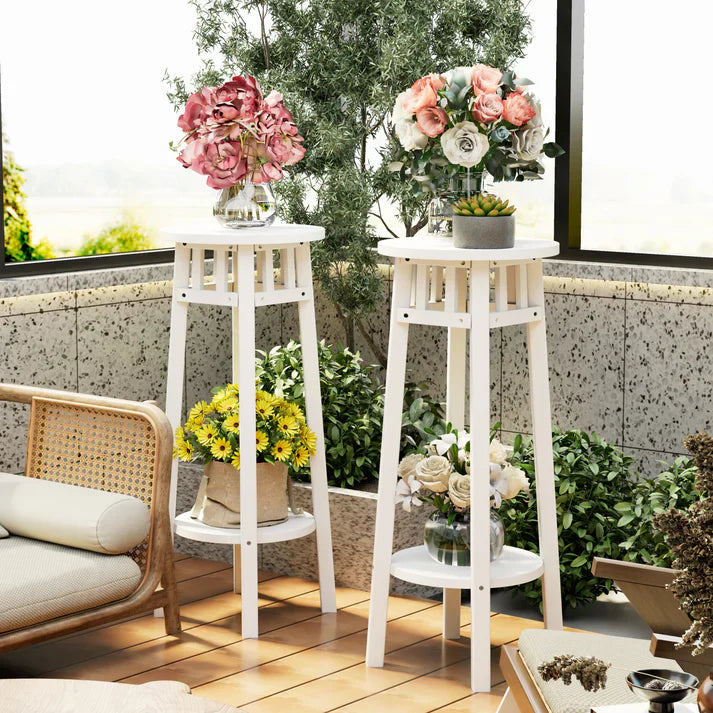
Thecompare this option with the dimensions of your plant area are specifically designed for garden, balcony, and office outdoor use, and the rustproof construction reflects that design intent. Available in white and black, they suit both contemporary and classic outdoor aesthetics and provide four display tiers for a meaningful plant arrangement.
Thereview the current size before planning your plant corner brings genuine structural mass and a cart format that adds mobility to outdoor use. The wrought iron construction and protective surface finish suit covered outdoor areas well, and the cart design allows the arrangement to be moved under cover during heavy weather.
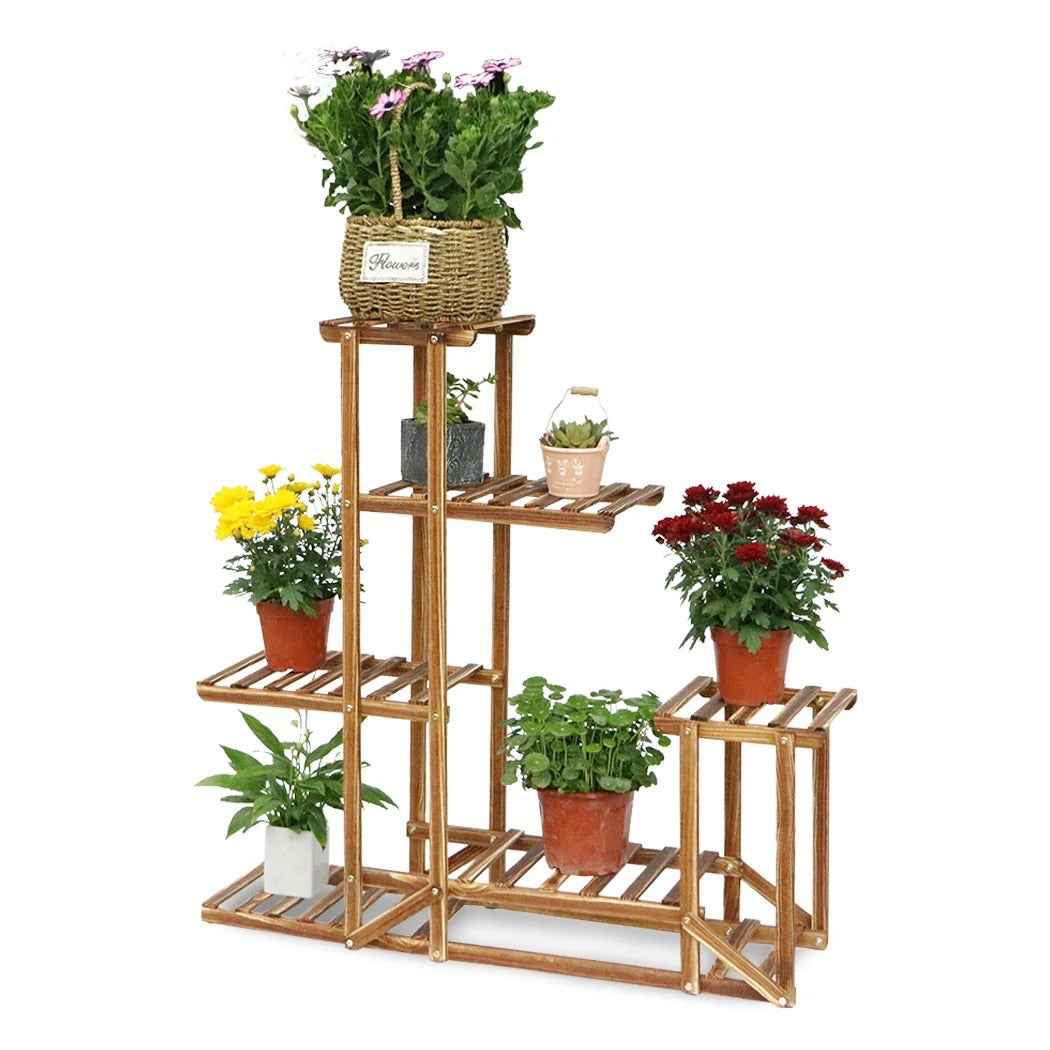
For a timber option suited to outdoor and semi-outdoor settings, thesee whether the footprint works beside your furniture uses carbonised wood construction across an impressively wide display format. The carbonisation treatment improves moisture resistance relative to standard timber, and the wide shelf platforms accommodate generous pot sizes that a typical outdoor plant collection involves.
Our fullplan a balcony-friendly plant display covers a range of materials, formats, and price points, and ourbrowse plant display options by room and footprint includes several designs specifically suited to outdoor conditions in Australian gardens and balconies.
Placement Decisions That Extend Outdoor Stand Life
Where you position an outdoor stand affects how long it lasts almost as much as what it is made from. A few placement habits make a meaningful practical difference.
Under cover where possible is the single most effective step for extending outdoor stand life. A verandah, pergola, or roofed balcony dramatically reduces rain and UV exposure compared to a fully exposed position, and opens up a considerably wider range of materials that will perform reliably.
Away from direct soil contact reduces moisture wicking into the stand base. Positioning stands on pavers, tiles, or decking rather than directly on lawn or garden soil keeps the base drier and reduces the ground-contact corrosion that begins at the feet of any metal stand.
In wind-sheltered positions where possible reduces the mechanical stress that wind puts on tiered structures - particularly taller multi-tier stands that present more surface area to lateral forces. A sheltered corner position against a wall or fence provides natural wind protection while also creating an attractive backdrop for the plant display.
For further guidance on setting up plant displays on outdoor surfaces, our post on how to arrange outdoor plant stands on patios, balconies, and decks covers positioning strategies in more depth. And for the specific challenges of Australian climate conditions, our post on choosing outdoor plant stands suited to Australian weather provides a detailed regional breakdown worth reading before purchasing.
Basic Maintenance for Outdoor Plant Stands
Even the most weather-resistant stand benefits from basic maintenance that takes very little time and extends service life significantly.
For metal stands, wipe down the frame periodically to remove soil, moisture, and salt accumulation. Address any chips or scratches in the coating promptly with a rust-inhibiting touch-up paint. Inspect the base feet annually for surface corrosion and replace rubber end caps if they have deteriorated.
For timber stands, reapply the outdoor sealant or oil finish as recommended by the product manufacturer. Check structural joints annually for moisture ingress or movement, and address any early signs of surface cracking before they allow moisture to reach the inner timber.
During extended periods of heavy rain or extreme weather, bringing stands under cover or into a sheltered position protects both the stand and the plants it holds, regardless of the stand's weather resistance rating.
Finding the Right Outdoor Stand for Your Space
At Metro Elegance, our outdoor plant stand range reflects the genuine diversity of Australian outdoor living - from inner-city apartment balconies to suburban gardens to coastal outdoor entertaining areas. We stock options across materials, formats, and price points because outdoor conditions and practical needs vary too much for any single solution to suit everyone.
If you have a specific outdoor setting - a coastal garden, a rooftop balcony, a tropical patio - and want to discuss which stand construction is most appropriate before purchasing, we are glad to help. Reach out through our contact page and we will give you a straightforward, honest recommendation.
Frequently Asked Questions
What is the most weather-resistant material for an outdoor plant stand in Australia?
Powder-coated steel is the most practical and widely available weather-resistant material for most Australian outdoor settings. Galvanised steel offers stronger protection in very wet or coastal conditions. Treated timber with a quality outdoor sealant performs well in covered outdoor areas. The specific conditions - coastal, tropical, temperate, exposed versus covered - should guide the final material choice.
Can bamboo plant stands be used outdoors in Australia?
Standard bamboo is generally not well-suited to fully exposed outdoor use in Australian conditions, particularly in tropical and coastal regions. Carbonised bamboo performs better due to its heat-treatment process, but still benefits from a sealant and is most reliable in covered outdoor settings. In direct sun and rain, untreated bamboo will deteriorate relatively quickly compared to metal or sealed timber alternatives.
How do I protect an outdoor plant stand from rust?
Choose a stand with a quality powder-coat finish applied consistently across all surfaces including joints and internal areas. Keep the frame clean of soil, moisture, and salt accumulation through regular wiping. Address any coating chips or scratches promptly with rust-inhibiting touch-up paint. Ensure base feet have protective caps to prevent ground-contact moisture wicking.
Are outdoor plant stands suitable for coastal areas?
Yes, but material selection is important in coastal environments due to salt air. Powder-coated steel with a thick, complete coating, galvanised steel, or stainless steel are the most appropriate metal options. Timber stands in coastal areas benefit from regular resealing. Regular maintenance - wiping down surfaces to remove salt accumulation - is particularly important regardless of material.
What is the difference between an indoor and outdoor plant stand?
The main differences are material treatment and construction specificity. Outdoor stands are designed to handle moisture, UV exposure, and temperature variation, typically through powder-coated or galvanised metal, treated timber, or carbonised bamboo. Indoor stands may use materials and finishes that look good in controlled conditions but would deteriorate under sustained outdoor exposure. Many stands are suitable for both covered outdoor and indoor use.
How long should an outdoor plant stand last in Australia?
Longevity varies with material quality, construction, specific outdoor conditions, and maintenance. A well-built powder-coated metal stand in a covered outdoor area with basic maintenance can reasonably last several years. Direct rain and sun exposure, coastal salt air, and no maintenance will shorten the lifespan of any stand. No general figure applies across all products, conditions, and maintenance regimes.
Do I need a different plant stand for a covered balcony versus an open garden?
In practice, yes. A covered balcony is considerably less demanding than a fully exposed garden position - it reduces direct rain and most UV exposure significantly. This means materials that would deteriorate quickly in a fully exposed garden can perform reliably on a covered balcony. For fully exposed positions, prioritising the most robust material and surface treatment combination available within your budget is worthwhile.