
Key Takeaways
Compare every style in the full Plant Stands range.
- Trailing plants need elevation to display their cascading growth effectively - a stand that is too low defeats the purpose of growing a trailing variety indoors.
- Height is the primary stand characteristic to prioritise for trailing plants, with the ideal range typically between 60cm and 100cm depending on the plant's trail length and the room's ceiling height.
- Open platform formats with no surrounding barriers allow trailing foliage to cascade freely in all directions rather than being redirected or tangled by the stand structure.
- Single-specimen elevated stands and ladder-format stands with wide rung spacing are the most effective formats for trailing plants.
- The weight of a trailing plant's pot is often modest, which opens up a wider range of stand constructions - structural confidence in the platform and base is still important, but very heavy-duty materials are rarely required.
- explore furnishings suited to relaxed Australian living carries tall and elevated plant stand options suited to trailing plants, with free shipping across Australia.
Trailing plants are among the most satisfying to grow indoors. A mature pothos with trails reaching a metre or more, a string of pearls cascading from a high shelf, a heartleaf philodendron with long stems sweeping toward the floor, a devil's ivy filling a corner with a curtain of green - these plants create a quality of living softness in a room that upright plants simply cannot replicate.
The challenge is that trailing plants only look their best when they have the elevation to trail. A pothos sitting on a low coffee table with its trails pooling on the surface is not a compelling display. The same pothos on a 70cm stand, with its growth cascading freely in every direction, creates a completely different visual effect - dynamic, natural, and genuinely beautiful.
Getting that elevation right, choosing a stand format that allows the trailing growth to flow without obstruction, and positioning the arrangement where the cascading foliage can be properly appreciated are the decisions that turn a trailing plant from something you own into something your room is better for.
This guide covers all of those considerations with specific attention to the trailing plant species that are most commonly grown in Australian homes, and the stand formats and heights that serve them well.
Why Elevation Is Non-Negotiable for Trailing Plants
The word "trailing" describes what the plant does when it has somewhere to trail from. Without adequate height, a trailing plant has nowhere to go - it grows horizontally along the surface beneath it, puddles on the floor, or is forced into a shape that is not natural to the variety.
The visual difference between a trailing plant with adequate elevation and one without it is significant. Elevation transforms the growth habit from a problem to be managed into a feature to be celebrated. The trails become visible from across the room. The movement of individual stems at different lengths creates a composition that reads as organic and intentional. The plant is doing what it is designed to do, and the stand is providing the conditions for that to happen.
For most common trailing plants grown in Australian homes, the minimum useful elevation for a display stand is around 50-60cm. Below that height, trail length of more than 30-40cm will begin to contact the floor or surface below before the cascade has had room to develop fully. For longer-trailing species - mature pothos, devil's ivy, or string of hearts with trails exceeding 80cm - a stand in the 70-90cm range provides the clearance for the full trail to hang freely.
This makes trailing plant stands a category where height is prioritised more explicitly than for most other indoor plant applications. For most plants, height is a proportional consideration balanced against ceiling clearance. For trailing plants, height is the primary functional requirement that the display depends on.
The Stand Formats That Work Best for Trailing Plants
Not every tall stand is well-suited to trailing plants. The format and structure of the stand determines whether the trailing growth can cascade freely or whether the stand itself interrupts the natural direction of growth.
Single-specimen elevated stands are the most direct format for trailing plants. A clean platform at the right height, supported by a simple leg or frame structure with minimal obstruction below the platform, allows the plant's trailing growth to cascade in all directions without interference. The visual effect is clean and natural - the plant appears to be floating at the right height, with its trails creating a living curtain around the base of the stand.
For this format to work well, the platform needs to be genuinely open on all sides. Stands with walls, rails, or surrounding frame elements above the shelf level will redirect or contain the trailing growth in ways that look constrained rather than natural.
Ladder-format stands work well for trailing plants when the rung spacing is generous enough to allow trailing growth to cascade between levels. A ladder stand with rungs spaced 30-40cm apart can display a trailing plant on an upper rung while allowing the trails to pass through the space below rather than resting on the next rung down. This creates a waterfall effect that suits trailing plants beautifully and adds visual complexity to the overall arrangement.
Where ladder stands work less well for trailing plants is when the rungs are closely spaced and the trailing growth gets caught or redirected on the rung immediately below the planting level. Checking the spacing between rungs before purchasing a ladder stand for a trailing plant display is worth doing.
Multi-tier stands with a dominant upper platform can work effectively when the trailing plant is positioned on the top or uppermost occupied tier, with the cascading growth falling freely down the face of the stand. This approach integrates the trailing plant into a broader collection display while still giving it the elevation it needs. The trailing growth becomes part of the overall composition, connecting the tiers visually and softening the geometric structure of the stand.
Corner stands at height are a strong choice for trailing plants in corners, which are already one of the most effective positions for this plant type. A tall corner stand with an open top platform allows trailing growth to cascade in the two directions facing into the room, framing the corner with living foliage in a way that is difficult to achieve with any other display method.
Height Recommendations for Common Trailing Plant Species
Different trailing plant species grow at different rates and reach different trail lengths at maturity. The right stand height varies accordingly.
Pothos and devil's ivy are among the fastest-growing trailing plants commonly kept indoors in Australia. Mature specimens in good light conditions can develop trails of 1-2 metres or more. A stand in the 70-90cm range suits a well-established pothos, providing enough clearance for the trails to develop significantly before reaching the floor. For plants in earlier growth stages, a 50-60cm stand is adequate and allows room to increase elevation as the plant matures.
Heartleaf philodendron develops long, arching trails that benefit from a stand in the 60-80cm range. The heart-shaped leaves are most attractive when the trails have room to arch outward before descending, which means slightly lower stands can work at earlier growth stages.
String of pearls and string of hearts are more delicate trailing plants where trail breakage is a concern. A stand that provides adequate height - typically 60-80cm - without requiring the trails to navigate around stand structure reduces the risk of trail damage during watering and maintenance. Open platforms with no surrounding elements are particularly important for these more fragile varieties.
Tradescantia (spiderwort) is a fast-growing trailing plant that suits stands in the 50-70cm range. Its bushy trailing growth is not as dramatically long as pothos but benefits significantly from elevation that allows it to cascade outward rather than simply growing along a flat surface.
Devil's ivy in hanging basket-style elevated displays suits stands at the upper end of the height range - 80-100cm - where the bushy, multi-directional trailing growth has enough space to develop fully without the lower trails contacting the floor or surrounding furniture.
Positioning a Trailing Plant Stand for Maximum Effect
The position of the stand in the room determines how the trailing growth reads visually and how well the plant's light needs are met.
Against a plain wall is one of the most effective positions for a single-specimen trailing plant on an elevated stand. The wall provides a backdrop that allows the trail to be seen clearly as it cascades, without visual competition from furniture or other objects behind it. A pale or neutral wall behind a dark-leafed trailing plant creates the contrast that makes the cascade most visible.
In a corner at height creates a framing effect where the trails cascade outward into the room from the corner position. The two walls of the corner become the backdrop, and the trailing growth fills the space in front of them with organic texture. This is one of the most visually effective positions for trailing plants and suits the corner stand format particularly well.
Beside a window with good light addresses both visual and practical considerations. Trailing plants like pothos, philodendron, and devil's ivy are relatively tolerant of indirect light, but they grow more vigorously and maintain better colour in a bright position. Placing the stand near a north or east-facing window provides the light conditions that support healthy growth while also making the cascading foliage visible against the natural light from behind.
On a shelf or ledge at height is an alternative to a dedicated stand where architectural features allow it. A built-in shelf at 150cm, a high bookcase top, or a mantelpiece provides natural elevation for a trailing plant without a stand. A dedicated stand becomes necessary where these architectural features are not available or not suitable for the pot weight.
For further ideas on using height and placement effectively for indoor plant displays, our post on how to create a layered, lush indoor plant display with multiple stands covers compositional approaches that incorporate trailing plants alongside other varieties.
Stand Picks from Metro Elegance for Trailing Plants
When we look at the Metro Elegance range with trailing plants specifically in mind, several designs stand out for their height, open platform format, and suitability for the cascading growth habits of the most popular trailing varieties.
Thecheck fit and placement details before choosing is one of the most practically effective formats for trailing plants. The ladder profile provides genuine height at the upper rungs, the open rung format allows trailing growth to cascade between levels, and the foldable design makes repositioning easy as the arrangement evolves. Its natural timber aesthetic suits the organic, living quality of trailing plant displays particularly well.
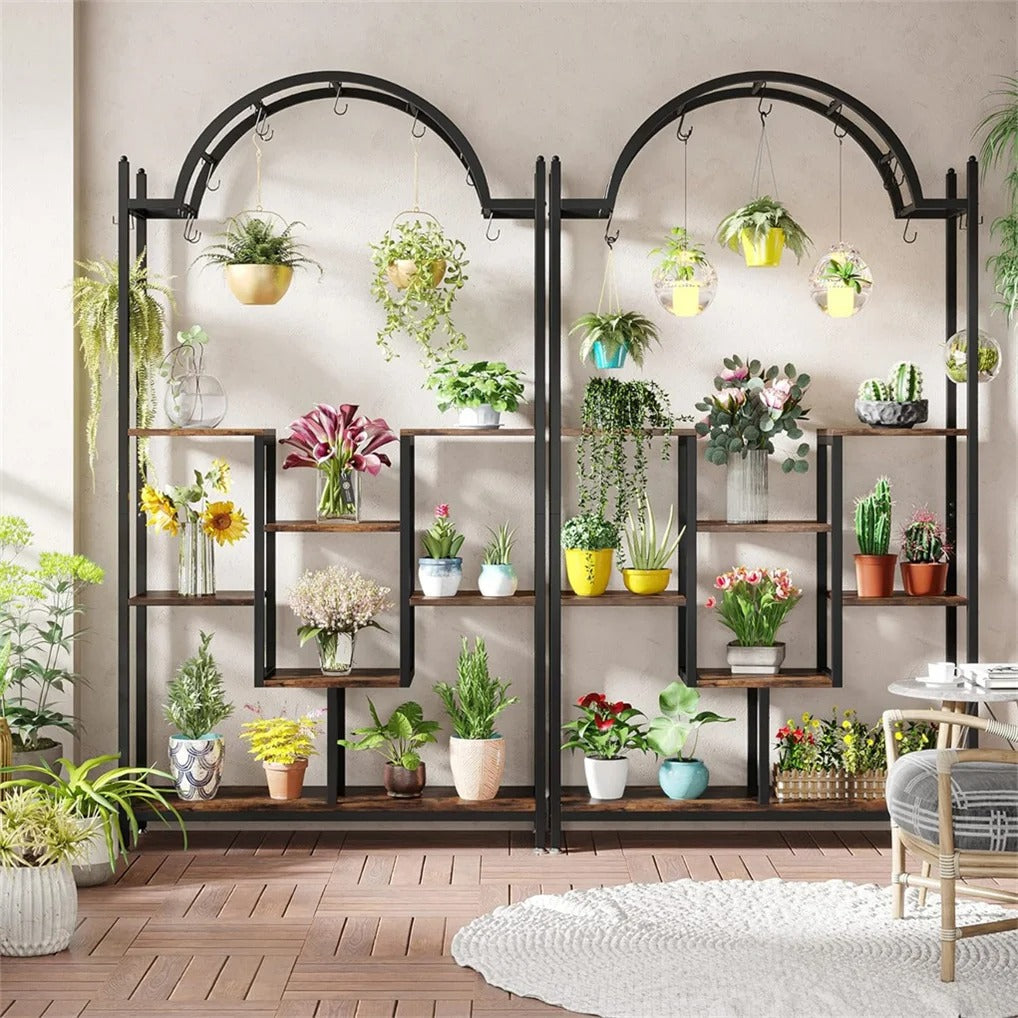
Thereview the support layout before arranging heavier pots offers excellent trailing plant functionality through its combination of elevated tiers and hanging hooks. The hooks allow trailing plants to be suspended at height with their growth cascading freely below, while the tiered shelving accommodates other plants at different levels. The arched format and vintage styling add visual character that suits the natural aesthetic of trailing plant displays.
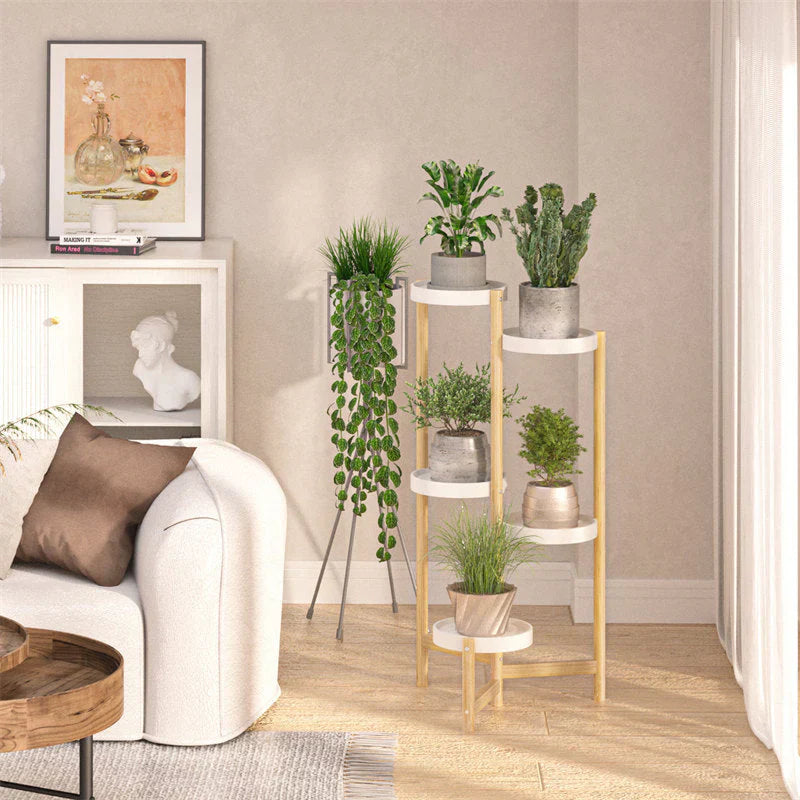
For a single statement trailing plant on a dedicated elevated platform, thereview the working height for regular plant care provides significant height at the upper tiers with the corner footprint that suits trailing plant positioning most effectively. Placing a trailing plant on the top tier of this corner stand creates a cascading display that fills the corner with living foliage from ceiling height downward.
Ourchoose supports around pot weight and placement is the most directly relevant collection for trailing plant applications, given that height is the primary requirement for this plant type. Ourbrowse options for a balanced group of houseplants also includes formats at appropriate heights for a variety of trailing plant species.
Caring for Trailing Plants on an Elevated Stand
Elevated stands introduce a few specific practical considerations for trailing plant care that are worth building into your routine.
Watering at height can be awkward for stands where the pot is difficult to reach. The simplest approach is to use a long-spouted watering can that can direct water to the soil surface without disturbing the trailing growth. For stands where reaching the pot is genuinely difficult, a self-watering pot insert allows less frequent watering without compromising plant health.
Trail management as the plant grows becomes necessary for very fast-growing trailing varieties like pothos and devil's ivy. If the trails reach the floor, they can be gently trained back up around the stand structure, trimmed to promote bushier growth, or the stand can be moved to a higher position if ceiling clearance allows. Regularly assessing the relationship between trail length and stand height keeps the display looking intentional as the plant matures.
Dust accumulation on long, hanging trails is more of an issue for elevated trailing plants than for those at a lower level, simply because the trails are more exposed. Wiping the leaves of waxy trailing varieties with a damp cloth every few weeks keeps the foliage looking clean and removes the fine dust layer that can affect the plant's light absorption over time.
Our post on how to style plant stands effectively for a fresh, green indoor look covers additional styling and maintenance principles that apply well to trailing plant displays, and our post on the practical reasons why plant stand height matters for both display and plant health explains the broader logic behind choosing elevation as a priority.
Finding the Right Stand for Your Trailing Plants
At Metro Elegance, we understand that trailing plants have specific requirements that not every stand meets, and our range reflects that. From tall ladder formats and arched metal designs with hanging hooks, to elevated corner stands that turn trailing growth into a room feature, we stock options suited to every trailing plant species and every Australian interior style.
Free shipping across Australia is included on every order, so the listed price is the total price regardless of where you are located.
If you have a specific trailing plant and room in mind and want guidance on which stand height and format will work best, we are happy to help. Reach out through our contact page and we will give you a considered recommendation.
Frequently Asked Questions
What type of plant stand is best for trailing plants?
Single-specimen elevated stands with open platforms and ladder-format stands with generous rung spacing are the most effective for trailing plants. Both allow trailing growth to cascade freely without obstruction from the stand structure. The key requirement is adequate height - typically 60-90cm depending on the species - so the trailing growth has room to develop before reaching the floor.
How tall should a plant stand be for a trailing plant?
For most common trailing indoor plants, a stand height of 60-90cm is appropriate. Faster-growing, longer-trailing species like pothos and devil's ivy benefit from the upper end of that range or higher. Shorter-trailing or slower-growing varieties can work effectively on stands of 50-60cm. The trail length of the plant at its current development stage is the most useful reference - the stand should provide enough clearance for the full trail to hang freely.
Can I use a multi-tier stand for trailing plants?
Yes, with a few considerations. Position the trailing plant on the top or uppermost occupied tier so its growth can cascade downward. Ensure the tier spacing is generous enough that trailing growth can pass through rather than resting on the next tier down. A trailing plant incorporated into a multi-tier display with other plants at lower tiers creates a visually rich arrangement where the cascading growth connects the levels.
What is the best position in a room for a trailing plant stand?
Against a plain wall or in a corner are the most effective positions. The wall or corner provides a backdrop that allows the cascading trail to be seen clearly against a simple surface. Near a window with good indirect light serves both practical and visual purposes - the light supports healthy growth, and the natural light from behind creates attractive backlighting for the trailing foliage.
Do trailing plants need a special kind of platform on their stand?
The platform should be fully open on all sides with no surrounding walls, rails, or upper frame elements that would redirect or contain the trailing growth. A simple, flat platform surface at the right height with no obstruction below or around it allows trailing growth to cascade naturally in all directions. Avoid stands with enclosed platform designs that direct growth upward or inward rather than allowing free cascading.
How do I stop trailing plant trails from tangling on the stand structure?
Choose a stand with minimal structural elements below the platform - a clean leg or frame design with open space beneath. Ladder stands should have rung spacing generous enough for trails to pass through without catching. Regularly check the growth direction and gently guide any trails that are wrapping around structural elements back into a free-hanging position. For very fast-growing varieties, more frequent checks prevent tangles from developing.
Are tall plant stands stable enough for trailing plants in Australian conditions?
For indoor positions, a tall stand with a wide, well-grounded base is stable for most trailing plant applications - trailing plants are typically lightweight, which reduces tipping risk compared to stands holding heavy specimen plants. For outdoor or balcony positions with wind exposure, choose a stand with a wider base and heavier construction, or position the stand against a wall for additional stability.