
Key takeaways
- Good plant stand arrangement balances sunlight, airflow, and visual harmony.
- Different outdoor spaces require different layouts and stand heights.
- Grouping plants thoughtfully prevents overcrowding and improves plant health.
- Material choice matters for long-term outdoor durability in Australian conditions.
- A considered layout makes outdoor areas feel intentional, not cluttered.
At Metro Elegance, we see outdoor plant styling as an extension of how you live. Patios, balconies, and decks are not just transitional spaces. They are places where people relax, entertain, and connect with greenery every day. How you arrange your outdoor plant stands plays a major role in how these spaces feel and how well your plants thrive.
Many people focus on choosing the right plants but give less thought to layout. Professional designers and experienced plant owners approach outdoor arrangement with intention. They consider space, light, airflow, and how the eye moves across the area. With the right approach, even a compact balcony can feel calm and curated rather than crowded.
This guide explains how to arrange outdoor plant stands across different types of outdoor spaces, using practical principles that work for Australian homes.
Start With the Purpose of the Space
Before moving a single plant stand, it helps to be clear about how the space is used. A deck designed for dining will need clear walkways and open zones. A balcony meant for quiet evenings can handle a denser, more immersive plant layout.
At Metro Elegance, we always recommend thinking about function first. Plant stands should support how the space is used, not restrict it. This mindset prevents layouts that look good briefly but become frustrating over time.
Understand Light and Exposure
Outdoor spaces vary significantly in light levels, especially in apartments and townhouses. Some balconies receive strong afternoon sun, while others stay shaded most of the day.
Arranging plant stands by light exposure helps keep plants healthy and reduces ongoing maintenance. Taller stands can hold sun-loving plants without blocking light from those below. Lower stands and floor-level groupings suit shade-tolerant varieties.
In Australia, it is also important to consider heat buildup on balconies and decks. Spacing stands slightly apart improves airflow and reduces stress on plants during warmer periods.

Use Height Variation to Create Balance
One of the most common mistakes we see is placing all plant stands at the same height. This flattens the visual impact and makes even beautiful plants feel unremarkable.
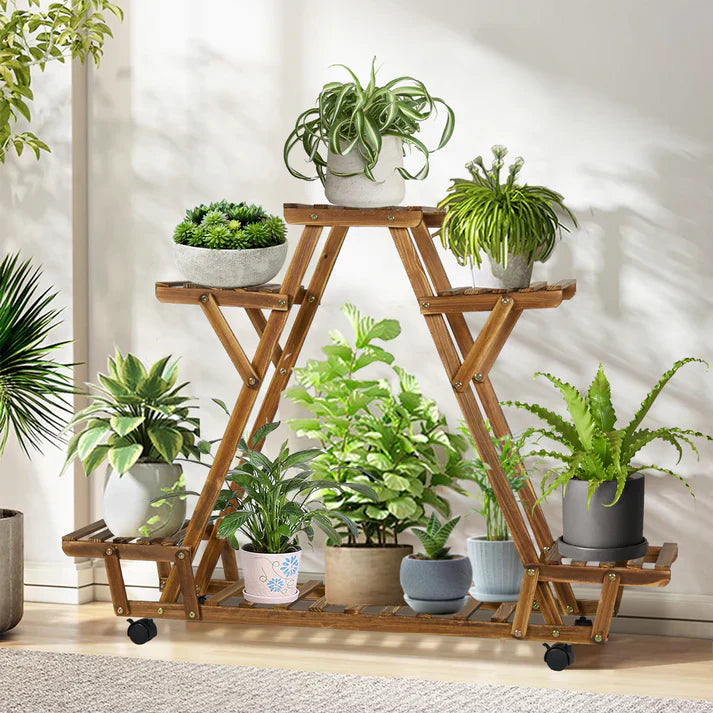
Professional-style arrangements use a mix of heights to guide the eye naturally. Tall plant stands draw attention upward, mid-height stands fill the visual centre, and low stands or ground-level pots anchor the space.
Our tall plant stand collection is often chosen by customers looking to add vertical interest without taking up excessive floor space. When combined thoughtfully with shorter stands, the result feels layered and intentional.
Arrange by Zones Rather Than Rows
Lining plant stands in straight rows can make outdoor spaces feel rigid. Instead, grouping stands into small zones creates a more natural flow.
On patios, a corner grouping near seating can soften hard edges. On balconies, placing clusters at either end leaves the centre open and functional. Decks benefit from staggered groupings that follow the shape of the space rather than fighting it.
This approach also makes it easier to rotate plants when needed, ensuring even light exposure and consistent growth.
Choose Materials That Suit Outdoor Conditions
Outdoor plant stands must handle moisture, temperature changes, and regular exposure to the elements. Material choice is not only about appearance but also longevity.
Metal plant stands are popular for their strength and clean lines. They suit modern outdoor spaces and hold their shape well over time. Our metal plant stand collection reflects this balance between durability and design.
Wooden stands bring warmth and texture but require thoughtful placement. Keeping them slightly elevated and away from constant moisture helps maintain their finish longer.
Match Stand Size to Plant Size
Oversized plants placed on small stands can feel unstable, while small plants on large stands may look lost. Matching scale is essential for both safety and aesthetics.
For larger potted plants, structured designs like the 5-tier bamboo modern plant stand patio flower pot holder allow weight to be distributed evenly while offering space for multiple plants. This type of stand works well on decks and larger patios where vertical presence is welcome.
On balconies, compact multi-level stands such as the 3-tier bamboo ladder shelf plant stand help maximise greenery without crowding the floor.
Leave Space for Movement and Maintenance
Outdoor spaces need to be lived in. Leaving adequate space between plant stands allows for comfortable movement and makes maintenance easier.
Watering, pruning, and cleaning are all simpler when stands are not pressed tightly together. This spacing also improves airflow, which reduces moisture buildup around pots and soil.
For guidance on balancing greenery with functionality, our article on making the most of compact outdoor areas explores layouts that work particularly well in Australian apartments.
Think in Layers Rather Than Quantity
A well-arranged outdoor space does not require a large number of plant stands. Professionals often use fewer stands but place them more thoughtfully.
Layering involves combining different heights, textures, and plant types without overwhelming the space. A single statement stand paired with supporting pieces often looks more refined than many similar stands grouped together.
The 6-tier wrought iron plant stand for indoor and outdoor use is a good example of how one structured piece can carry visual weight while keeping plants organised.
Adapt Layouts Seasonally
Outdoor arrangements are not static. Sun angles shift, temperatures change, and plants grow at different rates throughout the year.
We recommend reviewing plant stand layouts periodically and making small adjustments. Rotating stands, changing plant positions, or moving taller stands to different areas helps maintain balance and plant health.
Our guide on maintaining wooden plant stands in changing weather explains how seasonal care supports both plants and furniture longevity.
Keep the Overall Look Cohesive
A cohesive outdoor arrangement feels calm and intentional. Mixing too many stand styles, colours, or materials can make spaces feel busy.
Choosing a consistent material or finish across most stands creates harmony. Accent pieces can then be introduced sparingly to add interest without visual noise.
Our broader perspective on this approach is outlined in our article on choosing the right plant stand for your home, which explores how style and practicality work together.
Let Your Space Evolve Naturally
Outdoor plant styling is not about perfection. Plants grow, seasons shift, and preferences change. The most inviting spaces evolve over time.
At Metro Elegance, we encourage customers to see plant stand arrangement as an ongoing process rather than a final result. Starting with quality stands and a thoughtful layout makes it easier to adapt as your outdoor space develops.
Bring It All Together With Metro Elegance
Arranging outdoor plant stands well transforms patios, balconies, and decks into spaces that feel balanced and welcoming. When layout, materials, and plant selection work together, outdoor areas become an extension of the home rather than an afterthought.
If you would like advice on selecting plant stands or creating a layout that suits your space, our team is here to help.
Contact us here to discuss your outdoor styling needs.
Frequently Asked Questions
How many plant stands should I use on a balcony?
This depends on balcony size and layout. Fewer, well-placed stands usually create a more balanced result than filling every available space.
Do outdoor plant stands need to be weather resistant?
Yes. Stands used outdoors should handle moisture and temperature changes to maintain stability and appearance over time.
Is it better to group plants or space them apart?
Small groupings with space between stands allow for airflow and easier maintenance while still creating visual impact.
Can wooden plant stands be used outdoors in Australia?
They can, but placement matters. Keeping them out of constant moisture and maintaining finishes helps extend their lifespan.
Should plant stands be placed against walls or railings?
Placing some stands near walls or railings works well, but leaving breathing room prevents damage and supports plant health.
How often should I rearrange outdoor plant stands?
There is no fixed schedule. Adjust layouts when seasons change or when plants outgrow their current positions.
Do tall plant stands work in small outdoor spaces?
Yes, when used carefully. Vertical stands can add greenery without taking up valuable floor space if positioned thoughtfully.