
Key takeaways
- Australian climates demand outdoor plant stands that can handle sun, rain, humidity, and temperature changes.
- Material choice matters more than design when it comes to long-term outdoor durability.
- Wooden and metal plant stands can both work outdoors when properly designed and maintained.
- Placement, drainage, and exposure all influence how long an outdoor plant stand lasts.
- Investing in well-made outdoor plant stands can reduce maintenance and replacement over time.
Outdoor spaces play a big role in how Australians live. Balconies, patios, courtyards, and gardens often act as extensions of the home, not just decorative extras. With that comes the desire to style outdoor areas with the same care given to interiors. Outdoor plant stands are a simple but effective way to elevate greenery, add structure, and make plants part of the overall design.
At Metro Elegance, we design and curate plant stands with real Australian conditions in mind. Choosing the right outdoor plant stand is not just about appearance. It is about understanding climate, materials, and how a product will perform over time. This guide breaks down what to look for so your outdoor plant stands remain functional and visually appealing.
Understanding Australian climate conditions
Australia’s climate is diverse, but there are common challenges across most regions. Strong UV exposure, sudden rainfall, humidity in coastal areas, and temperature fluctuations can all affect outdoor furniture.
Outdoor plant stands sit directly in these conditions, often carrying heavy pots and holding moisture from watering. This makes them more vulnerable than many other outdoor decor items. Selecting weather-resistant designs helps prevent warping, rusting, or structural weakening.
Before choosing a plant stand, it helps to think about where it will live. A covered balcony faces different conditions than an open garden or patio. Exposure level should guide material choice and design.

Material choices that perform outdoors
Treated and suitable timber options
Wooden plant stands remain popular because they bring warmth and a natural feel to outdoor spaces. Timber works especially well in Australian gardens and balconies where greenery is a key feature.
Not all wood is suitable for outdoor use. Well-designed wooden plant stands use treated or naturally resilient timber and construction methods that allow for airflow and drainage. Our wooden plant stand collection includes designs that work both indoors and in sheltered outdoor settings when used as intended.
Regular maintenance, such as keeping stands out of pooled water and cleaning them periodically, helps extend their lifespan. For areas with high humidity, choosing raised designs can also reduce moisture contact.
Metal plant stands for exposed areas
Metal plant stands are often preferred for fully exposed outdoor spaces. When properly finished, metal can handle rain, sun, and temperature changes with minimal maintenance.
Powder-coated or treated metal designs are particularly suitable for balconies and patios. Our metal plant stand collection is curated for customers looking for durability combined with clean, modern styling.
Metal stands tend to offer slimmer profiles, which makes them a good option for smaller outdoor spaces where floor area is limited.
Structural design matters as much as material
Even the right material can fail if the design does not support outdoor use. Stable bases, reinforced joints, and balanced weight distribution are essential.
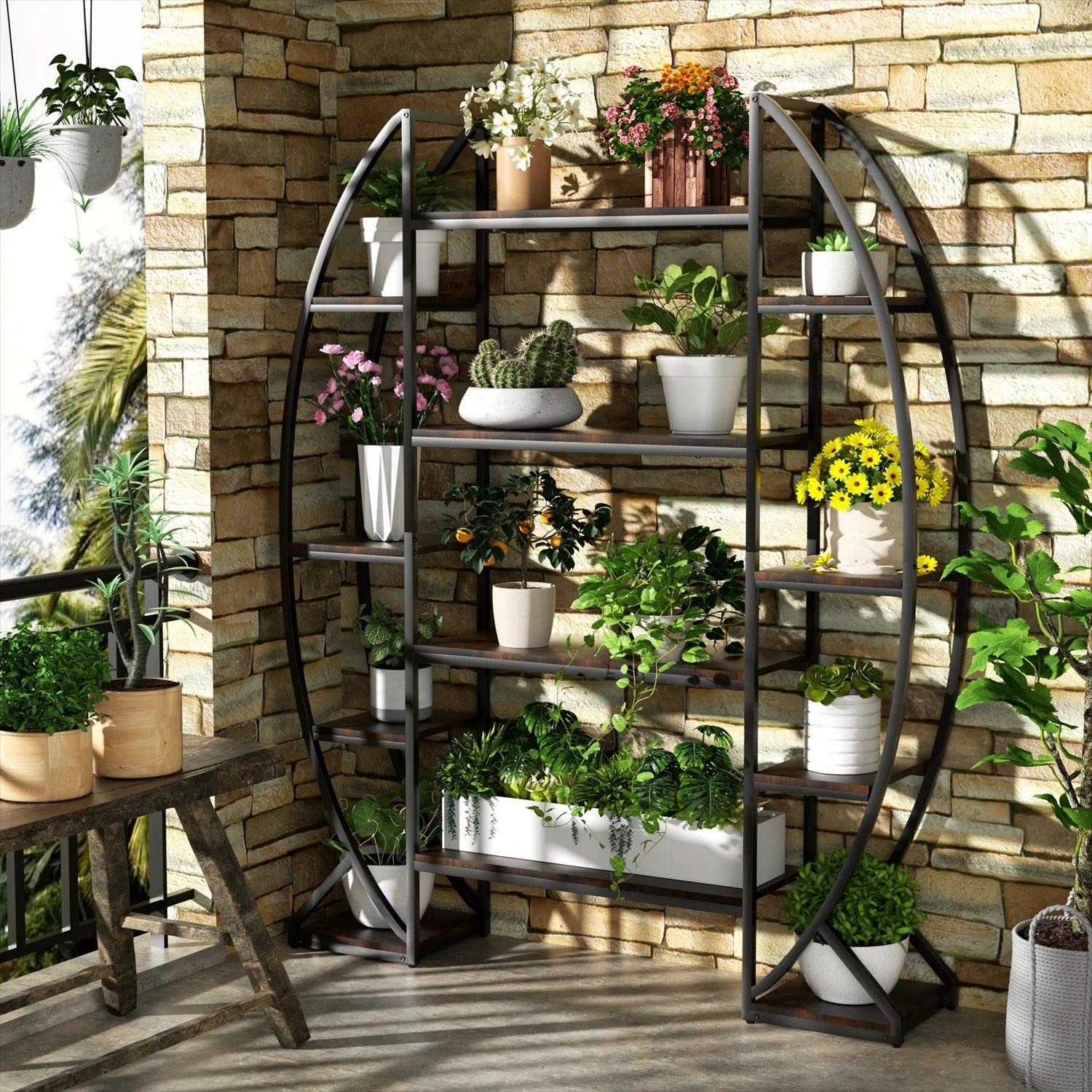
Multi-tier stands should be designed so weight is evenly spread, especially when holding several pots. A product like the 4-tier metal plant stand for balcony and living room use demonstrates how tiered designs can remain stable while offering vertical display options.
For heavier pots, lower and wider stands often perform better outdoors. Taller designs should be placed in areas protected from strong wind.
Drainage and airflow considerations
Outdoor plant stands must allow water to escape easily. Poor drainage can lead to moisture buildup, which affects both the plant and the stand itself.
Look for designs with slatted shelves, open frames, or raised platforms. These features encourage airflow and reduce prolonged contact with water. Wooden ladder-style or tiered designs are particularly effective in this regard.
A piece like the solid pine wood multi-tier plant stand for indoor and outdoor use offers vertical spacing that helps with airflow while keeping plants visually organised.
Matching plant stands to outdoor spaces
Balconies and apartments
Many Australians live in apartments where outdoor space is limited. For balconies, lightweight but stable plant stands work best. Vertical designs maximise greenery without overcrowding the space.
Compact multi-tier stands or narrow metal frames allow plants to be grouped neatly. If you are styling a smaller area, our article on plant stand ideas for limited outdoor spaces provides practical inspiration.
Gardens and patios
Larger outdoor areas allow for more flexibility. Heavier wooden or metal stands can act as focal points within garden layouts. In these spaces, plant stands often support larger pots and benefit from wider bases.
For open patios, consider how stands will interact with other furniture. Keeping finishes consistent helps create a cohesive outdoor setting rather than a collection of unrelated pieces.
Maintenance expectations for outdoor plant stands
No outdoor furniture is completely maintenance-free. However, choosing the right design can significantly reduce effort over time.
Wooden stands may benefit from occasional cleaning and checking joints, particularly in humid or rainy regions. Metal stands usually require less upkeep but should still be inspected periodically for signs of wear.
We share practical care advice in our guide on maintaining wooden plant stands in challenging weather, which applies equally to outdoor settings.
When versatility matters
Some customers prefer plant stands that can move between indoor and outdoor spaces. This is common in seasonal styling or rental homes where flexibility is important.
Designs that work in both environments offer better value and adaptability. Our article on choosing plant stands that suit different parts of the home explores how to balance aesthetics and function across settings.
At Metro Elegance, we aim to offer plant stands that transition easily while maintaining durability and style.
Investing in long-term outdoor styling
Outdoor plant stands should support your plants and your lifestyle, not create extra work. By considering material, design, placement, and maintenance from the outset, you can choose stands that remain reliable and visually appealing.
Metro Elegance focuses on practical design choices that suit Australian conditions, whether you are styling a city balcony or a backyard garden. Our collections are curated to balance durability with modern design, so outdoor spaces feel as considered as interiors.
If you would like advice on selecting outdoor plant stands for your specific space, we are happy to help. Contact us to speak with our team and explore options that suit your outdoor environment.
FAQs
What materials are best for outdoor plant stands in Australia?
Metal and properly treated timber are commonly used for outdoor plant stands because they handle sun and moisture better than untreated materials.
Can wooden plant stands be used outdoors?
Yes, wooden plant stands can be used outdoors in suitable conditions, especially in covered areas, when designed for airflow and drainage and maintained appropriately.
Do outdoor plant stands need special drainage features?
Good drainage is important. Open or slatted designs help prevent water buildup and reduce long-term damage.
Are metal plant stands better for coastal areas?
Metal plant stands with appropriate protective finishes are often preferred in coastal areas due to humidity and salt exposure, though regular checks are still recommended.
How do I stop outdoor plant stands from tipping over?
Choose stands with stable bases, place heavier pots on lower levels, and position taller stands in sheltered locations.
Can outdoor plant stands be used indoors as well?
Many designs are versatile enough for both indoor and outdoor use, provided they suit the space and are used as intended.
How often should outdoor plant stands be maintained?
Maintenance needs vary by material and exposure. Periodic cleaning and inspection help extend the life of outdoor plant stands.