
Key Takeaways
See our indoor and outdoor plant stands before choosing a design for your space.
- Plant stands in a modern living room work best when they are treated as furniture decisions rather than afterthoughts - material, scale, and placement all need to relate to the rest of the room.
- The most common styling mistake is placing a stand wherever there is available floor space rather than positioning it where it contributes most to the room's visual composition.
- Modern living rooms benefit from a mix of stand heights - low, medium, and tall - rather than a single uniform level of greenery across the space.
- Stand material should relate to the existing material palette of the room: timber stands in rooms with warm tones, matte black metal in contemporary industrial spaces, and white or natural finishes in lighter, minimal interiors.
- One well-positioned statement plant on a quality stand tends to have more impact than several plants scattered without a clear arrangement logic.
- explore design-led options for functional rooms carries plant stands in timber, bamboo, and metal suited to modern Australian living rooms, with free shipping across Australia.
A plant stand in a living room can do one of two things. It can look like it belongs there - part of the room's overall composition, relating to the furniture and materials around it in a way that feels considered and complete. Or it can look like it was placed there because the plant needed somewhere to go, with no particular relationship to the space it occupies.
The difference between these two outcomes is not about the plants themselves, or even primarily about the stands. It is about how the stands are positioned, what they are made from, how many there are, and how they relate to the other elements in the room. In other words, it is about styling - which is a set of learnable, repeatable decisions rather than an innate design sense.
Australian living rooms have become increasingly plant-forward over the past decade. Indoor greenery is a genuine part of the design vocabulary in contemporary Australian interiors, from coastal Hamptons-influenced homes to minimalist apartment living rooms to open-plan family spaces. The stands that display those plants are increasingly visible as design elements in their own right, not just functional supports.
This guide covers the specific decisions that make plant stands work in a modern living room - from the foundational questions of placement and proportion through to material matching, arrangement logic, and the styling details that separate a considered display from a random collection of pots on sticks.
Start with the Room, Not the Plant
The instinct when styling plant stands is to start with the plant - you have a monstera or a fiddle leaf fig, and you need somewhere to put it. The result of this approach is a stand chosen for the plant in isolation, placed wherever it fits, without consideration for how it relates to the broader room.
The more effective approach is to start with the room and treat the plant stand as a furniture decision. Ask the same questions you would ask about a side table or a coffee table: where in the room does an additional vertical element make visual sense? What material would relate well to the existing palette? What height would fill the vertical space without competing with other furniture?
This shift in thinking changes the outcome significantly. A plant stand chosen and placed as a room decision rather than a plant decision will integrate naturally into the living room rather than sitting alongside it.
In practice, this means doing a visual audit of the room before selecting or repositioning any stand. Where is the vertical space underused? Where does the eye travel and where does it stop? Where are the existing design anchors - the sofa, the coffee table, the television or fireplace - and where could a plant and stand create balance or contrast with those anchors?
The answers to these questions lead you to a placement before you have even chosen a stand or plant, which is the right sequence for the decisions that follow.
The Most Effective Positions in a Modern Living Room
Not every position in a living room is equally suited to a plant stand. A few positions consistently deliver the most visual impact in modern Australian living rooms.
Corners beside sofas are the most versatile position for a single statement plant stand. The corner provides containment and framing, keeps the stand and plant out of the main circulation path, and creates an organic counterpoint to the geometric lines of the sofa. A tall stand with a sculptural plant - a bird of paradise, a fiddle leaf fig, a large monstera - in the corner beside a sofa is one of the most enduring styling combinations in contemporary Australian living rooms, and for good reason: it works reliably across a wide range of room sizes and interior styles.
Beside a window or glass sliding door serves both practical and aesthetic purposes. The natural light supports plant health, and the visual relationship between the plant and the light source creates a natural, luminous quality in the arrangement. A stand positioned so the plant silhouettes lightly against the window during the day adds a quality that is difficult to achieve with any other positioning decision.
As a visual anchor opposite a primary furniture piece creates balance in open-plan spaces where the living area needs definition. A large sofa on one side of the room and a substantial plant stand arrangement on the opposite or perpendicular wall creates a counterweight that gives the space its visual edges. This approach is particularly effective in open-plan Australian homes where the living area flows into dining and kitchen spaces without clear architectural boundaries.
Flanking an architectural feature - a fireplace, a built-in entertainment unit, or a feature wall - is a symmetrical approach that suits the more formal styling typical of Hamptons-influenced and classic contemporary living rooms. Two matching stands of equal height on either side of a fireplace creates a composed, symmetrical arrangement that reads as intentionally designed.
Height Layering: Why One Level Is Never Enough
One of the most common styling oversights in plant stand arrangements is working at a single height. A collection of plants all at the same elevation - all on 70cm stands, or all at floor level - creates a horizontal band of greenery that lacks the visual movement and interest that height variation provides.
Modern living rooms benefit from greenery at three distinct levels: low, mid, and high. This does not require three separate stands for every room - it requires deliberate choices about where each stand sits within the vertical range of the room.
Low level - below 40cm - suits coffee table arrangements, floor-level groupings of large pots, or low wide-platform stands under substantial plants. In a modern living room, a large plant at low level beside a sofa or under a side table creates a grounded quality that contrasts with higher arrangements elsewhere in the room.
Mid level - 40-80cm - is the most common height range for living room plant stands and suits the widest range of plant types. This is where most tiered bamboo and timber stands sit, and where medium-height plants like rubber trees, peace lilies, and compact monsteras display most effectively.
High level - 80cm and above - is where tall plants on elevated stands, ladder-format displays with plants on upper rungs, or corner stands reaching toward the ceiling operate. At this height, plants enter the visual zone above the furniture line and begin to fill the vertical space of the room in a way that lower arrangements cannot.
Having greenery at more than one of these levels transforms a living room plant arrangement from a collection of individual plants into a composed, layered display with depth and dimension.
Matching Stand Material to the Modern Australian Living Room
Material matching is the styling decision that most determines whether a stand feels like it belongs in a room or was imported from a different aesthetic context.
Natural timber and bamboo suit warm, organic, and relaxed living room aesthetics - coastal contemporary, Hamptons-influenced, Japandi, and relaxed modern. These materials share the visual language of timber floors, rattan furniture, linen upholstery, and the warm neutral palette that characterises many contemporary Australian living rooms. A solid pine or bamboo stand in a room with those elements integrates naturally.
Matte black powder-coated metal suits the harder-edged contemporary and industrial aesthetics that are well-represented in Australian urban living rooms. Matte black already appears in tapware, light fittings, furniture frames, and cabinet hardware in these interiors, which means a matte black plant stand reads as part of the material vocabulary rather than an addition to it.
White or off-white finishes suit the lighter, airier palette of Scandinavian-influenced and minimal living rooms where the design language emphasises brightness, simplicity, and negative space. A white stand in a room with white walls, pale timber floors, and minimal furnishing almost disappears behind the plant - which is exactly the intended effect.
The rule is not rigid. Mixing one material stand against a complementary palette can work well, particularly when the stand is making a deliberate contrast. A dark-stained timber stand in a very pale, minimal room creates an intentional focal point rather than blending in - whether that serves the room depends on whether the focal point is wanted.
Specific Stand Recommendations for Modern Living Rooms
When we look at the Metro Elegance range with modern living room styling specifically in mind, a few designs suit the application particularly well.
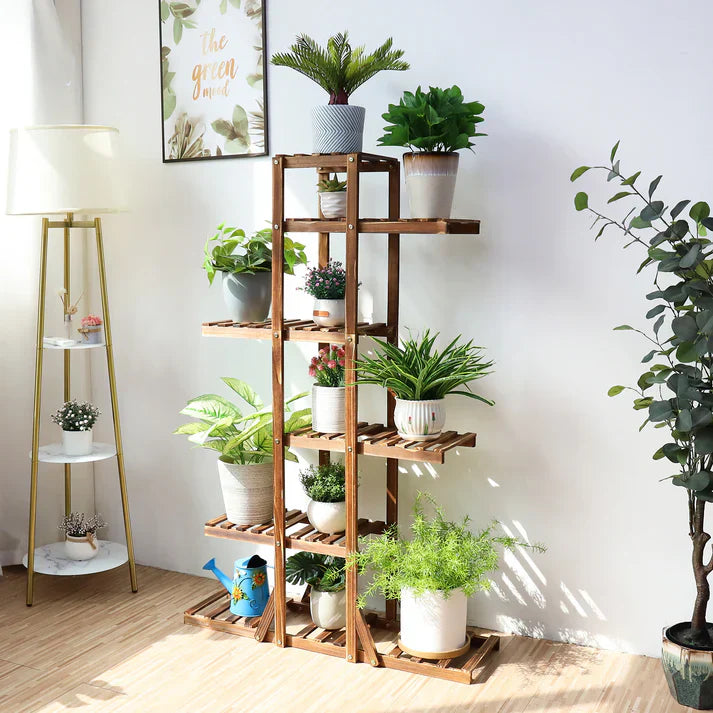
Thecheck the current details against your pot sizes offers the darker, more contemporary timber aesthetic that suits modern living rooms with a warmer, grounded palette. The carbonised finish adds depth and visual weight that suits rooms where the timber tones are rich rather than pale, and the multi-tier format provides the height layering that living room arrangements benefit from.
For a ladder-format stand in natural timber that suits Japandi and coastal contemporary living rooms, thecheck the shelf layout for the pots you want to display delivers a clean silhouette and the practical advantage of foldability for rooms where positioning flexibility matters. The natural timber finish and open ladder format keep the stand visually light even in a room with significant furniture.
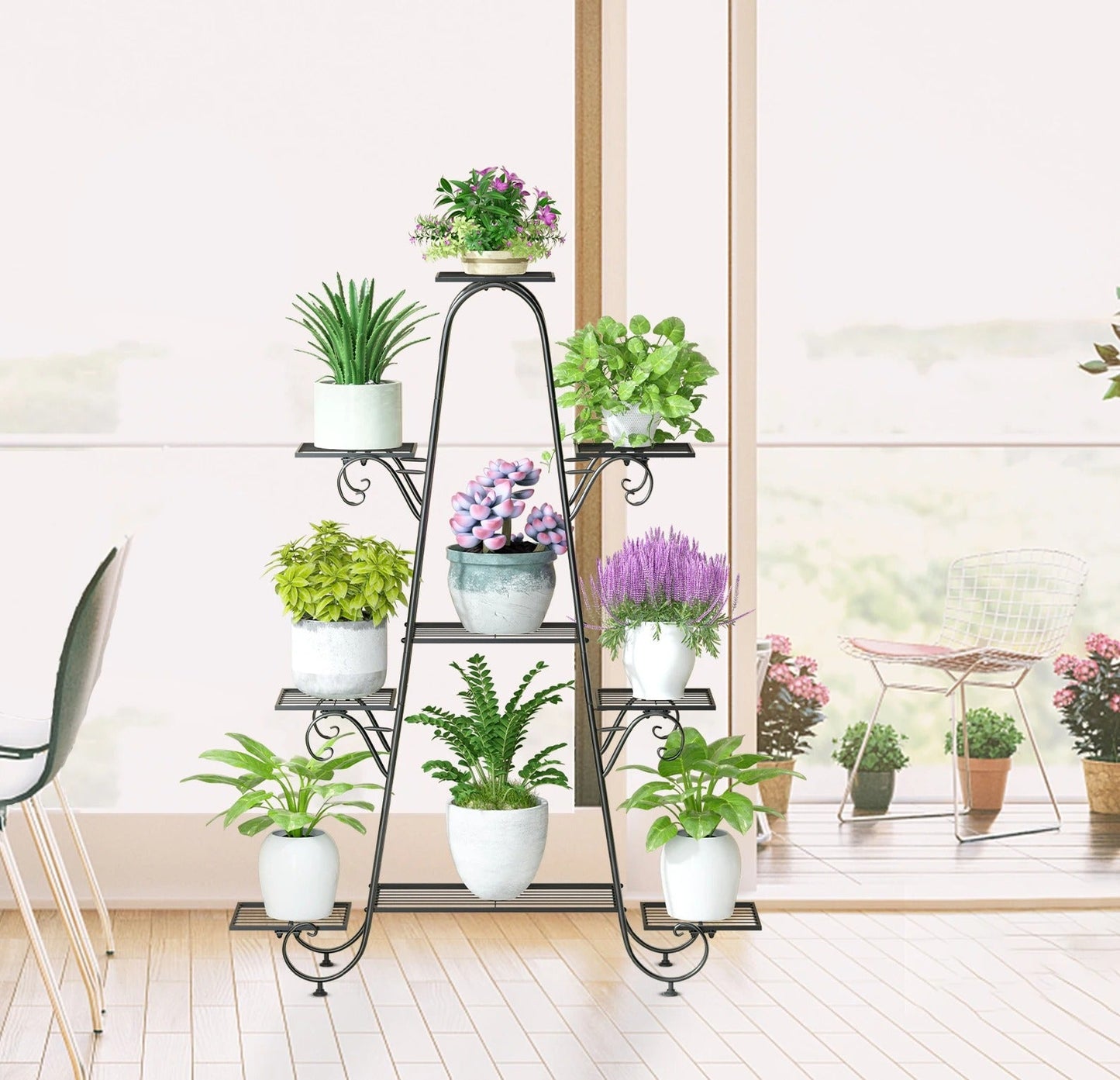
For a matte metal option that suits the harder-edged contemporary aesthetic, thereview the current size before planning your plant corner brings the clean geometry and powder-coated finish that integrates naturally with modern Australian living rooms where black metal features across the room's hardware and furniture.
Ourbrowse supports for a tidier watering setup covers the full range of formats and materials suited to living room styling, and ourchoose supports around pot weight and placement is worth browsing specifically when filling vertical space in the living room is the primary styling goal.
Styling Details That Make a Difference
Beyond the structural decisions of placement, height, and material, a few smaller styling decisions separate good plant stand arrangements from great ones.
Pot consistency within a display. When two or more stands are used in the same living room, the pots they hold do not need to match exactly, but they benefit from a consistent material direction - all terracotta, all matte ceramic, or all neutral-toned glazed ware. Pot variety across the room creates visual noise that competes with the plants themselves.
Negative space around each stand. Modern living rooms work on the principle that space around objects gives those objects presence. A plant stand surrounded by other furniture, accessories, and objects on all sides loses the visual separation that gives it impact. Ensuring at least 40-60cm of clear floor space around a stand lets it read as a deliberate design element rather than part of the clutter.
Scale relationship between stand and sofa. A small stand beside a large sectional sofa looks like it was placed there temporarily. The scale of the stand and plant should feel proportional to the furniture they are placed beside. A large sofa needs a tall or substantial plant and stand combination to create balance rather than an arrangement that looks incidental.
Our post on how to style indoor plant stands for a fresh, considered indoor look covers these finer styling principles in more detail, and our post on the key considerations for choosing a tall plant stand for your living space provides a practical checklist for stand selection that applies well to living room decisions.
For inspiration on creating a layered, multi-stand arrangement in a living space, our post on how to use multiple plant stands together for a lush layered look is worth reading before finalising your arrangement approach.
Getting the Arrangement Right for Your Living Room
There is no single formula for styling plant stands in a modern living room - the right arrangement depends on the room's size, layout, existing palette, and how much visual weight you want greenery to carry in the overall space. What the principles in this guide provide is a framework for making those decisions deliberately rather than by default.
At Metro Elegance, we have built our plant stand range with real Australian living rooms in mind - rooms that need furniture decisions, not just somewhere to put a pot. Solid construction, considered aesthetics, and free shipping Australia-wide are the foundation of what we offer.
If you are styling a living room and want guidance on which stand format, material, or height suits your specific space before purchasing, we are glad to help. Get in touch through our contact page and we will give you a straightforward, personalised recommendation.
Frequently Asked Questions
Where should I put a plant stand in my living room?
Corners beside sofas, beside windows or glass doors, and as visual anchors opposite primary furniture pieces are the most effective positions in a modern living room. The goal is to choose a position where the stand and plant contribute to the room's visual composition rather than simply occupying available floor space.
How many plant stands should I have in a living room?
This depends on the room size and how central you want greenery to be in the design. In most modern Australian living rooms, one to three stands creates a considered arrangement without overcrowding. One large statement stand and plant combination is often more effective than several small scattered arrangements. Quality and placement matter more than quantity.
What type of plant stand suits a modern living room?
The stand material should relate to the room's existing palette. Timber and bamboo suit warm, organic aesthetics. Matte black metal suits contemporary industrial and urban interiors. White or natural finishes suit minimal and Scandinavian-influenced rooms. The format - ladder, tiered, single-specimen - depends on the number of plants and the desired visual effect.
How do I make plant stands look intentional rather than random in a living room?
Treat stand placement as a furniture decision rather than a convenience choice. Choose a position based on where the room's visual composition needs a vertical element. Match the stand material to the existing palette. Ensure clear space around each stand. And work at more than one height level across the room so the greenery has depth and movement rather than sitting at a single elevation.
Can I mix different plant stand styles in the same living room?
Yes, but with consideration for coherence. Mixing timber and metal stands can work well when the finishes are complementary - natural timber with matte black metal, for example. What tends to create visual noise is mixing many different materials, colours, and formats without a unifying thread. Limiting variation to two material types and maintaining consistency in pot colour or material across the stands helps hold the arrangement together.
Should plant stands match other furniture in the living room?
They do not need to match exactly, but they should relate. A stand in the same material family as the room's furniture - timber with timber, black metal with other black metal elements - integrates naturally. A stand in a contrasting material can work as an intentional accent, but the contrast should feel deliberate rather than accidental.
How do I use plant stands to make a small living room feel larger?
Tall, vertical plant stands draw the eye upward and increase the perceived height of a room. Positioning stands in corners frees up the central floor area. Avoiding a clutter of small arrangements in favour of one or two well-positioned stands keeps the floor space open and the room feeling less congested. Stands with slim, open frames take up minimal visual space while still contributing greenery and vertical interest.