
Key Takeaways
Compare every style in the full Plant Stands range.
- Indoor plant stands add height, structure, and visual interest to any room without requiring a renovation.
- Material choice - wood, bamboo, or metal - affects both the aesthetic and long-term durability, especially in humid Australian climates.
- Corner plant stands and tiered designs are among the most practical options for smaller homes and apartments.
- Matching your plant stand style to your existing furniture creates a cohesive, intentional look.
- At Metro Elegance, we offer a wide range of indoor plant stands suited to everything from Hamptons-style interiors to minimalist modern homes.
There is something about a well-placed plant stand that makes a room feel more considered. Not just lived in - genuinely designed. It lifts a trailing pothos to eye level, transforms a corner that was doing nothing into a green focal point, and adds the kind of layered texture that stylists always talk about but rarely explain in practical terms.
The good news is that getting there does not require an interior designer or a big budget. It starts with understanding what to look for, and knowing which styles actually suit the way Australians live.
We have put together this guide to walk you through exactly that, with honest advice on materials, placement, and the types of stands that work best in modern Australian homes.
Why Indoor Plant Stands Matter More Than You Think
Plants on the floor look fine. Plants on the right stand look intentional.
The difference comes down to height variation. When everything in a room sits at the same level - furniture, decor, plants - the eye has nowhere to travel. Plant stands introduce vertical layers that make a space feel more dynamic without adding bulk or clutter.
They also serve a practical purpose. Elevating plants improves air circulation around the pot, allows water to drain properly without sitting against skirting boards or timber floors, and makes it easier to rotate pots for even sunlight exposure. If you have ever had a timber floor discoloured by a terracotta pot that was sitting directly on it, you already understand the value of elevation.
If you want to go deeper on this, our guide to the benefits of using plant stands covers the practical and aesthetic case in detail.
Choosing the Right Material for an Australian Home
Material is one of the most important decisions you will make when choosing an indoor plant stand - not just for looks, but for how the piece holds up over time.
Bamboo and timber are the most popular choices for Australian interiors right now, and for good reason. They are warm, natural, and versatile. Bamboo is particularly well suited to humid environments, making it a reliable option in Queensland, coastal New South Wales, and other areas that see consistent moisture. Timber stands - especially those made from pine or carbonised wood - tend to suit minimalist and Japandi-inspired rooms particularly well.
For anyone weighing up the options, our post on wood versus metal plant stands for Australian homes breaks down the pros and cons of each material type in a local context.
Metal plant stands suit homes with an industrial, contemporary, or Scandi edge. Black powder-coated steel, in particular, has become a staple in modern Australian interiors over the past few years. It pairs cleanly with concrete floors, white walls, and rattan furniture. Metal is also generally lighter than it looks and easy to move between rooms as your layout changes.
The Best Indoor Plant Stand Styles for Modern Australian Homes
Tiered and Multi-Tier Stands
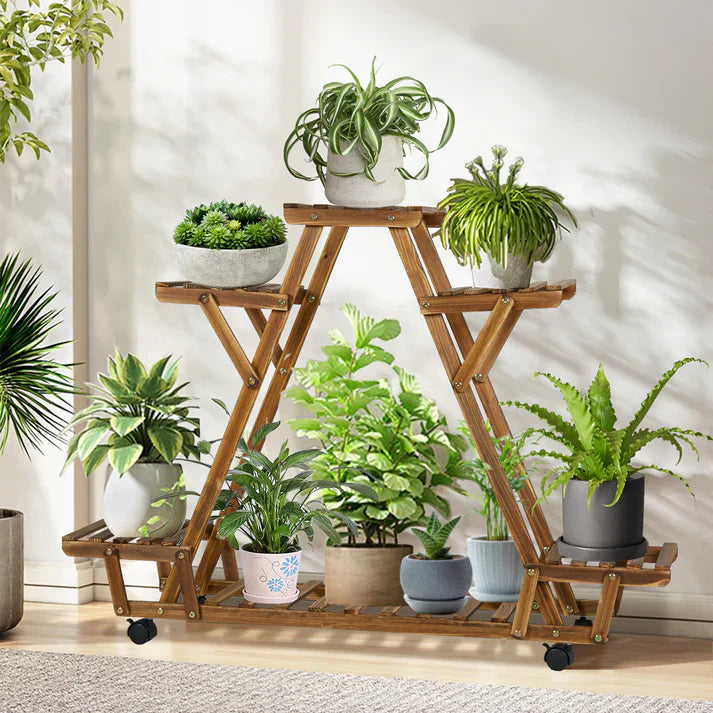
If you only own a few plants but want the look of a full indoor garden, a tiered stand is the most efficient way to achieve it. Multi-tier designs - whether three-tier bamboo ladders or five-tier shelving racks - let you display multiple pots at staggered heights from a single footprint.
This is particularly relevant for apartment dwellers in Sydney, Melbourne, and Brisbane who are working with limited floor space but want significant visual impact. A tiered stand in a corner can hold eight to ten pots and take up less room than a single armchair.
Ourbrowse supports for a tidier watering setup includes several multi-tier bamboo and timber options designed specifically with this in mind.
One product worth considering is thesee whether this design keeps pots accessible and visible, which provides a genuinely generous amount of display space in a slim, vertical profile. It works especially well in living rooms or near sliding doors where natural light is available across multiple levels.
Corner Plant Stands
Corner stands are one of the most underused design tools in Australian homes. Corners are notoriously difficult spaces - too narrow for furniture, too awkward for art. A tall corner plant stand fills that space purposefully and pulls the eye upward, making ceilings feel higher in the process.
They suit bedrooms particularly well. A tall, slender corner stand with a trailing plant in a bedroom corner adds calm and texture without taking up any usable floor space. Our blog post on using tall plant stands in bedrooms for a calming touch explores this further if you are thinking about incorporating greenery into a sleep space.
Ourcompare stand layouts for different pot groups brings together some of the most considered designs we stock, from slim bamboo ladders to triangular wooden shelving units. Thereview the finish and footprint for your intended room is a standout here - it fits snugly into corners, holds multiple pots at different heights, and has a natural timber finish that suits almost any interior palette.
Ladder Shelf Plant Stands
The ladder shelf format - a leaning, angled design that widens toward the base - has been popular for a reason. It is inherently stable, visually light, and easy to move. For renters who cannot install shelving or drill into walls, a ladder plant stand offers the same layered display effect without any permanent changes to the property.
Thecheck placement needs before adding it to the room from Metro Elegance is worth noting here for exactly that reason. Its foldable design makes it easy to store or relocate, which suits the kind of flexible living arrangement that many Australians - particularly younger renters in major cities - are navigating.
Metal Plant Stands for Contemporary Homes
For homes with a more industrial or contemporary aesthetic, a metal plant stand introduces structure without warmth. This is not a criticism - sometimes a room needs visual contrast rather than more cosiness, and a sleek black metal stand against a white wall or pale timber floor delivers exactly that.
Metro Elegance stocks a solid range of metal designs, from compact four-tier racks to rolling plant carts with wheels - ideal for anyone who wants to move plants between rooms depending on the season or the light.
Matching Your Plant Stand to Your Interior Style
One thing we often see is people choosing a plant stand they love in isolation, then bringing it home and realising it does not quite fit. A boho rattan pot on a clinical black metal stand. A trailing fern in a terracotta pot on a sleek white marble-look pedestal. These combinations are not wrong, exactly - but they require more confidence to pull off than most people expect.
A simpler approach: look at the furniture you already own and work from there.
- If your home is Hamptons or coastal, look for white or natural-toned timber stands with clean lines.
- If your home is minimalist or Japandi, carbonised bamboo or pale pine stands work well.
- If your home is industrial or contemporary, black metal stands with straight lines suit the palette.
- If your home is eclectic or maximalist, tiered stands with a more ornate profile give you something to work with.
Our blog post on top indoor plant stand ideas for modern Australian interiors goes into this in more depth, with specific styling suggestions for each aesthetic.
Placement Tips That Actually Make a Difference
Getting the right stand is only half the work. Where you put it matters just as much.
Near natural light sources - Living rooms with north-facing windows are ideal for most indoor plants. A tiered stand positioned a metre or two from a large window can support a variety of light-loving varieties at once.
In dead corners - As mentioned, corners are underused. A corner stand transforms wasted space into a genuine feature.
In hallways - A slender single-pot stand in an entryway or hallway sets the tone for the rest of the home. It is one of those small details that guests notice without always being able to say why.
In bathrooms - Low-light and humidity-tolerant plants like pothos, peace lilies, and ferns thrive in bathrooms. A compact wooden stand next to a bathtub adds a spa-like quality that feels intentional without being overdone.

What to Look for Before You Buy
Before adding anything to your cart, it is worth running through a few practical questions:
- Weight capacity - Will it hold the pot and soil combination you have in mind, particularly for larger specimens?
- Weight capacity - Will it hold the pot and soil combination you have in mind, particularly for larger specimens?
- Height - Taller stands read better in rooms with high ceilings; shorter stands work better in compact spaces.
- Stability - Any stand with a narrow base should be checked for tipping risk, especially in homes with children or pets.
- Finish - For indoor use in humid rooms (bathrooms, kitchens), make sure the finish is sealed or moisture-resistant.
Atcompare furnishings around comfort and usable space, we stock plant stands across a wide range of heights, materials, and price points, all with free shipping across Australia.
Final Thoughts
An indoor plant stand is a small investment that genuinely changes how a room feels. It is not about following a trend - plants have been part of Australian homes for generations, and stands simply help you display them better.
The key is choosing a design that works with your space rather than against it. Whether that means a slim bamboo corner stand for a Sydney apartment or a wide nine-tier display rack for a Queensland sunroom, there is a format that suits every home and every collection of plants.
Browse our full range ofplan a layered arrangement without blocking walkways to find the right fit for your space - and if you need help deciding, we are always happy to assist.
Ready to find the perfect plant stand for your home? Get in touch with our team and we will help you choose the right style, size, and material for your interior.
Frequently Asked Questions
What is the best indoor plant stand material for Australian homes?
Bamboo and timber are popular choices because they suit the warm, natural aesthetic common in Australian interiors and hold up reasonably well in humid conditions when properly sealed. Metal stands are a strong option for contemporary or industrial-style homes and are generally low maintenance.
How do I choose the right height for an indoor plant stand?
Consider the ceiling height and the plant itself. A trailing plant on a taller stand creates visual drama and allows the plant to cascade naturally. For rooms with standard ceiling heights, stands between 60cm and 100cm tend to work well without overwhelming the space.
Are tiered plant stands good for small apartments?
Yes - tiered plant stands are particularly well suited to small spaces because they allow multiple plants to be displayed from a single footprint. A five or six-tier stand can hold several pots while taking up less floor space than individual individual stands for each plant.
What plants work best on indoor plant stands in Australia?
Pothos, peace lilies, fiddle leaf figs, monsteras, and rubber plants are all popular choices for indoor stands in Australian homes. The right plant depends on the light conditions in the specific spot where the stand will sit.
Can wooden plant stands be used in bathrooms?
Bamboo and sealed timber stands can generally handle the humidity of a bathroom environment, but it is worth checking the product's finish and care instructions. Unsealed raw timber is more vulnerable to moisture damage over time.
How many plant stands do I need for a living room?
There is no fixed rule, but a common approach is one feature stand (tiered or tall) paired with one or two smaller individual stands at varying heights. The goal is to create visual layering without cluttering the floor space.
Where should I place a corner plant stand for the best effect?
Corners that receive indirect natural light are ideal. A north or east-facing corner in an Australian home typically offers enough ambient light for a range of indoor plants. Avoid corners that are completely dark or directly in front of air conditioning vents, as both extremes can stress plants.