
Key Takeaways
Find compact, tiered and statement options in our Plant Stands for Australian homes.
- Grouping small plants on a tiered stand immediately transforms a scattered collection into a composed display with visual structure and intention.
- Height variation is the single most important principle in small plant display - arrangements that work at multiple levels are more interesting than those spread across a single flat surface.
- Consistency in pot material or colour creates visual cohesion across a mixed plant collection without requiring every plant to look the same.
- Light access needs to be considered for every plant in the arrangement, not just the front-facing ones - regularly rotating the stand or individual pots prevents uneven growth.
- Small plants benefit from being near other plants - grouping them creates a localised humidity microclimate that supports plant health, particularly for tropical varieties.
- find ideas for balancing style and daily use stocks a wide range of multi-tier stands suited to small plant collections, with free shipping across Australia.
Most people who love plants reach a point where the collection has quietly outgrown every available surface. The windowsill is full. The coffee table has three pots on it. There is a succulent on the bathroom vanity, two on the kitchen bench, and something trailing off the bookshelf. Individually, each plant looks fine. As a whole, the arrangement looks like an accumulation rather than a collection.
The difference between a scattered group of plants and a styled display is not the number of plants, the rarity of the varieties, or the quality of the pots. It is structure. A display that works has visual hierarchy - different heights, a sense of where the eye should travel, a framing that makes the collection read as intentional. A scattered arrangement lacks all of that, regardless of how good the individual plants are.
Plant stands - particularly multi-tier designs - are the most direct solution to this problem. They introduce the vertical dimension that flat surface arrangements lack, consolidate the collection into a defined space, and give the display the compositional quality that makes it feel like a considered design decision rather than a habit of placing things where there is room.
This guide covers the practical principles behind displaying small plant collections well, from the basic logic of height and grouping through to specific stand choices and arrangement techniques that work in real Australian homes.
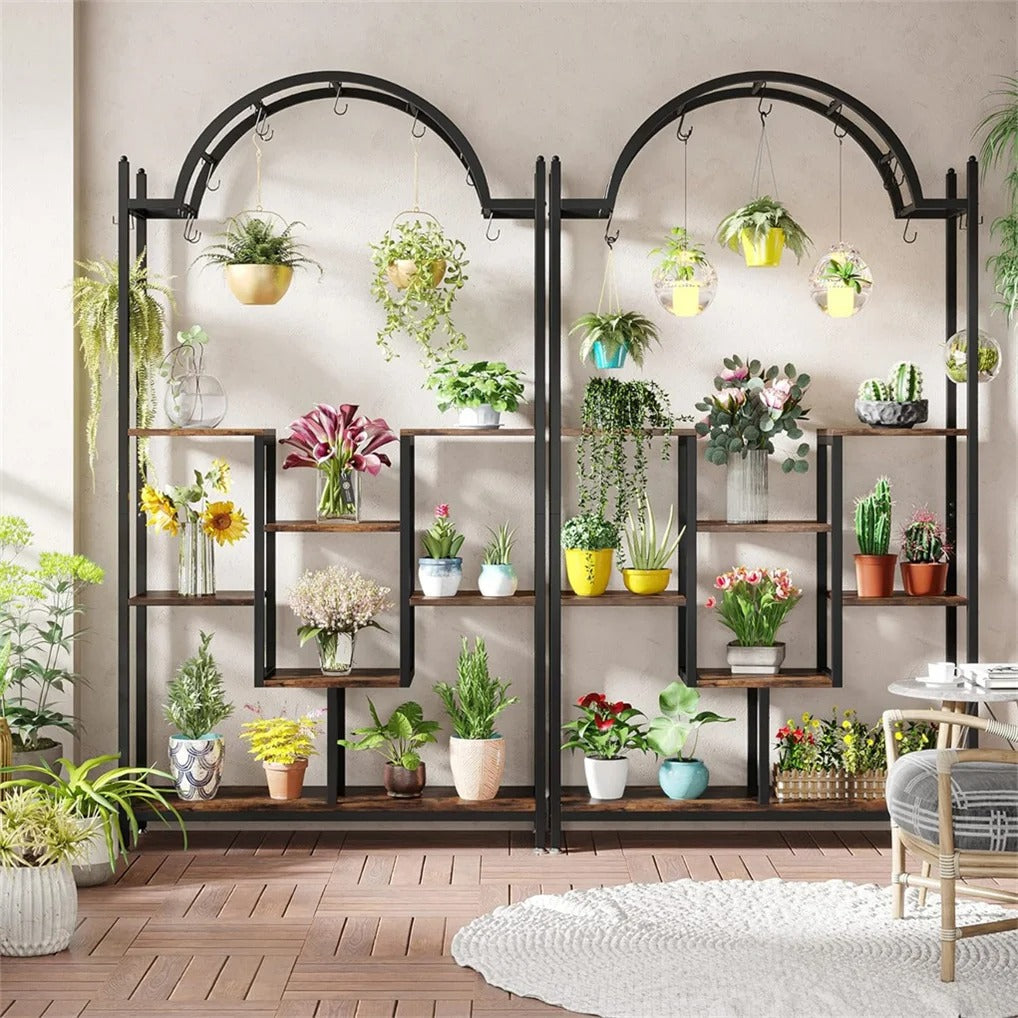
Why Small Plants Are Harder to Display Than Large Ones
It might seem counterintuitive, but small plants are actually more challenging to display compellingly than large statement plants. A single mature fiddle leaf fig has enough visual presence to be placed almost anywhere and make an impact. A collection of small succulents, herbs, pothos cuttings, and compact ferns requires more compositional thought to read as anything other than clutter.
The core challenge is scale. Small plants do not individually command attention in a room. They need to work collectively - as a group, as a curated display - to have the visual weight that makes them register as a design element rather than background noise.
This is exactly where the right stand makes a decisive difference. A tiered stand takes the same collection of small plants that was scattered across various surfaces and concentrates them into a single, vertically composed arrangement. The stand provides the structure; the plants provide the texture, colour, and life. Together they create something that is more visually significant than any individual plant could be alone.
The other challenge with small plants is that they are often positioned where there is available space rather than where the display makes most sense. The back of a windowsill, the corner of a shelf, the edge of a side table - these are positions of convenience rather than positions of intention. A dedicated stand, placed deliberately in the right location, removes this constraint entirely and allows the collection to be treated as a feature rather than an afterthought.
The Foundational Principle: Height Variation Creates Visual Interest
If there is one principle that separates displays that work from those that do not, it is height variation. An arrangement of plants all at the same height looks static. An arrangement that moves through different heights - low, medium, and tall within the same composition - draws the eye upward and through the display in a way that feels dynamic and considered.
On a tiered stand, this variation is built into the structure. Each tier is at a different height, and the plants on it are naturally separated from those above and below. The display automatically has the vertical movement that makes it interesting to look at.
What you can add on top of that structural variation is additional height variation within individual tiers. Pairing a low, rosette-forming succulent beside a taller upright cacti on the same shelf level adds movement within a single tier. A trailing pothos cascading over the edge of a shelf adds a downward element that softens the horizontal geometry of the platform.
The arrangement principle that works most consistently is to think in three zones: something at the base that anchors the arrangement visually, something at mid-height that provides the main body of the display, and something at the top that draws the eye upward. This does not need to be rigidly maintained across every arrangement, but it provides a useful starting framework when you are working with a new collection or a new stand.
Grouping Principles That Make Collections Look Composed
Beyond height variation, a few specific grouping principles determine whether a plant display reads as composed or as random.
Odd numbers tend to work better than even. A group of three or five plants on a single tier reads more naturally than four arranged in a line. This is a principle that holds across most visual arts - odd number groupings have an inherent asymmetry that feels more organic and considered than even symmetrical arrangements.
Varying textures within each group adds richness. Placing a fine-textured, feathery plant beside a broad-leafed variety, or a smooth succulent beside a textured cacti, creates visual contrast that makes each plant more noticeable than it would be surrounded by similar textures. The contrast lets each variety read clearly as a distinct plant rather than blending into the overall green mass.
Leading with the most interesting plant. In any group arrangement, one plant should function as the focal point - the most interesting form, the most unusual colour, or the most recently acquired specimen that you want to draw attention to. Position it slightly forward or at the most visible point of its tier, and arrange the supporting plants around it rather than competing with it.
Consistent pot colour or material across the stand. Mixing four different pot materials across eight plants - terracotta, plastic, ceramic, and concrete all represented - creates visual noise that competes with the plants. Choosing one pot material throughout, or at minimum limiting the variation to two complementary materials, lets the plants be the visual subject rather than the containers.
Stand Formats That Work Best for Small Plant Collections
Multi-tier bamboo and timber stands in the three to five tier range are the most versatile format for small plant collections. They provide enough tiers to create genuine visual hierarchy, suit a wide range of interior styles, and are available at price points that make them accessible for most budgets. For the majority of small plant displays in Australian homes, a three or five-tier bamboo or timber stand is the starting point worth considering first.
Ladder stands are a strong choice when the collection is not too deep - ladder shelves are typically narrower front-to-back than box-format shelves, which means they suit small, compact pots rather than anything with a wider base. The graduated height of a ladder stand creates a natural visual slope that works particularly well for trailing plants whose foliage can cascade over the edge of each rung.
Corner stands are the most space-efficient format for compact apartments and small rooms. A triangular corner stand in bamboo or timber turns a dead corner into a concentrated display area and uses the geometry of the corner as a natural frame for the arrangement. For collections that have outgrown available flat surfaces, a corner stand provides significant new display capacity without taking up meaningful floor space in the open room.
Step-style stands with wide, flat platforms suit collectors who want a more gallery-like arrangement where each pot is clearly separated and individually visible. The step format provides height variation while keeping each plant distinctly presented rather than grouped closely together.
Specific Recommendations from Metro Elegance for Small Plant Displays
When we look at our range at Metro Elegance with small multi-plant displays specifically in mind, a few options stand out for their format, tier count, and suitability for compact collections.
The 2 Pack Bamboo 2-Tiers Cute Plants Stand Holder is a practical and flexible option for smaller collections or for those who want to start with a compact display and build gradually. Having two matching stands allows them to be paired together for a coordinated look, or positioned in different rooms to distribute the collection across multiple spaces with visual consistency.
For a collection that has grown to fill more tiers, the 5 and 6 Tier Plant Stand Rack with Multiple Flower Display Shelving provides the display capacity for a substantial small plant collection in a single vertical structure. Multiple tiers at this count allow a genuinely layered arrangement with variety across every level, which is where small plant displays tend to look most compelling.
For a corner-specific option that makes efficient use of a defined space, thesee how this layout could support a tiered display provides six levels of display capacity in a corner footprint. This is one of the most effective formats for a growing small plant collection in a compact living space, turning a corner that would otherwise hold nothing into a full vertical garden display.
Ourbrowse ways to elevate plants without crowding the room covers the full spectrum of tier counts and formats suited to small plant displays, and our broaderfind a display format for mixed pot heights includes both natural material and metal options depending on the aesthetic your interior calls for.
Colour and Texture Composition Within the Display
Beyond the structural principles of height and grouping, the visual composition of the plant display benefits from thinking about colour and texture as deliberate decisions rather than whatever arrives in the next pot.
Green variation is underestimated. Most people think of their plant collection as "green" without registering how different the greens actually are - the dark, glossy green of a rubber tree cutting, the pale blue-green of an echeveria, the bright lime green of a pothos, the deep burgundy-green of a prayer plant. Building a small plant display that highlights this range of greens, rather than mixing them randomly, creates a colour composition within the arrangement that rewards closer inspection.
Accent plants in different tones - burgundy, silver, variegated white and green, or deep purple - can be used as compositional anchors on specific tiers. One or two plants in a distinctly different tone create focal points within the arrangement that draw attention to specific tiers and add visual complexity without requiring unusual varieties.
Trailing plants used directionally are one of the most effective compositional tools in small plant displays. A trailing string of pearls or a cascading pothos positioned on an upper or mid tier, with the trail directed toward a specific lower section of the arrangement, creates a visual connection between tiers that makes the display read as a composed whole rather than a stack of independent shelves.
Our post on how to mix and match plant stands to create a layered, lush indoor display covers the layering principle in more depth, and our post on how to style plant stands for a fresh indoor look is worth reading alongside this guide for its broader styling guidance on plant and stand combinations.
Practical Management of a Multi-Plant Stand Display
Maintaining a multi-plant display on a tiered stand is slightly more involved than caring for individual plants on separate surfaces, but a few simple habits keep it manageable.
Stagger watering by plant needs rather than by convenience. Different plants on the same stand will have different watering requirements. Resist the temptation to water everything on the stand at the same time - overwatering succulents while trying to keep moisture-loving ferns happy creates a situation where neither plant is correctly cared for.
Rotate the stand and individual pots periodically. Plants on the side of the stand furthest from the primary light source will receive less light than those closest to it. Rotating the entire stand by a quarter turn every few weeks, or individually rotating pots within their tier, evens out the light exposure across the collection and prevents the directional growth that makes arrangements look unbalanced over time.
Check drainage across all tiers after watering. When watering plants on upper tiers, overflow can reach lower tier saucers before those pots are watered. After watering the full stand, check each saucer and empty any that have accumulated standing water.
Our post on why stand placement and elevation support better drainage and plant air circulation explains the plant health logic behind these habits in more detail.

Creating Your Display with Metro Elegance
At Metro Elegance, our plant stand range is built with real plant collections in mind - not just for product photography. We stock multi-tier options across bamboo, timber, and metal in formats suited to everything from compact apartment collections to extensive indoor plant displays, with free shipping across Australia on every order.
If you have a collection you want to display more effectively and are not sure which stand format suits the number of plants, the room size, or your interior style, we are happy to help. Get in touch through our contact page and we will give you a practical recommendation based on your specific situation.
Frequently Asked Questions
How do I display a large collection of small plants without it looking messy?
The key is structure rather than reduction. A tiered stand consolidates the collection into a vertical arrangement with visual hierarchy, turning what looks like clutter on flat surfaces into a composed display. Consistent pot materials, height variation across tiers, and deliberate grouping by texture or colour all contribute to a display that looks intentional rather than accumulated.
What is the best plant stand for displaying multiple small plants?
Multi-tier bamboo or timber stands in the three to five tier range are the most practical format for small plant collections in Australian homes. They provide enough levels for visual hierarchy, suit a wide range of interior styles, and accommodate the small to medium pot sizes that most small plant varieties are grown in. Corner formats are particularly space-efficient for compact rooms.
How many plants can I put on a tiered plant stand?
This depends on the stand's tier count, shelf depth, and the size of the pots. A three-tier stand can typically hold six to nine small pots comfortably - two to three per tier with appropriate spacing. A five-tier stand can accommodate ten to fifteen pots. Avoid overloading any single tier or allowing pots to overhang the platform edge, particularly on stands with weight limits for each shelf level.
How do I create visual interest in a small plant display?
Vary heights within and across tiers, mix foliage textures, incorporate at least one trailing plant that cascades between levels, and use a consistent pot colour or material to tie the collection together visually. Position your most interesting or unusual plant at the most visible point of the arrangement and build the surrounding plants as supporting elements rather than competing focal points.
Can I mix different types of plants on the same stand?
Yes, and this is often what makes a display interesting. The practical consideration is grouping plants with similar watering and light requirements on the same tiers where possible, so care routines can be managed efficiently. Mixing succulents with moisture-loving ferns on the same stand is workable as long as each pot is watered individually according to its specific needs.
How do I choose between a corner stand and a straight tiered stand for small plants?
A corner stand is more space-efficient and suits rooms where floor space is limited. It uses the geometry of the corner as a natural frame for the display. A straight tiered stand is more visible from multiple angles and works well as a room feature in an open space. The choice depends primarily on where in the room the display will be positioned and how much floor area is available.
How do I keep plants at the back of a tiered stand from getting too little light?
Rotate the entire stand periodically - a quarter turn every few weeks works well for most indoor positions. For stands where rotation is impractical, rotate individual pots within their tier. Position the light-neediest plants on the tiers and sides of the stand closest to the primary light source, and use more shade-tolerant varieties in the positions that receive less direct light.