
Key Takeaways
Explore the complete plant stand range to compare dimensions, materials and placement.
- Tall plant stands add vertical interest to living rooms, drawing the eye upward and making spaces feel larger and more considered.
- Height matters more than most people realise - a stand that is too short for the room or the plant can look awkward rather than intentional.
- Bamboo, timber, and metal are the three most practical material choices for tall indoor stands in Australian living rooms.
- Corner placement is one of the most effective uses of a tall plant stand, turning an otherwise underused space into a genuine design feature.
- Metro Elegance stocks a curated range of tall plant stands suited to modern Australian interiors, with free shipping Australia-wide.
Most living rooms have a height problem - not too little of it, but too little use of it. Sofas, coffee tables, side tables, and consoles all operate at roughly the same visual plane. The lower half of the room gets all the attention, while the upper half sits largely empty. The result is a space that feels finished but flat.
A tall plant stand is one of the simplest ways to address this. It introduces a vertical element that draws the eye upward, adds life and texture at a height where most decorating decisions stop, and does all of this without requiring any structural changes or significant investment. For Australian homes - where indoor-outdoor living and greenery are genuinely part of the culture - it is a natural fit.
The question is not really whether a tall plant stand belongs in your living room. It is which one, where, and why.
What Makes a Plant Stand "Tall" and Why It Matters
There is no universal definition, but tall plant stands are generally considered to be those measuring 80cm or more in overall height. At that height, the plant they support begins to register at or above seated eye level, which is where the visual impact becomes significant.
Below that threshold, a plant stand tends to read as a functional accessory - somewhere to put a pot. Above it, the stand and plant together become a design element in their own right. They occupy the middle zone of a room between furniture height and ceiling height, a zone that most decorating choices leave entirely empty.
This is also the zone where statement plants - fiddle leaf figs, tall monsteras, bird of paradise plants, and large dracaenas - naturally want to live. These plants grow upward. A short stand undersells them. A tall stand gives them context and makes their height feel intentional rather than accidental.

Choosing the Right Height for Your Living Room
The right height for a tall plant stand depends on three things: the ceiling height of the room, the size and growth habit of the plant, and the surrounding furniture.
For rooms with standard ceiling heights (around 2.4 metres, which is common in many Australian homes), a stand between 90cm and 120cm works well for most tall indoor plants. This brings the top of the plant to somewhere between 1.5 and 2 metres, which fills the vertical space without competing with the ceiling.
For rooms with higher ceilings - raked ceilings in architectural homes, double-height living areas in newer builds - taller stands or multi-tier designs allow the plant display to scale appropriately with the space. A 90cm stand in a room with 3.5-metre ceilings will look undersized and lost.
It also helps to consider the surrounding furniture. A tall stand placed next to a low-slung sofa creates maximum contrast and visual impact. The same stand next to a tall bookcase or floor lamp may disappear into the surrounding clutter.
Our post on what to consider when choosing a tall plant stand covers these sizing decisions in a practical checklist format that is worth reviewing before you buy.
The Best Materials for Tall Living Room Plant Stands
Bamboo and Timber
Bamboo remains one of the most popular materials for tall indoor plant stands in Australian living rooms, and its appeal is not hard to understand. It is lightweight despite its strength, visually warm, and naturally suited to the relaxed aesthetic that characterises most Australian interiors. A tall bamboo corner stand fits as comfortably in a Hamptons-style living room as it does in a coastal or Japandi-influenced space.
Timber stands - particularly those made from pine or carbonised wood - offer similar warmth with a slightly heavier, more grounded quality. They suit living rooms with timber flooring, natural fibre rugs, and earthy tones particularly well.
One thing worth knowing about tall bamboo and timber stands is that their stability can vary significantly by design. A wide-legged base or a triangular footprint will generally be more stable than a narrow cylindrical pedestal, which matters more the taller the stand gets.
Metal
Powder-coated metal is the go-to material for tall plant stands in contemporary and industrial-influenced living rooms. A tall black metal stand with clean lines suits polished concrete floors, white walls, and modern furniture with an ease that timber sometimes cannot match.
Metal stands also tend to be more stable at height than some timber designs, simply because the material allows for wider, heavier bases without adding bulk to the visual profile of the stand. For anyone nervous about a tall stand tipping, a metal option with a generous base is worth prioritising.
Mixed Materials
Some of the most visually interesting tall plant stands combine materials - a timber shelf on a metal frame, for instance, or a bamboo rack with metal cross-bracing. These hybrid designs tend to suit eclectic or transitional living rooms where a single material would feel either too industrial or too organic on its own.
The Best Tall Plant Stand Styles for Living Rooms
Tall Corner Stands
Corner stands are the natural starting point for anyone looking to introduce a tall plant display into a living room. Corners are often the most underused areas in any room - too narrow for furniture, too awkward for art - and a tall corner stand transforms that dead space into a genuine feature.
A triangular or L-shaped corner stand with multiple tiers allows you to display several plants at staggered heights from a single floor position. The visual effect is closer to a curated indoor garden than a functional pot holder, and the corner placement means it does not interrupt the main flow of the room.
Metro Elegance's range ofchoose a stand layout for your available floor space includes several designs suited to living room corner placement. Thesee if this option fits your watering and display routine is particularly well suited to this use - its triangular footprint fits neatly into a corner, and the stepped tiers allow for the kind of layered plant display that looks deliberately styled rather than improvised.
Tall Ladder Shelf Stands
Ladder shelf stands - the leaning, angled designs that widen toward the base - are one of the most versatile formats for tall plant display in living rooms. They lean against a wall rather than standing free, which makes them naturally stable at height, and their open design keeps the visual weight light even when fully loaded with pots.
They are particularly practical for renters who want the look of built-in shelving without the permanence. A tall bamboo ladder stand against a living room wall creates a similar effect to a wall-mounted plant shelf at a fraction of the cost and with zero installation required.
Thereview this layout for easier day-to-day plant care from Metro Elegance adds an extra layer of practicality with its fold-flat design, which makes it easy to store or move if your layout changes.
Single-Pot Pedestal Stands
Not every living room wants a large tiered display. Sometimes the right approach is a single tall pedestal stand holding one carefully chosen plant - a mature fiddle leaf fig, a large monstera, or a sculptural cactus - positioned as a deliberate focal point rather than part of a collection.
A pedestal stand at 100cm or taller, with a clean minimalist profile, lets the plant itself be the statement. This approach suits living rooms that are already well furnished and do not need more visual complexity - just one strong vertical element to complete the composition.
Multi-Tier Tall Racks
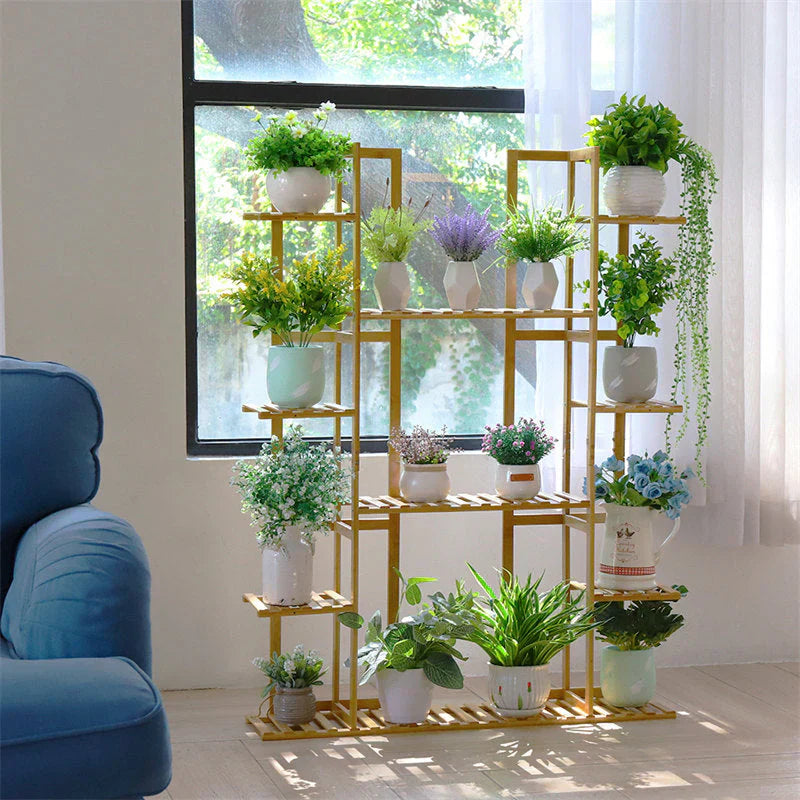
For living rooms where you want to display a significant plant collection without spreading pots across multiple surfaces, a tall multi-tier rack is the most efficient solution. A nine or eleven-tier stand can hold a dozen or more pots in a single floor position, creating a plant wall effect that works especially well in larger living rooms or open-plan spaces.
Thecheck the current details against your pot sizes available at Metro Elegance is a strong option for this kind of display. Its extra-wide design accommodates a greater variety of pot sizes than most standard racks, and the carbonised wood finish has a naturally warm, contemporary quality that suits modern Australian living rooms well.
Placement Tips That Make a Real Difference
Where you place a tall plant stand in a living room will determine how effective it is. A few principles worth keeping in mind:
Use tall stands to anchor room transitions. In open-plan living and dining spaces - common in contemporary Australian homes - a tall plant stand can visually anchor the transition between zones without the need for a physical partition. Positioned between the sofa area and the dining table, it creates a sense of separation while keeping the space open.
Balance tall stands with lower furniture nearby. A tall stand next to a low coffee table or a low-slung armchair creates dynamic contrast that makes both pieces feel more intentional. Tall next to tall tends to compete; tall next to low tends to complement.
Consider the light source. Most popular tall indoor plants are moderate to high light plants. Positioning a tall stand within a few metres of a north or east-facing window gives the plant the best conditions for healthy growth without requiring you to move it constantly.
Leave breathing room around the stand. A tall plant stand pushed into a tight corner with furniture pressing in on both sides will look cramped and be difficult to water and maintain. Even 30 to 40 centimetres of clear space on at least one side makes the display feel more considered.
For more advice on arranging plant stands effectively in a living room, our post on creating a layered indoor look with multiple plant stands has practical styling guidance that applies to both large and small spaces.
Matching a Tall Stand to Your Living Room Style
The material and finish of a tall plant stand should work with the existing palette of the room rather than against it. A rough-hewn timber stand in a room of clean white lines will create friction. A sleek black metal stand in a warm, earthy living room will feel cold.
A few general pairings that tend to work well in Australian living rooms:
- Coastal or Hamptons interiors suit natural bamboo or pale timber stands with an unfussy profile.
- Minimalist or Scandi rooms suit tall stands in light timber or powder-coated white metal with clean, straight lines.
- Japandi or wabi-sabi spaces suit carbonised or darkened timber with an organic, handcrafted quality.
- Contemporary or industrial rooms suit black powder-coated metal with a geometric or architectural profile.
- Eclectic or maximalist rooms suit more ornate designs - arched frames, mixed materials, or curved profiles that add to the layered quality of the space.
Our post on styling indoor plant stands for a fresh, considered look covers these styling decisions in more depth if you are working through a specific interior style.
Shop Tall Plant Stands at Metro Elegance
Atbrowse décor solutions for everyday living, we have curated a range of tall plant stands designed to suit the full spectrum of modern Australian living rooms - from compact apartment spaces to larger open-plan homes. Every order ships free across Australia, and our team is on hand to help you choose the right style, height, and material for your specific space.
Whether you are starting with a single statement stand or building out a full indoor plant display, we have designs that fit both the intention and the budget.
Ready to find the right tall plant stand for your living room? Get in touch with the Metro Elegance team and we will help you choose with confidence.
Frequently Asked Questions
How tall should a plant stand be for a living room?
For most Australian living rooms with standard 2.4-metre ceilings, a stand between 90cm and 120cm works well. This brings the plant into the upper visual zone of the room without competing with the ceiling. Rooms with higher ceilings can accommodate taller stands or multi-tier designs proportionally.
What is the best tall plant stand for a corner in a living room?
Triangular or L-shaped corner stands are designed specifically for corner placement and make the most efficient use of that space. A six-tier triangular timber stand is a popular format that fits neatly into a corner while displaying multiple plants at staggered heights.
Are tall plant stands stable enough for large plants?
Stability depends on the base design and material more than height alone. Stands with wider bases, lower centres of gravity, and heavier frames tend to be more stable with larger pots. Always check the stated weight rating of any stand before placing heavy ceramic or terracotta pots on it.
What plants suit a tall indoor plant stand in a living room?
Fiddle leaf figs, monsteras, bird of paradise plants, dracaenas, and large rubber plants are all popular choices for tall indoor stands in Australian living rooms. The right plant depends on the light conditions at your specific stand location.
Can I use a tall bamboo plant stand indoors long-term?
Yes - bamboo is well suited to indoor use and holds up reliably in standard indoor conditions. It is not recommended for areas with standing water or extreme humidity, but in a living room environment it is a durable and practical choice.
How do I style a tall plant stand so it looks intentional rather than random?
Positioning helps significantly. Place a tall stand to anchor a corner, define a zone in an open-plan space, or balance a low furniture grouping on one side of the room. Choosing a stand material that matches your existing furniture palette also helps the piece feel like part of the design rather than an afterthought.
Do tall plant stands come with weight limits?
Most well-made stands include a stated weight capacity in the product specifications. This is worth checking before purchase, particularly if you plan to use large, heavy pots. Wet soil adds significant weight, so factor in the watered weight of your pot, not just the dry weight.