
Key Takeaways
Compare materials, heights and layouts in our Plant Stands collection.
- Indoor trees are among the most structurally demanding plants to stand correctly - weight, pot diameter, and total height all need to be matched carefully to the stand.
- Solid timber and welded metal construction are the most appropriate materials for indoor tree stands due to their load-bearing capacity and long-term stability.
- Stand height for indoor trees should be lower than for smaller plants - a tree already at 100-150cm needs elevation in the 20-50cm range to stay proportionate with the room.
- Base stability is the most critical stand characteristic for heavy indoor trees - a wide, well-grounded base prevents tipping under the significant weight of a large, fully watered specimen.
- Placement strategy matters as much as stand choice - corners with natural light access are the most effective position for most indoor tree species.
- plan the next step in your room update carries plant stands in solid timber and metal construction suited to heavy indoor trees, with free shipping across Australia.
Indoor trees occupy a different category from other houseplants. A fiddle leaf fig at 150cm, a bird of paradise with a broad canopy, a mature rubber tree, or a tall olive tree grown indoors - these are plants that genuinely change the feel of a room. They introduce a scale of living material that smaller plants cannot match, and they bring a kind of architectural quality to an interior that most furniture cannot replicate.
What makes them worth writing about specifically in the context of plant stands is that they are also the plants most likely to be displayed poorly. Too often, a beautiful mature tree is sitting directly on the floor in its nursery pot, or perched on a stand that was clearly not chosen with its weight or scale in mind. The result is an arrangement that looks unfinished - the plant is impressive, but the way it is presented suggests it was placed rather than positioned.
A stand chosen correctly for an indoor tree changes that. It provides a defined base for the arrangement, elevates the pot off the floor to improve drainage and air circulation, and creates the visual separation between the plant and its surface that makes the whole display read as deliberate.
This guide is for anyone who has invested in an indoor tree - or is planning to - and wants to make sure the stand they choose matches the scale, weight, and visual character of what they are growing.
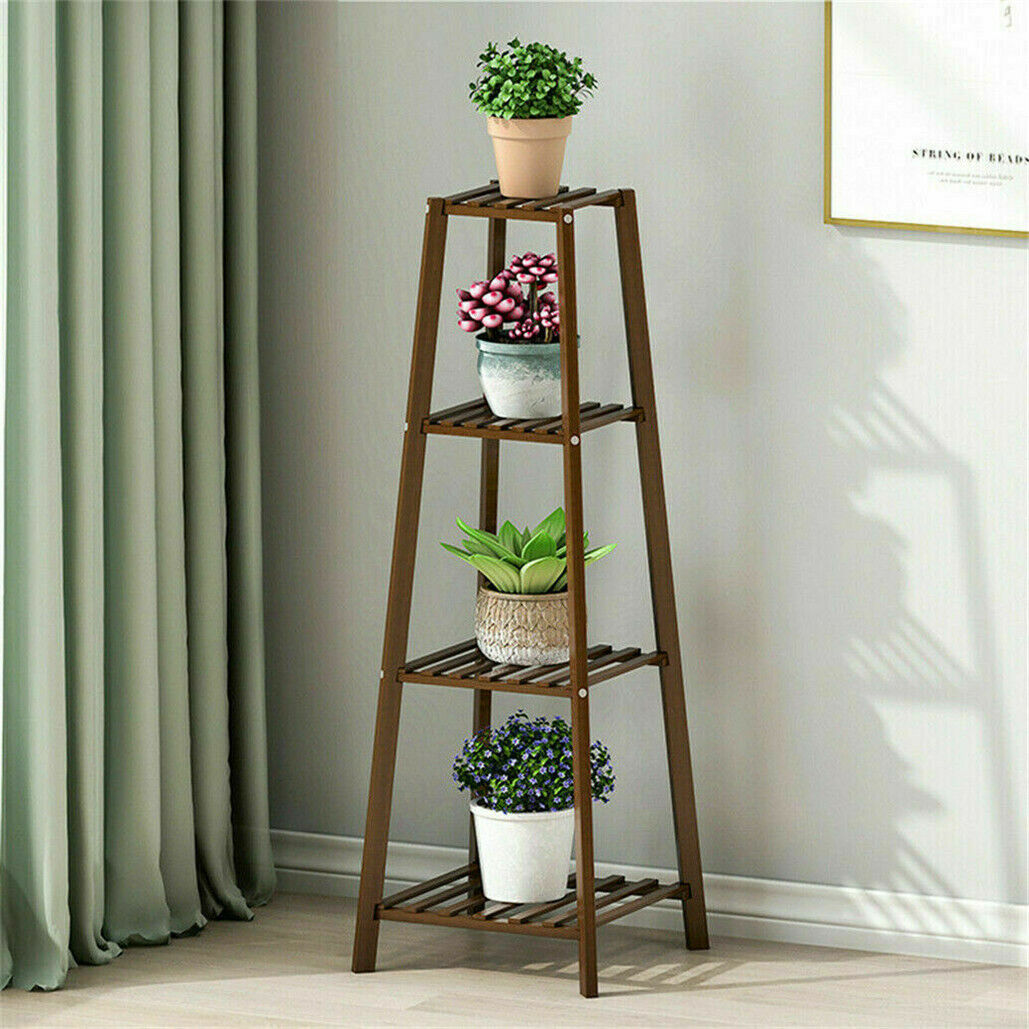
Why Indoor Trees Present Unique Challenges for Stand Selection
Most plant stand guidance is written with small to medium pots in mind. Indoor trees sit outside the normal range in almost every relevant dimension.
Weight is the first and most significant challenge. A mature fiddle leaf fig in a 30-35cm ceramic pot, fully watered, can weigh 15-25kg depending on pot material, soil volume, and plant size. A large bird of paradise in a heavy terracotta container can be heavier still. A stand supporting this kind of load needs to be built for it - not adapted to it from a design intended for lighter applications.
Pot diameter is the second consideration. Indoor trees are typically grown in pots of 25-40cm in base diameter, which requires stand platforms of matching or greater width. As described in our guide to matching plant stand platforms to your pot dimensions, the platform must fully support the base of the pot without overhang - and at 25-40cm base diameters, this eliminates a large proportion of the stands available on the market.
Total height management is the third. An indoor tree that is already at 130cm does not need a 90cm stand - the combination would push the canopy toward the ceiling in most Australian homes and create a cramped, unbalanced impression. Stand height for indoor trees needs to be modest - often 20-50cm - providing elevation without compounding the plant's existing height beyond what the room can accommodate.
Centre of gravity is the fourth. A tall, heavy plant on an elevated stand raises the combined centre of gravity of the entire arrangement. The taller and heavier the plant, the wider and more grounded the stand base needs to be to maintain stability. A narrow-footed stand under a heavy indoor tree is a tipping risk that becomes more acute over time as the plant grows and the pot becomes heavier.
What Stand Construction Actually Handles Indoor Tree Weight
The material and construction method of a stand determines whether it can safely and reliably hold an indoor tree. Two categories stand out as genuinely appropriate for this application.
Solid timber construction - particularly stands built from solid pine, hardwood, or thick multi-layer bamboo - provides the load-bearing reliability that heavy indoor trees require. The key is that the timber is solid throughout rather than MDF, particleboard, or thin veneered board. Solid timber does not compress or flex under load in the way that engineered wood products do, and it maintains its structural integrity over the years of daily use that a permanent indoor tree arrangement involves.
Shelf platform thickness matters as much as the overall frame. A solid timber stand with a thin, lightly supported platform shelf will bow under a heavy pot even if the legs and frame are substantial. Look for stands where the platform is solid and well-supported from below, not simply resting on the frame edges.
Welded metal construction - powder-coated steel or wrought iron frames - offers excellent load-bearing performance for indoor trees. A properly welded metal frame does not flex under load, handles heavy pots with structural confidence, and maintains its geometric stability over time without the moisture sensitivity that timber can show in consistently humid conditions. For very heavy indoor trees, welded metal is often the more reliable choice.
What to avoid for indoor tree applications: thin-gauge wire frames regardless of how they are finished, lightweight decorative bamboo stands with basic pin or cord joinery, MDF platform stands in any format, and any stand where the platform dimensions are smaller than the pot base diameter.
The Right Stand Height for Common Indoor Tree Species
Different indoor tree species grow to different mature heights, which means the right stand height varies by species. A few common examples illustrate the proportional thinking that applies.
Fiddle leaf fig at mature indoor height of 100-180cm: a stand of 25-45cm provides meaningful elevation and improves drainage access while keeping the canopy well within ceiling clearance in most Australian homes. Taller stands push the top growth too close to the ceiling and make the arrangement feel precarious.
Bird of paradise at mature indoor height of 100-150cm with a wide, spreading canopy: a stand of 20-40cm suits the visual character of this plant, which derives its presence from canopy width rather than height. Elevating it too high on a tall stand makes the broad lower leaves difficult to appreciate and creates an unstable visual weight distribution.
Rubber tree at indoor heights typically ranging from 80-150cm depending on variety and pruning: a stand of 30-50cm works well for most rubber tree specimens, providing the visual lift that distinguishes a displayed plant from one simply placed on the floor, without reaching for ceiling height.
Indoor olive at typically 80-120cm in container cultivation: a stand of 30-50cm suits most indoor olive arrangements, providing the low pedestal quality that suits the Mediterranean character of the plant without making it unnecessarily top-heavy.
Weeping fig at heights ranging from 100-200cm in indoor cultivation: lower stands of 20-35cm are appropriate for taller specimens, while more compact weeping figs of around 80-100cm can sit effectively on stands up to 50cm.
In all of these cases, the ceiling height of the specific room is the upper limit that governs the decision. In rooms with taller-than-standard ceilings - architectural homes, open-plan living areas - more stand height is available without creating ceiling pressure. In rooms with standard 2.4m Australian ceilings and a tree already at 130cm, the stand height ceiling is very low.
Placement Strategy: Where Indoor Trees Work Best on Their Stands
Getting the placement right is the final step that makes the stand and tree combination function as a genuine design feature rather than just a plant in a room.
Corners with natural light access are the most consistently effective position for indoor trees on stands. The corner provides three-dimensional visual framing, shelters the arrangement from foot traffic, and - if the corner is near a window on one or both of the adjacent walls - provides the natural light that most indoor tree species need to maintain their form and foliar density. A bird of paradise in a corner beside a north-facing window, elevated on a low solid timber stand, is one of the strongest single design elements an Australian living room can contain.
Against a plain wall works well for trees with strong silhouettes - fiddle leaf figs with their distinctive shaped leaves, or rubber trees with their dark, glossy foliage. The wall provides a simple backdrop that allows the tree's silhouette to read clearly without visual competition.
As a room divider in open-plan layouts is a less common but very effective use for large indoor trees on stands. A substantial tree on a low, stable stand positioned at the boundary between a kitchen and a living area creates a natural visual separation without a physical barrier, and the stand's defined base helps the arrangement feel intentionally positioned rather than simply placed in the way.
Away from direct air conditioning vents is a practical consideration for all indoor trees but particularly for large specimens in heavy pots that are difficult to move once positioned. Cold, dry air from air conditioning is damaging to most indoor tree species. Checking the placement of ceiling or wall vents before committing a heavy tree and stand to a position avoids a problem that is difficult to fix once the arrangement is in place.
Our post on how to use tall plant stands to create the right visual balance in living rooms and bedrooms covers placement and proportion thinking in more detail across different room contexts.
Specific Stand Options from Metro Elegance for Indoor Trees
When we look at the Metro Elegance range with indoor trees specifically in mind, a few designs stand out for their structural suitability and platform dimensions.
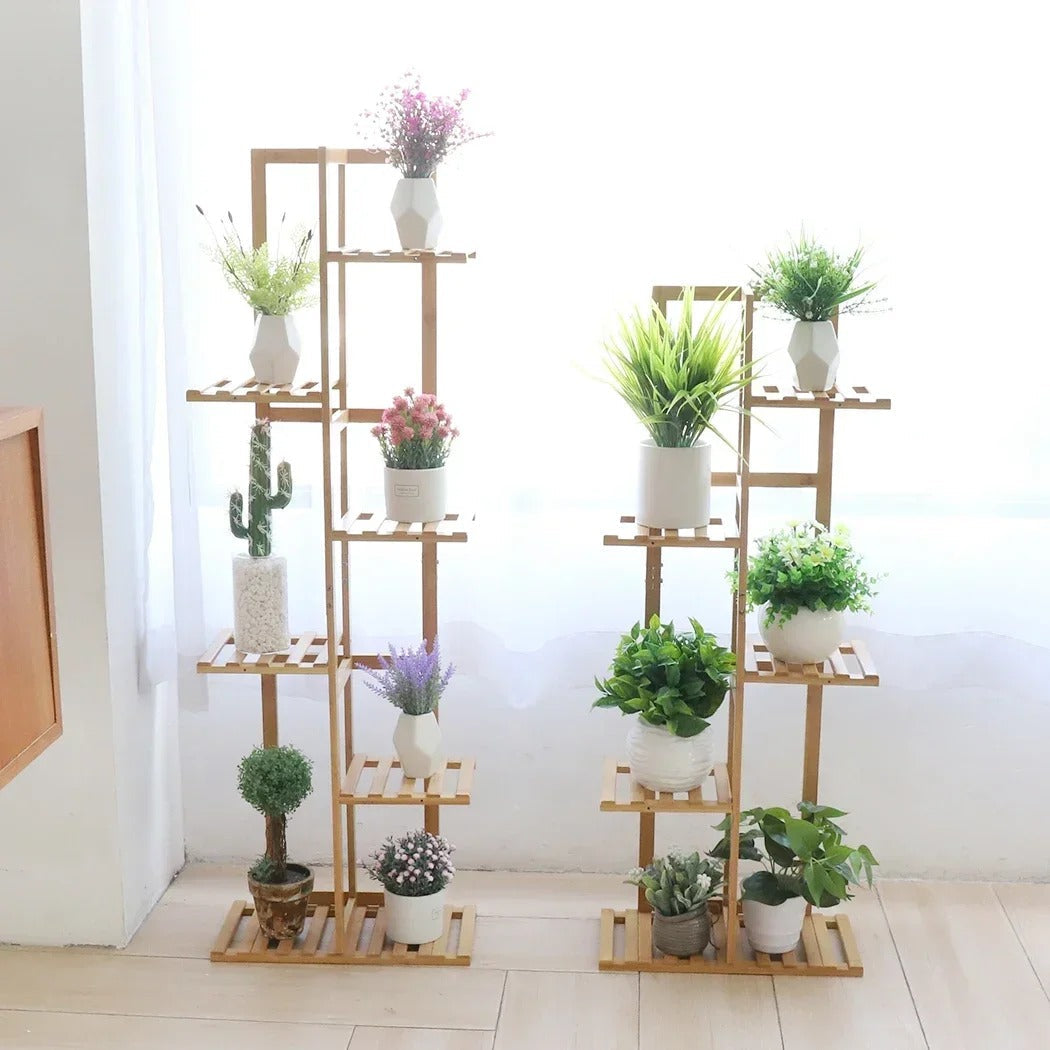
Thecompare this option with the dimensions of your plant area is a solid timber construction with a wide platform format suited to large pots in the 25-35cm base diameter range. The multi-pot design allows the tree to anchor a broader arrangement that includes smaller companion plants, which is one of the most effective ways to style a large indoor tree display without it looking isolated.
For a single statement tree requiring a low, wide, very stable platform, thecheck the shelf layout for the pots you want to display provides a grounded timber base in a simple, proportionate format. The clean construction keeps the focus on the plant rather than the stand, which is the right aesthetic approach for a tree whose presence needs no assistance in filling a room.
For the heaviest indoor tree specimens where maximum load-bearing confidence is the priority, thecheck the current details against your pot sizes offers welded metal construction with the structural integrity to handle significant weight at the lower levels. Using the lower tiers for the tree itself and the upper tiers for smaller companion plants creates a tiered indoor garden arrangement anchored by the tree as its visual centrepiece.
Ourcompare supports for a layered plant display includes options with the elevation range suited to different indoor tree heights, and ourcompare stand layouts for different pot groups covers the full spectrum of platform sizes and construction weights needed for different tree species and pot sizes.
Ongoing Care for an Indoor Tree Stand Arrangement
Once an indoor tree is positioned correctly on a well-chosen stand, the ongoing care routine is straightforward but worth thinking through.
Watering management at the scale of a heavy indoor tree requires more planning than smaller plant care. Watering a large tree in its stand position - rather than moving it to a sink or drain - means having a large, deep saucer under the pot and a method for removing accumulated drainage water before it sits too long under the heavy pot. A turkey baster or small manual pump is a practical tool for removing saucer water without lifting the pot.
Repotting timing affects the stand. As the tree grows and the pot size increases, the stand that matched the original pot may no longer match the new one. Building in a regular check of the pot-to-platform size relationship at repotting time ensures the stand remains appropriately sized as the tree develops.
Surface protection under the stand is important for timber floors and soft flooring. A heavy stand plus a heavy tree creates significant concentrated point load on small contact feet over years of fixed positioning. Quality furniture pads under each stand foot distribute the load and prevent surface marking.
Our post on why elevating plants on a proper stand improves both plant health and room aesthetics covers the practical benefits of stand use in more depth, and our post on how to choose and size a stand for very large indoor plants provides further guidance on the specific sizing decisions that apply to large specimen plants.
Finding the Right Stand for Your Indoor Tree
At Metro Elegance, we take the practical side of plant stand selection seriously. An indoor tree is a significant investment - in the plant itself, in the pot, and in the room it lives in - and a stand that does not match its weight, scale, or visual character undermines all of that investment. Our range includes solid timber and welded metal options with the construction weight and platform dimensions suited to the demands of real indoor tree specimens.
If you have a specific indoor tree in mind - its current height, its pot size, and the room it will live in - and want a recommendation before purchasing, our team is glad to help. Get in touch through our contact page and we will give you a considered, specific recommendation based on your actual situation.
Frequently Asked Questions
What type of plant stand is best for a fiddle leaf fig?
A low to medium height stand - generally 25-45cm - in solid timber or welded metal construction is most appropriate for a fiddle leaf fig. The stand platform should match the base diameter of the pot, typically 25-35cm for a mature specimen. Stability is the priority: a wide base footprint and solid construction are more important than height for this species.
Can a regular plant stand hold a large indoor tree?
Many plant stands are not designed for the weight of a large indoor tree. A fully watered mature indoor tree in a heavy pot can weigh 15-25kg or more. Only stands in solid timber or welded metal construction with a platform sized to the pot base diameter are reliably appropriate. Lightweight decorative stands, thin bamboo, and MDF platforms are not suitable for this application.
How tall should a plant stand be for an indoor tree?
Generally low - between 20cm and 50cm for most indoor tree species in standard Australian ceiling heights of 2.4m. The stand's purpose for an indoor tree is to provide a defined base and drainage clearance rather than significant additional height. The tree itself provides the height, and the stand provides the presentation.
Where should I put an indoor tree on a stand in my living room?
Corners with natural light access are the most effective placement for most indoor tree species. The corner frames the arrangement visually, provides light from adjacent windows, and keeps the tree out of high-traffic areas where the pot and stand could be knocked. Against a plain wall near a window is also effective for trees with strong silhouettes.
What is the best material for a plant stand under a heavy indoor tree?
Solid pine, hardwood, and welded powder-coated steel are the most reliable materials for heavy indoor tree applications. These materials do not flex under significant load, maintain their structural integrity over years of daily use, and provide the load-bearing confidence that a 15-25kg plant and pot combination requires.
How do I stop a plant stand from tipping under a heavy indoor tree?
Choose a stand with a base footprint at least as wide as the platform, ideally wider. Ensure all feet are in full contact with the floor - use furniture pads on uneven surfaces. Position the pot centrally on the platform so the weight is evenly distributed. Avoid stands with narrow, closely spaced feet under heavy loads. For very heavy specimens, lower stands provide a more stable centre of gravity than taller ones.
Do indoor trees need special stands compared to other indoor plants?
Yes, in terms of load capacity and platform dimensions. Indoor trees require stands built for significant weight - typically solid timber or welded metal - and platforms specifically sized to the larger pot base diameters these species are grown in. The height requirements are also different: lower stands are generally more appropriate for indoor trees than the taller stands that work well for smaller plants.