
Most Australians who want more plants in their homes run into the same problem eventually. The windowsill is full. The coffee table is occupied. The sideboard is doing actual sideboard work. And the floor - especially in apartments and smaller homes - is genuinely not available for a collection of individual pots spread across the living room.
Compare materials, heights and layouts in our Plant Stands collection.
The solution is not to give up on the plants. It is to start thinking vertically.
Vertical plant stands - designs that use height rather than floor area to display multiple plants - are one of the most practical and genuinely useful furniture categories for compact Australian living. They allow you to keep a meaningful plant collection without consuming the floor space that a home needs for movement, furniture, and everyday life. And when they are chosen and positioned well, they do something that a scattered collection of floor-level pots never quite achieves: they make the plant display look designed.
Atplan a practical refresh for an everyday room, we have built our plant stand range around exactly this kind of spatial thinking. This guide covers the main types of vertical plant stands, how to choose between them, where to position them for maximum effect, and how to match them with the right plants for an Australian home.
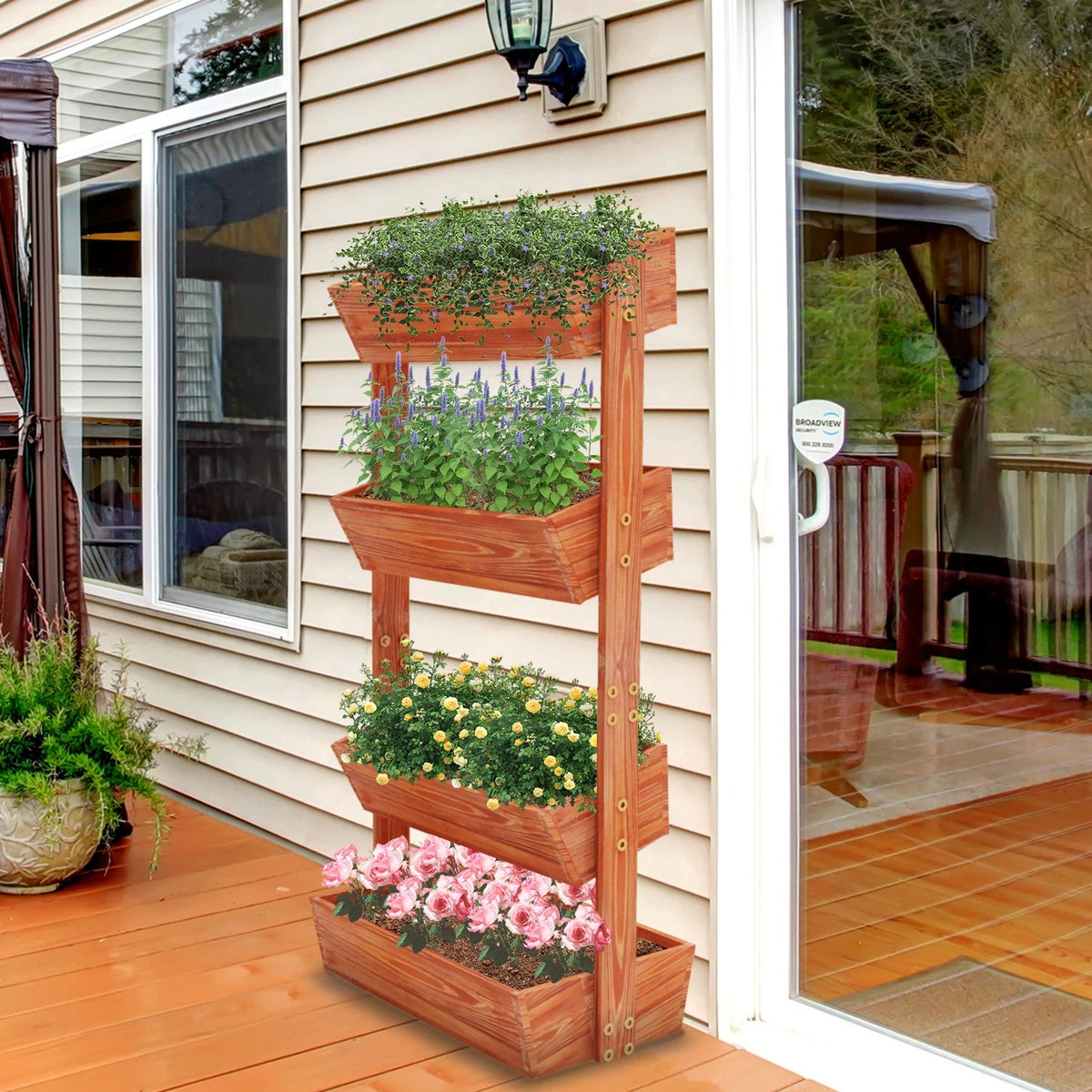
Why Vertical Is the Right Direction for Small Spaces
The logic behind vertical plant stands is straightforward, but it is worth making explicit because it changes how you approach every decision that follows.
In a compact room, floor space is finite and contested. Every square metre of floor that a plant stand occupies is a square metre that cannot be used for furniture, movement paths, or open space. Spreading plants across a room at floor level consumes that space progressively - each additional pot or low stand reduces the room's sense of openness.
Vertical space, in most Australian homes, is almost entirely unused. The space between the top of the furniture and the ceiling is rarely occupied by anything functional. Vertical plant stands colonise this unused zone, displaying multiple plants within a footprint that might be 30 to 50 centimetres square at floor level while reaching 120 to 180 centimetres into the room's height.
The secondary benefit is visual. A tall plant stand draws the eye upward, which creates the perception of a higher ceiling and a more generous room. This optical effect is well documented in interior design and is one of the reasons that tall vertical elements - floor lamps, tall bookshelves, vertical artwork - are consistently recommended for small spaces. A tall plant stand with a substantial plant at its peak achieves the same effect while also introducing living material into the room.
The Main Types of Vertical Plant Stands
Several distinct stand designs fall under the vertical category, each with its own characteristics and best-use scenarios.
Ladder Stands
The ladder stand is the most widely recognised vertical plant stand design. Its structure - two angled uprights connected by a series of horizontal shelves - creates a tiered display that ascends from a wider base to a narrower top, following the profile of a leaning ladder.
Ladder stands are particularly well suited to wall-adjacent placement. They lean naturally against a wall or stand independently flat against one, keeping their depth minimal while their height works the vertical space effectively. A three or four-tier bamboo ladder stand against a living room wall takes up roughly 30 centimetres of depth while displaying plants at three or four distinct heights.
The ladder form also has an inherent visual quality that suits a range of Australian interior styles. In natural bamboo or timber, it reads as warm and organic. In painted or powder-coated metal, it takes on a more contemporary or industrial character. This flexibility makes ladder stands one of the most versatile options across different home aesthetics.
Multi-Tier Corner Stands
Corner stands are designed specifically to use the geometry of two converging walls. Their base - typically triangular or wedge-shaped - sits flush against both walls simultaneously, occupying corner floor space that standard furniture cannot fill.
In terms of plants-per-square-metre of floor space, corner stands are among the most efficient options available. A six-tier corner stand might hold six or more plants within a footprint of approximately 40 by 40 centimetres at the corner point - a density that would be impossible to achieve with individual pots or separate stands.
For apartment dwellers and anyone working with a genuinely compact floor plan, the corner stand deserves serious consideration as a primary plant display option. Ourcompare the structure with your intended display position exemplifies this approach - its six levels of display within a corner footprint make it one of the most space-efficient options in our range, without sacrificing the natural material warmth that bamboo brings to an indoor setting.
Tall Single-Stem and Pedestal Stands
A tall single-stem stand - essentially a post with one or two platform surfaces at height - takes a different approach to vertical space. Rather than displaying multiple plants at multiple levels, it elevates a single plant to a significant height where it becomes a focal point.
These stands work particularly well with large, architectural plants that benefit from being displayed at eye level or above. A rubber plant or a large monstera elevated on a 90 to 100 centimetre single-stem stand commands a room in a way that the same plant on the floor never quite achieves. The elevation creates presence.
Single-stem stands also have among the smallest floor footprints of any plant stand type. A well-designed example might occupy as little as 20 by 20 centimetres at the base - making it an option even in very constrained positions, like beside a sofa arm or in the narrow space between a wardrobe and a wall.
Freestanding Tiered Shelving Stands
The freestanding tiered stand - multiple horizontal shelves arranged vertically within a single freestanding structure - combines the capacity of a multi-tier design with the flexibility of freestanding placement. Unlike corner stands, these can be positioned anywhere in a room without requiring a corner, though they still benefit from wall-adjacent placement for stability and spatial efficiency.
In taller configurations - nine or eleven tiers - these stands approach the plant-holding capacity of a dedicated plant wall while maintaining the portability and flexibility of a freestanding piece. They suit rooms where a more substantial plant display is the goal and where floor space can accommodate a slightly larger footprint in exchange for a significantly larger plant collection.
Ourreview the spacing for leaves, pots and easy access takes this capacity further than most - its eleven levels of display in a carbonised wood finish create a genuinely substantial plant display within a single vertical structure. The carbonised finish gives it a rich, warm character that suits living rooms and dining areas where the stand is intended to be a visible design element, not just a functional holder.
Matching Vertical Stands to Australian Home Styles
Vertical plant stands need to work within the visual context of the rooms they occupy. The right stand type is not just determined by size and capacity - it is also shaped by the aesthetic of the space.
Contemporary and minimalist interiors suit clean-lined ladder stands and slim single-stem designs in natural bamboo or matte-finished metal. The simplicity of the form complements the restrained aesthetic of contemporary rooms without introducing visual complexity that the room's palette was not designed to accommodate.
Coastal and relaxed Australian interiors benefit from natural material ladder stands and corner stands in bamboo or lighter timber. The organic quality of these materials connects with the coastal aesthetic's emphasis on natural elements, and their warm tones suit the light palettes typical of coastal homes.
Bohemian and eclectic interiors can accommodate more varied vertical stand choices - mixed materials, darker finishes, more unusual forms. In these rooms, the richness of a carbonised wood multi-tier stand or a wrought iron tall stand suits the aesthetic's appreciation of material variety and depth.
Compact apartment interiors of any style benefit most from the space-efficiency principles described above: small base footprint, natural materials, wall-adjacent or corner placement, and a height that uses the vertical space without overpowering the room's proportions.
For a broader view of how different stand styles suit different Australian interior aesthetics, our article on choosing a plant stand that matches your home's design style covers the key style pairings in practical terms.
Positioning Vertical Stands for Maximum Effect
The space-saving benefit of a vertical plant stand depends as much on where it is positioned as on which stand you choose. A tall stand placed in the middle of a room, away from walls, consumes more spatial and visual space than the same stand positioned against a wall or in a corner.
Against the main wall of a room. The largest unbroken wall in a living room or bedroom is typically the most effective position for a tall vertical stand. Positioned against this wall, the stand becomes part of the room's backdrop rather than an object floating in the middle of the space. The plant display reads as integrated with the room's architecture, which gives it more visual authority and makes the stand feel less intrusive.
In corners that currently serve no purpose. If a corner in your home currently holds nothing - or holds things that have been placed there by default rather than by design - it is a candidate for a corner plant stand. Replacing a dead zone with a vertical plant display is one of the highest-impact spatial improvements available in a small home.
Beside windows for plant health. Vertical stands positioned beside rather than in front of a window give the plants on each tier reasonable access to natural light while keeping the window itself unobstructed. In an apartment where natural light is a limited resource, this positioning serves both the plants and the room.
Along hallways. Hallways in Australian homes and apartments are frequently bare. A slim ladder stand or a tall single-stem stand positioned against the wall of a hallway introduces plant material into a transitional space that is usually ignored, and does so without reducing the width of the corridor.
For guidance on how to use tall and vertical stands across specific room types in Australian apartments and houses, our post on apartment plant stand placement for urban Australian homes covers the practical configurations in detail.
Plant Selection for Vertical Displays
The plants that work best on vertical stands are those whose growth habits complement the structure of the stand and the height at which they are displayed.
At the top tier: Choose plants that have some visual presence but are not so large that they create instability or obscure the tiers below. A compact snake plant, a small rubber plant, or a medium-sized pothos in a good-sized ceramic pot works well at the top of a tiered vertical stand.
At mid tiers: Trailing varieties are particularly effective here because their cascading growth adds vertical visual interest downward as well as across. Pothos, heartleaf philodendron, and similar trailing plants at mid-height create the flowing, cascading quality that makes a tiered vertical display feel generous and lush rather than simply stacked.
At the lower tiers: Compact plants suit the lower tiers of a tall stand. Succulents, small ferns, and compact peace lilies sit proportionally at lower heights and provide ground-level interest without needing the elevation that their larger counterparts require.
Across all tiers, light access needs to be considered. The upper tiers of a tall vertical stand will typically receive more ambient light than the lower ones. Choose plants for each tier with their light tolerance in mind - shade-tolerant varieties for lower shelves, and those that appreciate brighter conditions for the upper positions.
Outdoor and Balcony Applications
Vertical plant stands are not limited to indoor use. Australian apartments and houses often have balconies, courtyards, or outdoor living areas where the same space-saving logic applies - perhaps more urgently, since outdoor areas in dense urban settings can be extremely compact.
On a balcony, a vertical stand allows you to create a meaningful plant display without consuming the floor space needed for a chair, a small table, or clear circulation. A corner stand in the corner of a balcony, a ladder stand along one of the balcony's shorter walls, or a tall single-stem stand beside the railing can each introduce a substantial amount of greenery into a small outdoor area.
For outdoor use, stand material selection needs to account for exposure to the elements. Bamboo stands used outdoors should ideally be treated or sealed for weather resistance, and it is worth checking the product specifications for outdoor suitability. Oursee whether this design keeps pots accessible and visible is designed for both indoor and outdoor use, making it a practical option for balcony and courtyard applications where the corner position allows it to hold multiple plants within a compact outdoor footprint.
Ourcompare supports for a layered plant display includes options suited to both indoor and outdoor vertical display, with heights and materials appropriate for Australian conditions across both settings.

The Practical Value of Going Vertical
Vertical plant stands are not a trend or a styling shortcut. They are a genuine spatial solution to a genuine spatial problem - the desire to live with plants in homes that do not have unlimited floor space to give them.
The best vertical stands hold their value over time because they are useful. They display more plants in less floor space, they contribute to the room's visual composition through height and form, and they free up the surfaces and floor areas that everyday life actually needs to function.
At Metro Elegance, we source and design plant stands with this practical value as a starting point. The goal is not just pieces that look good in a showroom context - it is pieces that solve real problems in real Australian homes and continue to do so as the plants grow and the room evolves around them.
If you are working on a specific space and would like guidance on which vertical stand would suit it, our team is happy to help.
Get in touch with Metro Elegance here.
Frequently Asked Questions
What is a vertical plant stand?
A vertical plant stand is any plant display structure that prioritises height over floor footprint, allowing multiple plants to be displayed at different heights within a compact ground-level area. Common types include ladder stands, multi-tier corner stands, tall single-stem stands, and freestanding tiered shelving designs.
How much floor space does a vertical plant stand typically use?
This varies by design, but many vertical stands have a floor footprint of 30 to 50 centimetres square or less, while reaching heights of 100 to 180 centimetres. Corner stands are among the most space-efficient, with footprints as small as 30 by 30 centimetres at the corner point.
Can vertical plant stands hold heavy pots?
The weight capacity of a vertical stand depends on its construction and material. Most bamboo and timber tiered stands are designed for standard pot sizes and weights. For larger, heavier pots - those with substantial soil and root mass - check the weight rating for each shelf before loading. Distributing heavier pots across the lower tiers of a stand improves stability.
Are vertical plant stands suitable for balconies?
Yes, provided the stand material is suitable for outdoor or semi-outdoor conditions. Bamboo stands used on balconies should be weather-treated or specified for outdoor use. Powder-coated metal stands typically handle balcony conditions well. Always check the product specifications for outdoor suitability before placing an indoor stand in an exposed outdoor position.
How many plants can a vertical stand hold?
This depends on the number of tiers and the size of each shelf. A three-tier ladder stand typically holds three to six plants depending on pot size. A six-tier corner stand can hold six or more. Eleven-tier designs can accommodate a significant plant collection within a single vertical structure.
What plants suit the lower tiers of a vertical stand where light is reduced?
Shade-tolerant varieties suit the lower tiers of a tall vertical stand where ambient light is typically lower. Pothos, ZZ plants, peace lilies, cast iron plants, and small ferns all tolerate reduced light conditions. Selecting plants for each tier based on their actual light tolerance, rather than positioning them arbitrarily, helps maintain plant health across the full height of the stand.
Do vertical plant stands need to be fixed to a wall for stability?
Most freestanding vertical stands are stable without wall fixing when positioned on a level surface and loaded with pots that are appropriate for the tier size. Very tall stands or those in positions with high foot traffic may benefit from being positioned flush against a wall for added stability. Always follow the manufacturer's guidance for the specific stand you are using.