
Key Takeaways
Compare every style in the full Plant Stands range.
- Wooden plant stands are gaining popularity across Australian homes as a natural, warm counterpoint to the overly polished interiors of recent years.
- The rise of Japandi, wabi-sabi, and biophilic design principles has created strong alignment between natural timber materials and the direction contemporary Australian interiors are moving.
- Bamboo and pine are among the most popular timber choices for plant stands, offering a balance of natural character, reasonable durability, and accessible price points.
- Multi-tier and corner wooden stand formats are particularly in demand, driven by apartment living and the growing interest in indoor plant collections.
- Metro Elegance stocks a carefully chosen range of wooden plant stands suited to the full spectrum of modern Australian interiors, from compact apartments to larger family homes.
There is a shift happening in Australian home interiors that is worth paying attention to. After years of interiors dominated by concrete, glass, matte black fixtures, and the clinical precision of high-modernist design, something warmer and more organic is taking its place. Natural materials are back - not as a nostalgic throwback, but as a considered choice that reflects a broader cultural movement toward homes that feel genuinely comfortable rather than aspirationally severe.
Wooden plant stands sit neatly at the intersection of several of these trends. They are functional. They are natural. They introduce greenery into a space in a way that feels considered rather than improvised. And they suit the kind of warm, layered, lived-in aesthetic that a growing number of Australian homeowners and renters are actively pursuing.
This is not simply a passing decorating fad. The reasons wooden plant stands are trending run deeper than aesthetics alone, and understanding those reasons helps explain which styles and formats are resonating most strongly right now.
The Broader Design Shift Driving Demand
To understand why wooden plant stands are trending, it helps to understand the design context they are trending within.
Australian interior design has been moving steadily toward what is broadly described as biophilic design - an approach that prioritises the connection between interior spaces and the natural world. This means natural materials, organic forms, living plants, and textures that reference the outdoors even when you are firmly inside. Timber, bamboo, rattan, linen, terracotta, and stone are all part of this palette.
Alongside biophilic design, two specific aesthetic movements have gained significant traction in Australian homes: Japandi and wabi-sabi. Japandi combines Japanese minimalism with Scandinavian warmth, creating interiors that are spare without being cold. Wabi-sabi is a Japanese aesthetic philosophy that finds beauty in imperfection, natural aging, and organic irregularity. Both movements are strongly aligned with natural timber materials, and both place living plants at the centre of how a room is styled.
In this context, a wooden plant stand is not just a practical accessory. It is a direct expression of a considered design philosophy - a choice that signals something specific about how the occupant of a space wants it to feel.

Why Timber Suits Australian Homes Particularly Well
Australia has its own version of this trend, shaped by specific local factors. Indoor-outdoor living has always been central to Australian home design - the blurring of the line between a living room and a garden, between a kitchen and a courtyard. Natural materials facilitate this blurring in a way that synthetic or highly industrial materials cannot.
There is also the matter of climate. In most parts of Australia, the quality of light inside homes is different from the cool, diffuse light of northern European countries where Scandinavian minimalism developed. Australian light is warmer, brighter, and more direct. Natural timber and bamboo absorb and reflect this light in ways that feel right in Australian rooms, whereas highly polished or stark-white surfaces can feel overly harsh in strong natural light.
This is one of the reasons why natural material choices - including wooden plant stands - feel particularly suited to Australian interiors rather than simply imported from elsewhere.
The Role of Indoor Plants in This Trend
It would be impossible to discuss the trend for wooden plant stands without acknowledging the broader indoor plant movement that has taken hold across Australia over the past several years. Indoor plants are no longer a niche interest. They have moved firmly into the mainstream, with houseplants appearing across homes of every size, style, and budget.
As plant collections have grown, the need to display them properly has grown with it. Pots on the floor or clustered on windowsills no longer satisfy the visual standard that many Australian plant owners are working toward. A well-chosen plant stand - particularly a tiered or corner wooden design that allows multiple plants to be displayed at varying heights - is the natural next step in a growing indoor plant journey.
This is a self-reinforcing dynamic. More interest in indoor plants drives more interest in plant stands. More availability of well-designed plant stands encourages more investment in indoor plants. Wooden stands, with their natural finish and organic texture, serve as the most visually cohesive bridge between the plants themselves and the interior of the home.
Our post on why multi-tiered plant stands are a practical investment for plant lovers explores this in more detail for anyone at the stage of building out a more considered plant display.
The Formats That Are Trending Most Strongly
Not all wooden plant stand formats are trending equally. A few specific styles are capturing most of the current attention.
Multi-Tier Ladder and Rack Designs
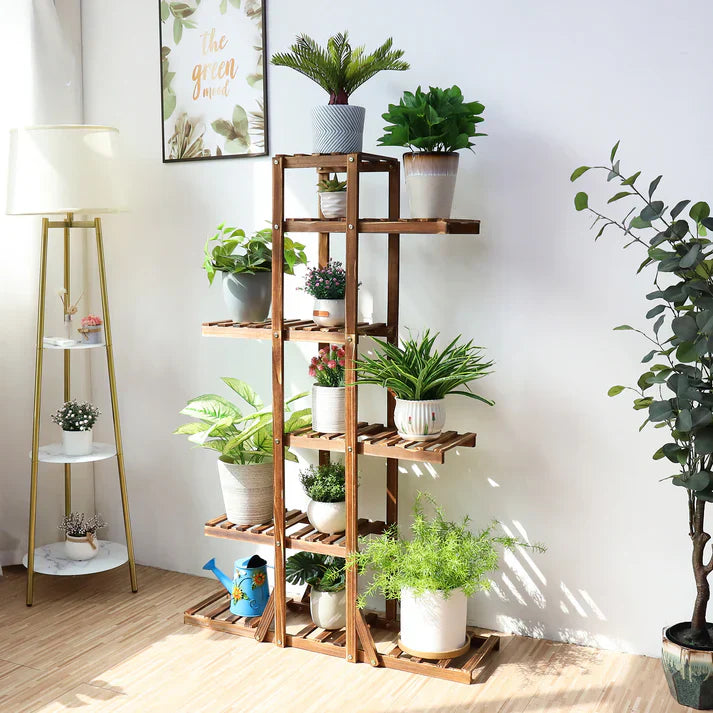
Multi-tier wooden plant stands - those with five, six, seven or more tiers stacked vertically - are among the most searched-for formats right now. The reason is practical as much as aesthetic. For apartment dwellers and small-home owners working with limited floor space, a tall multi-tier wooden rack allows a significant plant collection to be displayed from a single floor position.
The visual effect of a well-loaded multi-tier stand is also striking in a way that individual stands scattered around a room cannot replicate. It creates a focused, intentional display - closer to a living art installation than a functional accessory - that suits the direction contemporary Australian interiors are moving.
Thecompare this stand with your available floor space from Metro Elegance is a strong example of this format. Its carbonised finish gives it a warm, contemporary quality that suits Japandi-influenced interiors particularly well, and its generous tier count creates the kind of layered plant display that reads as genuinely designed rather than improvised.
Corner Wooden Stands
Corner wooden plant stands are trending for a related reason: the recognition that corners are some of the most underutilised spaces in any room. A triangular or stepped corner stand converts what is typically a design dead zone into a genuine focal point, and does it with a material - timber or bamboo - that feels natural and warm rather than imposing.
Thecheck placement needs before adding it to the room from Metro Elegance demonstrates this format well. Its stepped design creates visual interest at multiple heights within the corner, and the natural timber finish suits the warm, organic interiors that are currently dominating Australian home design.
Ladder Shelf Formats
The freestanding ladder shelf - a leaning, angled design that widens toward the base - remains consistently popular for indoor plant display in Australian homes. Its open design keeps the visual weight light, it leans against a wall for stability without any wall fixtures, and it suits the renter-friendly, commitment-free approach to decorating that characterises a significant portion of the Australian market.
These designs also photograph well, which has contributed to their sustained visibility on social platforms and interior design publications - a factor that is not irrelevant to how quickly certain formats gain traction.
Small Round Wooden Stands
At the other end of the scale, small individual wooden stands - compact, three-legged designs that hold a single pot - are trending as a way to elevate a single statement plant or a carefully chosen small specimen. Thesee whether this setup leaves enough room for watering from Metro Elegance represents this format well - they function as both side tables and plant holders, which reflects the growing appetite for pieces that serve multiple purposes in a space.
The Sustainability Dimension
Part of what is driving the wooden plant stand trend is a growing interest in more sustainable material choices in home decor. Bamboo in particular regenerates significantly faster than conventional hardwood timber, making it a more rapidly renewable resource for buyers who are mindful of the environmental profile of what they bring into their homes.
This sustainability consideration is not the primary driver for most buyers, but it is a reinforcing factor. When a material is warm, versatile, well-priced, and also carries a lower environmental footprint than many alternatives, the case for choosing it becomes easier to make.
For a broader look at how to approach plant stand material choices from an environmental perspective, our post on eco-friendly plant stand materials worth knowing about covers the options available to Australian buyers in a practical, non-prescriptive way.
How to Incorporate Wooden Plant Stands into a Modern Australian Interior
The design flexibility of wooden plant stands is one of their genuine strengths. They suit a wide enough range of interior styles that they work across most Australian homes without requiring a complete aesthetic overhaul.
A few approaches that tend to work well:
Use a corner wooden stand to anchor an underused space. In a living room or bedroom corner that currently holds nothing, a tall multi-tier wooden corner stand with three to five plants creates an immediate improvement to how the room reads - without adding any furniture to the main floor plan.
Let the stand material echo existing timber in the room. A bamboo plant stand in a room with rattan furniture. A pine ladder stand in a room with light oak flooring. A carbonised wood rack in a room with dark timber bookshelves. This kind of material echo makes the stand feel like part of the design rather than an addition to it.
Vary plant heights and pot styles across tiers. A multi-tier wooden stand that holds a trailing plant on the top tier, a fuller bushy plant in the middle, and small textured pots at the base reads as intentionally styled. Uniform pot sizes on every tier looks less considered.
Keep it simple in a minimalist room. A three or four-tier wooden stand in a minimal room should hold only a few plants with breathing room between them. The restraint is part of the effect.
For guidance on how to style wooden plant stands effectively across different room types, our post on how to style indoor plant stands for a fresh and considered interior look covers the practical styling decisions in detail.
Where to Find Quality Wooden Plant Stands in Australia
The growing demand for wooden plant stands has produced a wide range of options across the Australian market, and quality varies considerably. Atbrowse useful pieces for everyday spaces, we have curated a range offind a setup that keeps greenery easier to arrange that are selected with Australian homes and Australian conditions in mind - not just for how they look in product imagery, but for how they perform in real rooms over time.
Every Metro Elegance order ships free across Australia, and our team is available to help you find the right design, format, and size for your specific space and interior style. Whether you are looking for a single corner stand for a bedroom or a multi-tier display rack for an open-plan living area, we can help you make a confident choice.
Ready to find a wooden plant stand that suits your home? Contact the Metro Elegance team and we will help you choose the right style for your space.
Frequently Asked Questions
Why are wooden plant stands so popular right now?
The popularity of wooden plant stands reflects broader design trends toward natural materials, biophilic interiors, and warmer, more organic home aesthetics. The growth of indoor plant culture in Australia has also increased demand for well-designed display solutions, and timber and bamboo are natural material choices in that context.
Are wooden plant stands suitable for Australian conditions?
Wooden plant stands perform well in standard indoor conditions across all Australian climate zones. For outdoor or semi-outdoor use, a sealed or treated finish is recommended, particularly in humid regions or areas with significant UV exposure. Bamboo is generally more moisture-resistant than untreated softwood for sheltered outdoor positions.
What type of wood is best for an indoor plant stand?
Bamboo is a widely used and practical choice for indoor plant stands - it is light, warm in appearance, and suits a wide range of interior styles. Pine and carbonised timber are also popular options, with pine offering a pale, natural look and carbonised timber providing a darker, more contemporary finish.
Do wooden plant stands work in contemporary or minimalist interiors?
Yes - the key is choosing a clean, simple design rather than an ornate or heavily decorated one. Bamboo ladder shelves and slim tiered racks in pale timber or carbonised wood suit minimalist and contemporary interiors well, particularly when they hold only a few plants with deliberate spacing between them.
How do I match a wooden plant stand to my existing furniture?
Look at the dominant timber tones and textures already in the room. A pale bamboo stand suits rooms with light oak, rattan, or blonde timber furniture. A darker carbonised or walnut-toned stand suits rooms with darker timber furniture or moodier colour palettes. Matching material quality and finish across pieces creates the most cohesive result.
Are wooden plant stands good value compared to metal alternatives?
Wooden and bamboo plant stands are available across a wide range of price points and are generally comparable to metal equivalents in value. For indoor use, both materials offer good durability at similar price levels. The choice between them is primarily an aesthetic and maintenance question rather than a value question.
How many plants can a typical multi-tier wooden plant stand hold?
This depends on the number of tiers and the size of each tier. A six-tier wooden stand can typically hold six to ten small-to-medium pots depending on pot diameter and shelf depth. Leaving some tiers with visual breathing room between pots tends to look better than filling every tier to maximum capacity.