
Key Takeaways
Compare materials, heights and layouts in our Plant Stands collection.
- Solid wood and bamboo plant stands outperform MDF in moisture resistance, making them a more practical choice for plant display where watering and humidity are factors.
- MDF offers a smooth, consistent surface finish and can be more affordable, but it is notably vulnerable to moisture swelling and edge damage over time.
- For most plant stand applications in Australian homes, solid wood or bamboo is the more durable long-term material - particularly in any position near water or in humid conditions.
- The difference in longevity between the two materials is most pronounced in outdoor and semi-outdoor positions, where MDF is generally not suitable at all.
- Metro Elegance focuses on solid wood, bamboo, and metal plant stands rather than MDF composites, reflecting a practical emphasis on durability and natural materials.
When you start looking closely at plant stands in the Australian market, you will quickly realise that not all "wooden" plant stands are made from the same material. Some are solid timber or bamboo. Others are made from MDF - medium-density fibreboard - which is a composite wood product made from wood fibres, wax, and resin compressed under heat and pressure. A third category uses a combination of both: a solid frame with MDF shelving panels, or a timber veneer applied over an MDF core.
The distinction matters more for plant stands than it does for, say, a bookshelf or a TV unit. Plant stands are placed near plants. Plants are watered. Watering produces moisture - in the drip tray, on the shelf surface, in the immediate air around the pot. Moisture is where the difference between solid wood and MDF becomes most consequential, and understanding that difference before you buy can save you the frustration of a stand that warps, swells, or delaminating within the first year.
This guide covers the key differences between solid wood and MDF as plant stand materials, where each performs well and where each falls short, and how to make an informed choice for your specific situation in an Australian home.
What Is MDF and How Is It Different from Solid Wood?
Before comparing them, it helps to understand what each material actually is.
Solid wood refers to timber cut directly from a tree - pine, oak, acacia, and similar species. Its grain structure runs continuously through the piece, giving it natural strength, some flexibility under load, and the ability to be sanded, refinished, and repaired. Bamboo, while technically a grass, is used in similar ways to solid timber and shares many of its structural properties.
MDF (medium-density fibreboard) is an engineered wood product. It is made by breaking down wood or other lignocellulosic material into fibres, combining them with wax and a resin binder (typically urea-formaldehyde or similar), and pressing them under high heat and pressure into dense, uniform panels. The result is a material with no grain direction, consistent density throughout, and a very smooth, even surface that takes paint and laminate finishes well.
MDF is widely used in flat-pack furniture, cabinetry, and interior joinery because it is dimensionally consistent, easy to machine, and generally lower in cost than solid timber at equivalent sizes. These are genuine advantages in many applications. For plant stands specifically, however, several of MDF's material properties create challenges that solid wood handles more comfortably.
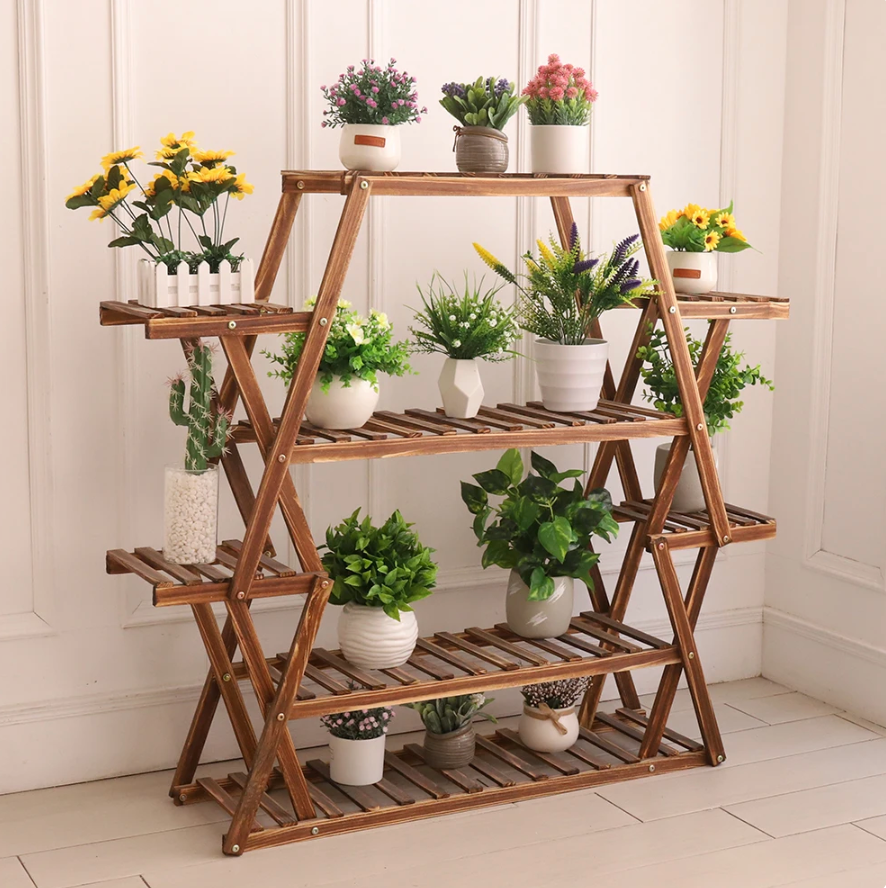
The Core Problem: MDF and Moisture
The most significant practical difference between solid wood and MDF for plant stand applications is moisture response.
Solid wood expands and contracts with changes in humidity - a well-known property that good furniture makers account for in their joinery. This movement is predictable and manageable. With a quality sealant or finish, solid wood resists surface moisture penetration effectively and can handle incidental water contact - a spill, condensation from a pot, the occasional overwatering - without structural damage.
MDF responds to moisture very differently. When MDF absorbs water - through surface contact, edge exposure, or sustained humidity - the wood fibres expand and the binding resin is compromised. The result is swelling, typically most pronounced at edges and joints. Once swollen, MDF does not reliably return to its original dimensions when it dries. In more severe cases, the surface laminate or paint bubbles and lifts, the edges crumble, and the structural integrity of the panel is compromised. This process is largely irreversible.
For a plant stand that will be near actively watered plants, this is a meaningful limitation. Even careful watering produces some moisture exposure - condensation beneath pots, occasional drips, elevated ambient humidity around a cluster of plants. Over time, these small exposures accumulate. A solid wood or bamboo stand handles this accumulation without visible deterioration. An MDF stand may show swelling and surface damage within months, particularly at the shelf surfaces where pots sit directly.
This is one reason why Metro Elegance focuses on solid wood, bamboo, and metal designs in our plant stand range rather than MDF composites. The practical demands of plant display are not well matched to MDF's moisture sensitivity.
Where Solid Wood and Bamboo Have the Advantage
Moisture Resistance in Plant Display Context
As discussed above, solid timber and bamboo handle the moisture exposure inherent in plant display significantly better than MDF. A sealed solid pine shelf or a bamboo tier can tolerate condensation, incidental drips, and elevated humidity without structural damage that is visible within the first season of use. This makes solid materials the more reliable long-term choice for any plant stand that will hold actively growing plants in real conditions.
Repairability and Retreatment
Solid wood can be sanded back and retreated if the surface finish deteriorates over time. A scratched or lightly stained solid wood shelf can be refinished without replacing the piece. MDF surfaces that are damaged - either by moisture or by mechanical scratching that reaches below the laminate layer - are generally not repairable in the same way. Once the surface laminate or paint is compromised on MDF, the remediation options are limited.
Outdoor and Semi-Outdoor Suitability
Solid wood with appropriate treatment, and bamboo with a sealed finish, can be used in sheltered outdoor positions such as covered patios and undercover balconies. MDF is not suitable for outdoor use in any form. Its moisture sensitivity makes even sheltered outdoor positions a challenging environment, as ambient humidity levels outdoors are generally higher than indoors and weather events can expose the stand to rain even under cover.
For anyone considering a plant stand for an outdoor or semi-outdoor position, solid wood or bamboo with appropriate treatment is the only natural material option. Our post on maintaining wooden plant stands through wet and humid conditions covers how to prepare and care for solid timber stands in outdoor Australian settings.
Natural Aesthetic Quality
Solid wood has natural grain, tonal variation, and texture that MDF cannot replicate. MDF is homogeneous and must rely on surface laminate, veneer, or paint to achieve its visual character. For plant stands in particular - where the material is often visible, where it sits alongside natural pots and plants, and where the organic quality of natural materials reads as appropriate - the visual difference between solid wood and a painted MDF equivalent is noticeable.
The warm, natural grain of a bamboo or pine plant stand fits naturally alongside terracotta pots, textured ceramics, and trailing greenery in a way that a smooth, painted MDF surface often does not. This aesthetic distinction is subjective but consistently relevant in plant display contexts.
Where MDF Has Advantages - and Why They Are Limited for Plant Stands
Surface Consistency and Paint Finish
MDF takes paint and laminate finishes extremely well because its surface is smooth and consistent with no grain direction. For furniture applications where a flawless, consistent painted finish is the priority - cabinetry, built-in joinery, painted bedroom furniture - this is a genuine advantage over solid timber.
For plant stands, this advantage is largely academic. Plant stands in natural timber or bamboo finishes are the more popular and visually appropriate choice for most Australian interiors. A smoothly painted MDF plant stand exists, but it is not typically what buyers are looking for when they invest in plant display furniture.
Cost at Point of Purchase
MDF is generally cheaper to produce than solid timber at equivalent panel sizes, and this is often reflected in lower retail prices. For buyers focused primarily on upfront cost, an MDF plant stand may appear to offer better value.
However, the lower upfront cost needs to be considered alongside the likely service life. An MDF plant stand that shows moisture damage within the first twelve months and needs replacing is not a lower-cost option than a solid wood equivalent that lasts several years with basic care. Over a two or three-year period, the total cost of ownership often favours the more durable solid material.
Weight in Some Applications
MDF is dense and heavy. For plant stand applications, this weight works against it rather than for it - heavier base materials make stands harder to move and reposition, which is a practical consideration in a category where portability is often valued. Bamboo and pine are both lighter than MDF at comparable volumes, which is another point in their favour for plant stand use.
Bamboo: The Natural Material Most Worth Considering
In a comparison focused on solid wood versus MDF, bamboo deserves specific mention as the natural material that often performs best in the specific context of plant display.
Bamboo is lightweight, naturally moisture-resistant compared to most softwoods, visually warm, and available in a wide range of plant stand formats at accessible price points. Its natural silica layer provides surface protection against incidental moisture contact that most untreated softwoods do not have. For indoor plant stands in Australian living rooms, bedrooms, and home offices, bamboo covers the practical requirements while also delivering the natural, organic aesthetic that suits most Australian interiors.
The 3-tier bamboo corner plant stand from Metro Elegance is a practical example - a compact, well-proportioned design that uses bamboo's natural properties in a simple, honest format suited to both indoor and sheltered outdoor use. Similarly, thesee whether this setup leaves enough room for watering demonstrates how bamboo handles the demands of a taller, multi-tier plant display without the moisture vulnerability that would limit an MDF equivalent in the same application.
For a broader look at how bamboo compares with other plant stand materials across different performance dimensions, our post on whether bamboo plant stands are actually durable covers the material's real-world strengths and limitations in detail.
Solid Pine: A Reliable and Accessible Natural Timber
For buyers who want the warmth and character of natural wood grain rather than the more uniform look of bamboo, solid pine is a well-suited option for indoor plant stands. Pine is a relatively fast-growing softwood compared to most hardwoods, is widely available from managed plantation sources, and can be finished with natural oils or low-emission sealants that maintain its natural character.
Solid pine plant stands are more resilient to moisture exposure than MDF, can be sanded and retreated if the surface becomes scratched or stained, and have a visual quality - natural grain, knots, tonal variation - that suits the organic aesthetic of plant display environments.
Thecheck the shelf layout for the pots you want to display from Metro Elegance is a solid example of this format - a genuine solid timber design built for both indoor and sheltered outdoor use, with the natural character of real wood rather than the uniformity of a composite panel.
How to Identify Whether a Plant Stand Is Solid Wood or MDF
In an online shopping environment where product descriptions are not always specific, a few practical ways to assess whether a plant stand is solid wood or MDF:
Check the product description for specific material terms. "Solid pine," "solid bamboo," "solid timber," or "whole-culm bamboo" indicate natural materials. "MDF," "engineered wood," "wood-composite," or descriptions that emphasise a smooth, consistent surface over natural grain are indicators of composite material.
Look at the edges in product images. Solid timber edges show grain running through the panel. MDF edges appear flat and homogeneous, often with a different texture from the face. If laminated, the edge may show a thin veneer strip applied over a visible composite core.
Consider the price relative to size. Very low-priced large solid wood stands warrant closer inspection of materials. Solid timber at substantial sizes costs more to produce than MDF, and a price point that seems notably low may reflect composite construction.
Ask the retailer directly. A reputable retailer should be able to specify the material clearly. If a retailer cannot or will not confirm whether a stand is solid wood or MDF, that is worth factoring into the purchase decision.
For a broader comparison of how different plant stand materials perform across Australian conditions and interior styles, our post on wooden versus metal plant stands for Australian homes covers the full material landscape in practical terms.
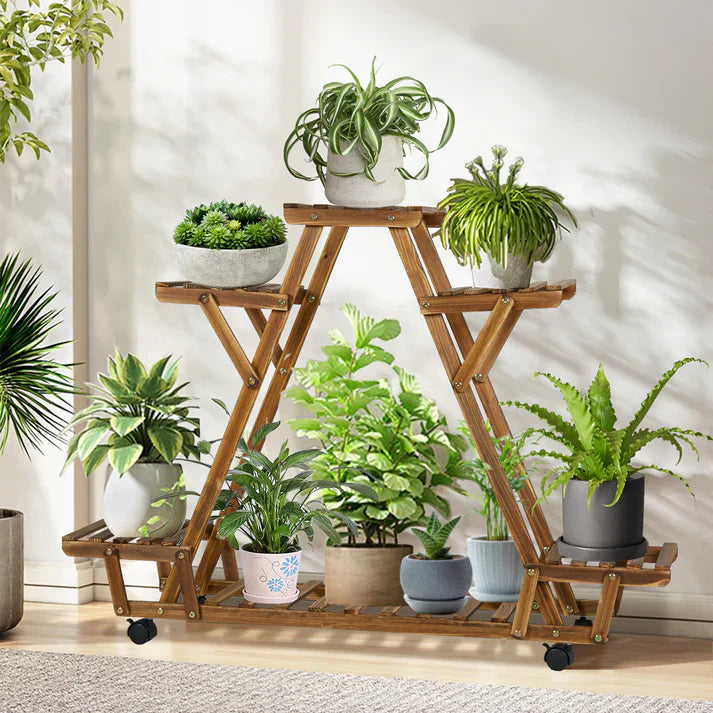
Shop Natural Material Plant Stands at Metro Elegance
Atplan the next step in your room update, we stock plant stands in solid bamboo, natural timber, and metal finishes - materials that suit the practical demands of plant display in Australian homes. Ourexplore space-aware supports for houseplants covers a wide range of formats, from compact corner designs to large multi-tier display racks, all with free shipping across Australia.
We do not stock MDF plant stands because the moisture sensitivity of the material is not well suited to the demands of plant display. Our focus is on materials that will hold up in real conditions, with real plants, over a meaningful period of time.
Want help finding the right solid wood or bamboo plant stand for your home? Contact the Metro Elegance team and we will help you choose with confidence.
Frequently Asked Questions
Is MDF safe to use for plant stands indoors?
MDF is structurally safe for indoor use in dry conditions. The primary concern for plant stand applications is moisture sensitivity rather than safety. Standard MDF products can off-gas low levels of formaldehyde from the resin binder, which is relevant in poorly ventilated spaces. Low-emission MDF products are available and reduce this concern, but moisture vulnerability remains the more significant practical limitation for plant display use.
Can MDF plant stands be used outdoors?
MDF is not recommended for outdoor use in any form. Its moisture sensitivity means it will swell, delaminate, and deteriorate quickly in outdoor environments, even in sheltered positions with elevated ambient humidity. Solid timber with appropriate treatment, bamboo, or powder-coated metal are the practical alternatives for outdoor plant stand use.
How can I tell if a plant stand is solid wood or MDF?
Check the product description for specific material terms such as "solid pine," "solid bamboo," or "whole-culm bamboo" versus "MDF," "engineered wood," or "composite." In product images, look at the edges - solid timber shows grain running through the panel, while MDF edges appear flat and homogeneous. Asking the retailer directly is always a reliable approach.
Does solid wood warp near plants?
Solid wood expands and contracts with changes in humidity, which is a known property of the material. With a quality sealed finish and appropriate care - avoiding sustained standing water contact and ensuring reasonable airflow around the stand - a solid timber plant stand manages these movements without significant warping in standard indoor conditions.
Is bamboo better than solid pine for a plant stand?
Both are practical natural material choices for indoor plant stands. Bamboo has a natural silica layer that provides modest moisture resistance, making it slightly more forgiving in conditions of incidental water contact. Solid pine has a natural wood grain and character that some buyers prefer aesthetically. Both materials are more suitable for plant display than MDF.
Why do some cheap plant stands use MDF? MDF is less expensive to produce than solid timber at equivalent panel sizes, which allows manufacturers to offer lower retail prices. The lower upfront cost may appeal to buyers focused on initial price, but the reduced durability - particularly in moisture-adjacent applications like plant display - means the total cost of ownership over two or three years may favour more durable natural material alternatives.
How long does a solid wood plant stand last compared to MDF?
This depends on construction quality, conditions of use, and maintenance. A quality solid timber or bamboo plant stand used indoors with basic care can last many years. An MDF plant stand in the same indoor position will typically last longer than one exposed to moisture, but it cannot be retreated or refinished in the same way if its surface is damaged. In any position with meaningful moisture exposure - near actively watered plants, in a humid room, or outdoors - the durability gap between solid wood and MDF becomes significant.