
Most people choose a plant stand the same way they choose a coat hanger: the plant needs to go somewhere, something needs to hold it up, and practically anything will do. The stand becomes invisible by default - a functional object that nobody really notices.
Find compact, tiered and statement options in our Plant Stands for Australian homes.
That is one way to approach it. But there is another way, and it changes the entire role that plants play in a room.
When a plant stand is chosen deliberately - for its form, its material, its height, and the way it relates to the space around it - it stops being invisible. It becomes part of the room's visual story. It draws attention in its own right, and the plant it holds becomes an extension of that intention rather than just a pot sitting on a shelf.
This is what it means to use a plant stand as a statement piece. And atcompare furnishings around comfort and usable space, it is an approach we genuinely believe in - because the right stand, in the right position, does something to a room that is difficult to achieve any other way.
Here is how to get there practically and deliberately.

Rethink What a Plant Stand Is For
The shift starts with how you think about the stand itself. A statement plant stand is not a support structure with plants as the point. It is a design object that happens to display plants. The distinction sounds subtle, but it changes every decision that follows - which stand you choose, where you put it, which plant goes on it, and how the whole arrangement relates to the rest of the room.
Think of it the way you would think about a sculpture, a floor lamp with an interesting base, or a chair that is positioned as much for how it looks as for where you sit. These are objects that earn their place in a room through their visual presence, not just their function. A well-chosen plant stand can do the same thing - and because it holds a living plant, it adds a layer of organic warmth that a purely decorative object cannot.
This reframe is important because it also clarifies what makes a stand a statement piece versus a background object. It is not about extravagance or cost. It is about scale, form, material, and placement. Some of the most visually striking plant stand arrangements use simple, well-made timber or metal stands. The impact comes from how they are used, not what they cost.
Scale: The Factor Most People Get Wrong
If there is one mistake that consistently undermines an attempt to use a plant stand as a statement piece, it is choosing a stand that is too small for the space.
A small stand in a generous room will always read as incidental. It does not anchor anything. It does not draw the eye. It sits there and gets looked past. For a stand to function as a focal point, it needs to be large enough relative to the space that it registers as a deliberate choice.
In a living room with 2.7 metre ceilings and an open floor plan, a 150 centimetre tall stand with a structural plant like a fiddle leaf fig or a large rubber plant becomes a genuine architectural element. In a smaller room or a hallway, a 90 to 110 centimetre stand can achieve the same effect. The key is proportion - the stand should feel like it was chosen for this specific space, not borrowed from a different context.
Height is particularly important for statement stands. Vertical scale draws the eye upward and gives a room the impression of more generous proportions. A tall, slim stand with a plant that reaches toward the ceiling creates a column of living material that grounds a space in a way that horizontal furniture arrangement simply cannot replicate.
Ourcompare the footprint with your balcony or room layout is a good example of this kind of vertical scale done well. Its arched form gives it a silhouette that reads as distinctly designed rather than purely functional, and its height means it commands attention from across a room.
Material and Form: Where the Statement Is Made
A statement plant stand needs a form that holds up to scrutiny. When something is positioned as a focal point, people look at it more carefully than they look at background objects. The details matter more - the quality of the joinery, the finish on the metal, the texture of the timber, the elegance or boldness of the overall silhouette.
Some forms that tend to work well as statement pieces:
Sculptural metal frames. A stand with an unusual geometric or organic shape in powder-coated metal creates a strong visual contrast against soft plant material and neutral walls. The interplay between the hard frame and the living plant is part of what makes the display interesting.
Solid timber with visible grain. A stand made from solid wood with a clear grain and honest construction has a quiet authority that suits a wide range of interior styles. It does not shout, but it does not fade either. In a room with a lot of manufactured surfaces, a genuine timber stand stands out for exactly the right reasons.
Half-moon and vase-shaped designs. These more unusual silhouettes work particularly well as statement pieces because the shape itself is decorative. Ourreview the working height for regular plant care is a good example - its form references a classical vase shape, which gives it a character that purely rectilinear stands do not have.
Tall corner designs used in unexpected positions. Taking a corner stand and placing it in the middle of a wall rather than in a corner creates an interesting tension - the form suggests one use, but the placement subverts it in a way that draws attention.
Across all of these, the underlying principle is the same: the stand has a form that communicates something. Whether that is warmth, precision, sculptural interest, or natural honesty, there is a visual language being spoken. The most effective statement plant stands are ones where you could appreciate the stand's design even if there were no plants on it at all.
Contrast: Making the Stand Register
A statement piece works through contrast. If a stand blends seamlessly into its surroundings, it is not making a statement - it is disappearing. For a stand to draw attention, it needs to be different in some meaningful way from what is around it.
This contrast can take several forms.
Material contrast. A slim black metal stand in a room dominated by warm timber and soft textiles creates an arresting visual counterpoint. The cool, hard material catches the eye precisely because everything else is soft and warm.
Scale contrast. A very tall stand in a low-furnished room, or a single large plant display in a room where everything else sits at desk height, creates immediate visual interest through the disruption of the room's typical horizontal line.
Colour contrast. A dark stand against a white wall, or a natural timber stand against deep-coloured paint, uses simple colour difference to make the stand register as a distinct element rather than part of the background.
Form contrast. An organic, curved, or irregular stand form in a room full of rectilinear furniture creates interest through shape. Ourcheck how this option uses height in a compact area uses this principle - its curved oval form sits in productive contrast with the straight lines of most contemporary furniture.
Understanding which type of contrast your room needs helps narrow the stand selection considerably. You are not just looking for a stand you like in isolation - you are looking for a stand that creates the right kind of visual dialogue with the room it is going into.
Placement: The Difference Between Noticed and Overlooked
Even the most striking plant stand can be undermined by poor placement. A statement piece needs a position where it can be seen and appreciated from the room's main sightlines. This is not always where you would naturally think to put a plant.
The most effective positions for statement plant stands are typically those that anchor the room's focal points. Against a wall that is directly opposite the main entry point into the room. Beside a fireplace or behind a sofa where the room's main seating arrangement is oriented. At the end of a hallway where there is a clear sightline from one end to the other.
These positions share a common quality: they are where a person's eye naturally travels when they move through or into the room. Placing a statement stand in these spots means it is encountered intentionally, not stumbled upon.
Avoid placing statement stands in corners that are not visible from the main living areas, beside doorways that interrupt the view, or in positions where other furniture competes directly for attention. A statement piece needs some degree of visual breathing room to register properly.
For more on how placement choices affect the overall effect of a plant display, our guide on using corner plant stands to maximise spatial impact covers positioning in practical terms, including for rooms where space is more limited.
Choosing the Right Plant to Complete the Statement
The plant that sits on a statement stand is not just a decorative afterthought - it is the other half of a pairing that either works or does not. Getting this right matters.
For a stand to function as a statement piece, the plant it holds should reinforce rather than undermine the stand's presence. A small, nondescript plant on a large, sculptural stand looks odd - the disproportion draws attention to itself in the wrong way. Conversely, an enormous sprawling plant on a delicate stand creates a practical and visual imbalance.
The most effective pairings tend to follow a few reliable principles. Tall, architectural plants with clear vertical growth suit tall, linear stands. Large-leafed plants with strong shapes suit sculptural or geometric stands, where the contrast between the organic leaf form and the precise frame creates genuine visual interest. Trailing varieties work well on stands with height, where the cascading growth adds a flowing quality that the stand's structure does not have on its own.
For specific plant and stand pairing advice tailored to Australian homes, our post on matching plant stands to the right pot and plant sizes walks through the practical considerations in more detail.
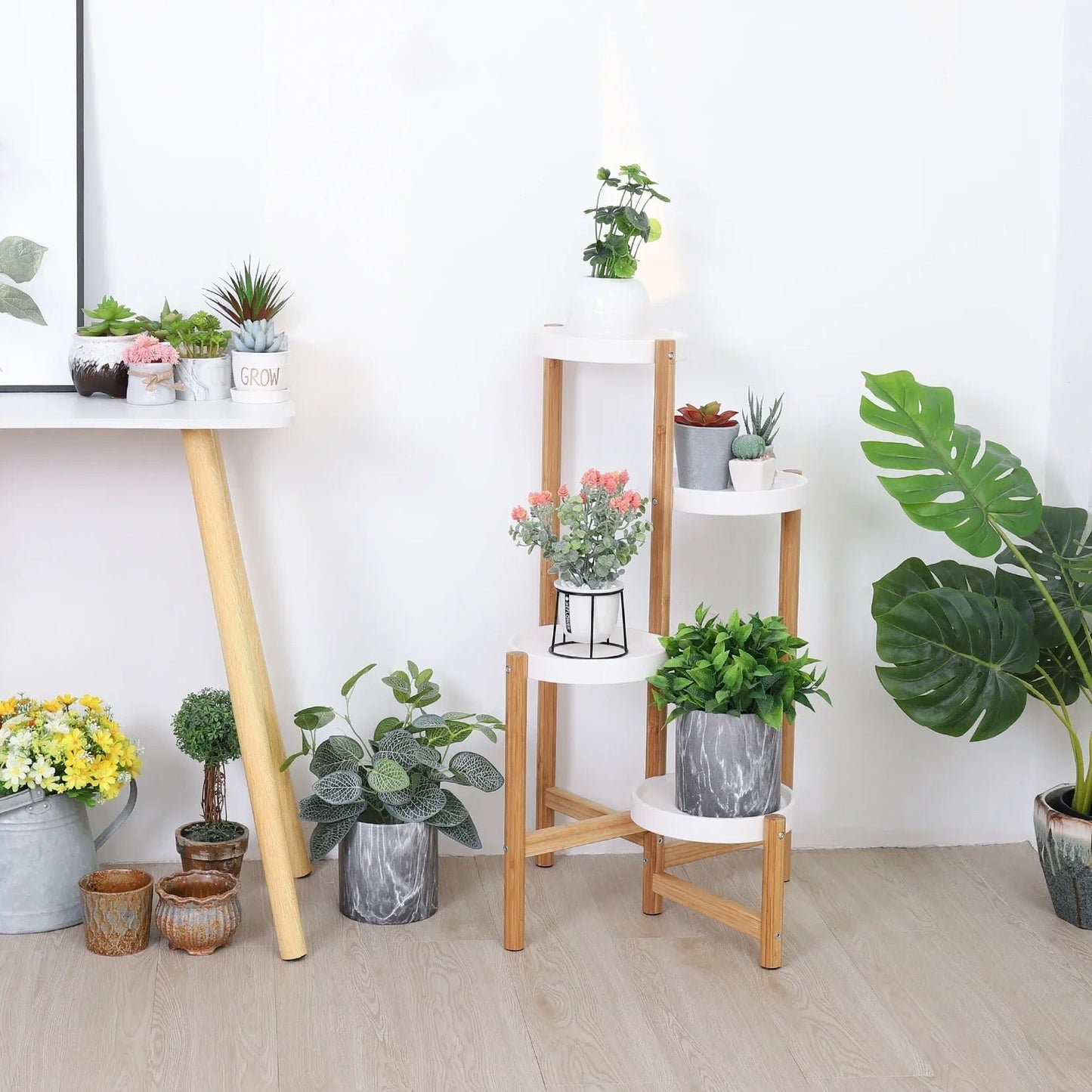
One Strong Statement Rather Than Many Weak Ones
There is a temptation, once you start thinking about plant stands as design objects, to treat every stand in the room as a potential statement piece. This approach tends to work against itself. When everything is trying to be noticed, nothing is.
A room benefits from one primary statement plant stand - the one that anchors the space and draws the eye. Secondary stands can complement it, but their role is to support the overall arrangement rather than to compete with the focal point. This hierarchy of visual weight is what gives a well-styled room its sense of coherence and intention.
At Metro Elegance, we stockbrowse ways to elevate plants without crowding the room alongside smaller, more restrained designs for exactly this reason. The range is built around the idea that different stands serve different roles in a room, and the best outcomes come from choosing each stand with that role in mind rather than selecting everything to the same level of visual intensity.
If you are working on a specific room and would like some guidance on which stands might work as your primary statement piece and which would suit a supporting role, our team at Metro Elegance is happy to help.
Frequently Asked Questions
What makes a plant stand a statement piece?
A plant stand becomes a statement piece through its scale, form, material, and placement. It needs to be large enough to register within the space, designed with a form that holds visual interest on its own, and positioned where it can be seen from the room's main sightlines. Function alone does not create a statement - deliberate design choices do.
What height should a statement plant stand be?
This depends on the room's ceiling height and overall scale. In rooms with standard ceiling heights of 2.4 to 2.7 metres, a stand of 120 to 160 centimetres tends to create a strong vertical presence without feeling disproportionate. In larger or higher rooms, taller stands can be used effectively.
Which plant stand materials work best as focal points?
Solid timber, powder-coated metal, and stands with sculptural or unusual forms tend to work best as statement pieces. The material should contrast meaningfully with surrounding furniture and walls so that the stand registers as a distinct design element rather than blending into the background.
Can a statement plant stand work in a small room?
Yes, but scale needs to be managed carefully. In a small room, a tall slim stand creates vertical interest without adding significant bulk at floor level. Avoid wide or heavy-based stands in compact spaces, as the base footprint can make the room feel more crowded.
How many statement plant stands should I have in one room?
One primary statement stand is generally the right approach. Secondary stands in the same room should play a supporting role - complementing the focal piece rather than competing with it. Trying to make every stand a statement piece typically results in a visually busy room that lacks a clear focal point.
Does the plant choice affect whether a stand reads as a statement piece?
Yes, significantly. The plant and stand need to be proportionally matched and visually compatible. A large, architectural plant reinforces the presence of a statement stand. A small or visually nondescript plant can undermine the stand's impact by making the pairing feel unbalanced or unconsidered.
Where is the best position to place a statement plant stand?
The most effective positions are those that fall within the room's natural sightlines - directly opposite an entry point, behind the main seating arrangement, beside a fireplace, or at the end of a hallway. These are the positions where a statement piece will be encountered deliberately rather than discovered incidentally.