
Key Takeaways
Browse Plant Stands Australia for indoor, outdoor, wooden, metal, tall and corner options.
- Bamboo is one of the most rapidly renewable plant stand materials available, reaching harvestable maturity significantly faster than most commercial timber species.
- The sustainability of any plant stand depends not just on the raw material but also on how it is processed, finished, and how long it remains in use.
- Longevity is one of the most underrated sustainability factors - a durable stand that lasts many years is often a more environmentally responsible choice than a cheap one that needs frequent replacement.
- Natural materials like bamboo, solid pine, and carbonised timber have a lower processing footprint than most synthetic or composite alternatives.
- Metro Elegance stocks a range of plant stands made from natural, renewable materials suited to Australian homes, with options across indoor and outdoor settings.
Sustainability has become a genuine consideration for a growing number of Australian consumers when making home decor decisions. It is no longer a niche concern - it is part of how many people think about what they bring into their homes and what the production of those things actually costs. Plant stands are not exempt from this consideration, and the good news is that some of the most naturally sustainable material options - bamboo, timber, and responsibly processed wood - are also among the most aesthetically appealing choices for Australian interiors.
But sustainability in home decor is a more nuanced subject than it sometimes appears. A product labelled "eco-friendly" or "natural" is not automatically a low-impact choice. The full picture includes how the material is grown or extracted, how it is processed and finished, how it is transported, and perhaps most importantly - how long it lasts before it needs to be replaced. A cheap bamboo stand that deteriorates in twelve months and ends up in landfill is not a more sustainable choice than a quality metal stand that is maintained and used for ten years.
This guide works through the main material options for plant stands from a sustainability perspective - honestly and without overclaiming - so that Australian buyers who care about this topic can make informed decisions.
Why This Question Is Worth Taking Seriously
Home furnishings and decor account for a meaningful share of household consumption and the associated material waste. In Australia, as in most developed economies, the trend toward frequent home updates and lower-priced disposable furniture has resulted in a significant volume of furniture waste. Plant stands sit in a relatively low-impact category compared to upholstered furniture or large appliances, but the same principles apply at smaller scale: durable, responsibly sourced materials with a long useful life are a more sustainable choice than cheap, poorly made alternatives that require frequent replacement.
The good news for plant stand buyers is that the most popular and widely available natural materials - bamboo, pine, and treated timber - are also among the more environmentally considered options available in the market, provided they are chosen thoughtfully and maintained to extend their useful life.
Bamboo: Why It Stands Out as a Sustainable Material
The Renewable Advantage
Bamboo is technically a grass rather than a hardwood timber, and its growth rate is one of its most frequently cited environmental advantages. Depending on the species, bamboo can reach harvestable maturity in approximately three to five years. This compares with many commercial hardwood timber species that take decades to reach comparable harvestable size. For a material that is used at significant global scale, this regeneration rate is a meaningful environmental advantage.
Bamboo also regenerates from its root system after harvesting without requiring replanting, which reduces soil disturbance compared to some forestry operations. The root system itself holds soil in place during and after harvest, which is relevant to erosion risk in bamboo-growing regions.
What the Sustainability Picture Actually Looks Like
It is important to be accurate here rather than simply promotional. The sustainability credentials of bamboo as a plant stand material are real, but they are not unconditional. The environmental impact of a bamboo product depends on the full supply chain: growing conditions, harvesting practices, processing methods, and any chemicals used in surface treatment or bonding agents.
Bamboo products that use formaldehyde-containing adhesives in their processing - which is relevant to some composite bamboo boards rather than whole-culm bamboo - carry a different environmental and health profile from whole-culm bamboo products processed with low-emission finishes. For buyers who are concerned about these details, looking for products with low-emission surface finishes is a reasonable step.
The broader point stands: bamboo as a raw material is one of the more rapidly renewable options available for plant stand construction, and whole-culm bamboo products processed with minimal chemical intervention are among the lower-impact choices in the category.
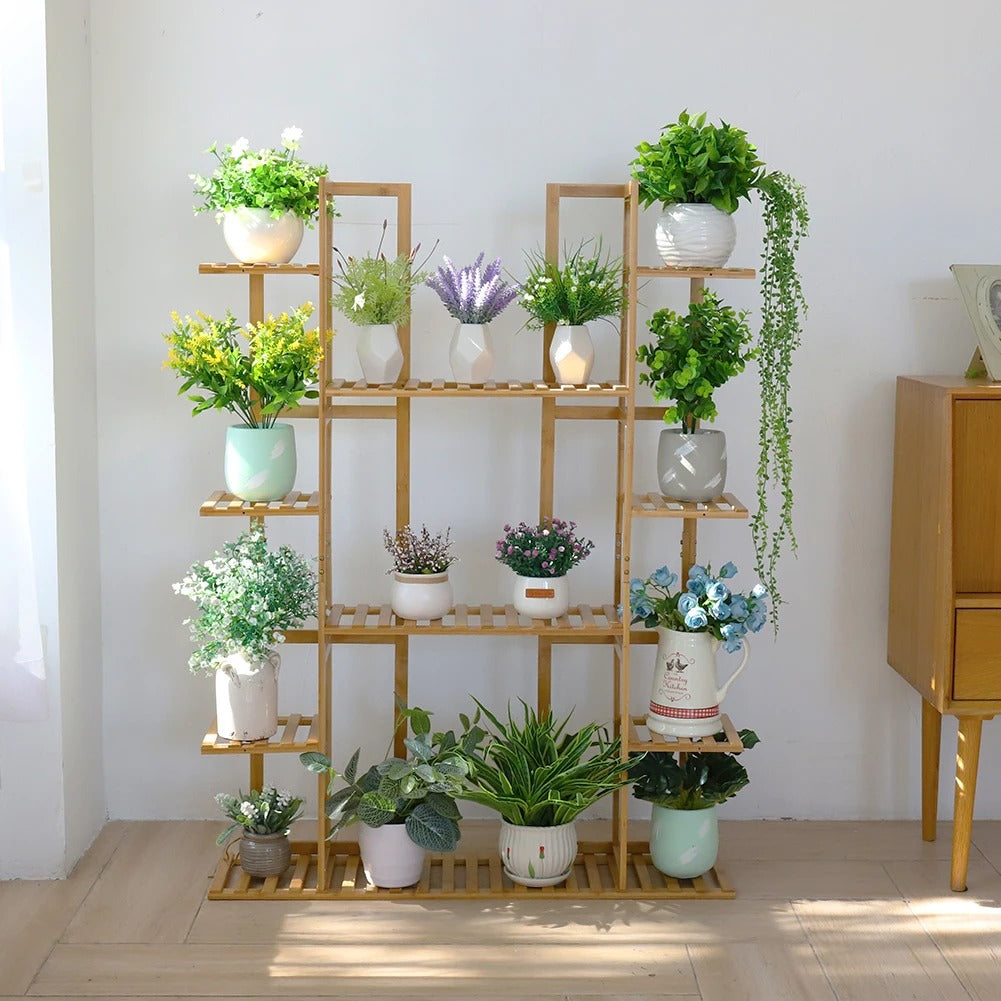
Metro Elegance'scompare supports for a layered plant display includes several whole-culm bamboo designs that use the natural structural properties of bamboo in a straightforward way, without excessive processing.
Thecheck the shelf layout for the pots you want to display is a practical example - a clean, multi-tier design that uses bamboo in a simple, unfussy format suited to both indoor and sheltered outdoor use in Australian homes.
Timber: Solid Wood as a Sustainable Choice
The Case for Natural Timber
Solid timber from well-managed sources is a genuinely considered material choice for plant stands. Timber is biodegradable at end of life, stores carbon during the life of the tree, and can be processed with relatively low energy input compared to many synthetic materials. For buyers who prioritise natural materials and end-of-life biodegradability, solid timber - particularly pine and other softwoods that reach harvestable maturity faster than tropical hardwoods - is a sound option.
Pine in particular is widely used in sustainable forestry operations in Australia and internationally. Pine plantations are specifically grown for timber production and harvested on managed rotations, which is a different environmental profile from old-growth logging or unmanaged forest clearing.
Carbonised Timber
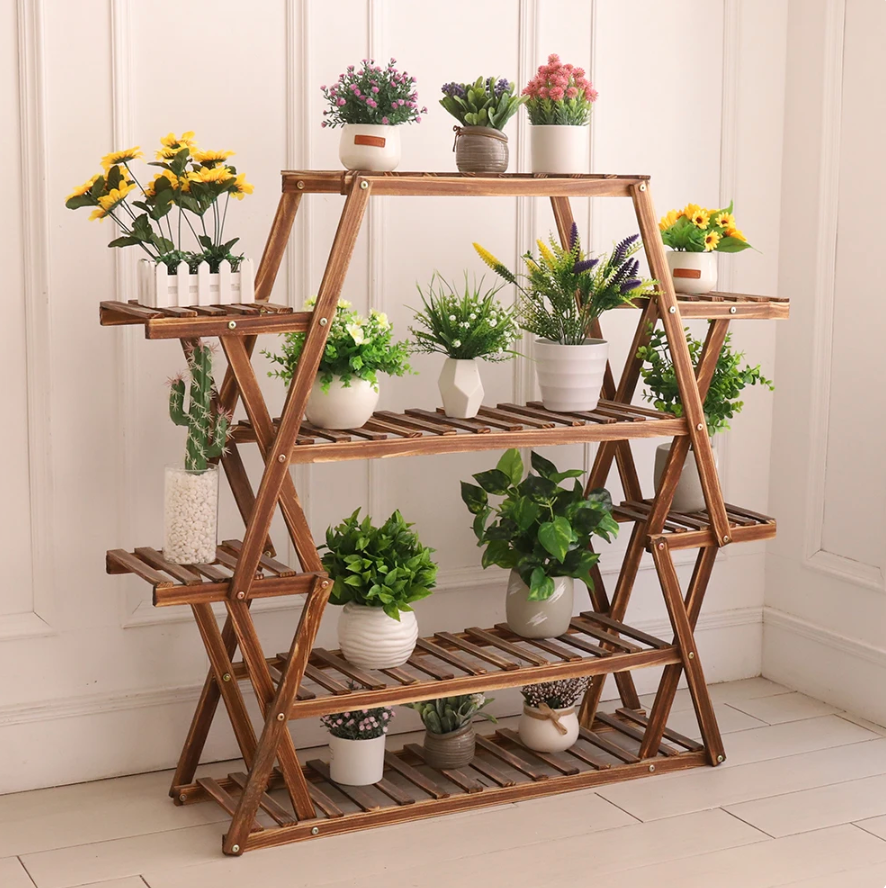
Carbonised timber - wood that has been surface-heated to create a darkened, hardened outer layer - is worth specific mention in a sustainability context. The carbonisation process creates a naturally more moisture and insect-resistant surface without the need for synthetic chemical treatments. For outdoor-positioned timber plant stands in particular, a carbonised finish represents a more natural protective approach compared to synthetic varnish or chemical preservative treatments.
Thesee whether this setup leaves enough room for watering from Metro Elegance is a good example of this format - its natural carbonised finish adds durability without relying on chemical surface treatments, which suits buyers who are thinking carefully about the processing footprint of their home decor choices.
Solid Pine Designs
Solid pine plant stands represent one of the more straightforward natural material choices in the category. Pine is a faster-growing softwood compared to most hardwoods, it is available from managed plantation sources, and it can be finished with natural oils or low-emission sealants that maintain the wood's natural character without introducing heavy chemical coatings.
Thecheck placement needs before adding it to the room from Metro Elegance is a well-suited option for buyers interested in a natural timber design with both indoor and sheltered outdoor versatility.
Metal Plant Stands: A Different Kind of Sustainability Argument
Metal is not typically the first material that comes to mind in a sustainability conversation, but it has its own environmental considerations that are worth acknowledging honestly.
The Durability and Recyclability Argument
Steel is one of the most widely recycled materials on the planet. At end of life, steel plant stands can be recycled and the material reused in new production, which is a meaningful environmental advantage compared to composite materials or mixed-media products that are difficult to separate and recycle at end of life.
The other sustainability argument for quality metal plant stands is durability. A powder-coated steel plant stand that lasts ten or fifteen years with basic maintenance has a lower replacement frequency than a cheaper natural material stand that is replaced every two or three years. When you factor in the material, energy, and transport cost of repeated replacement, the long-lived metal stand may represent a lower cumulative environmental impact over time - even if its initial production is more energy-intensive than a bamboo equivalent.
This does not make metal categorically more sustainable than bamboo or timber. It simply illustrates that sustainability accounting is more complex than single-factor analysis. The most environmentally considered choice combines a responsibly sourced material with high durability, low replacement frequency, and responsible end-of-life handling.
Longevity as the Most Underrated Sustainability Factor
Across all material categories, the single most reliable way to improve the sustainability profile of a plant stand purchase is to buy a quality product and maintain it well. A well-made bamboo stand that is properly sealed, kept in appropriate conditions, and maintained for five or more years is a more sustainable choice than a poorly made bamboo stand that needs replacing in twelve months.
This principle is worth naming clearly because it runs counter to the consumer habit of treating home decor as a frequent, low-commitment purchase. Plant stands - like most home furnishings - are not inherently disposable items. The choice to treat them as such is a consumption pattern rather than a product necessity.
For buyers who are genuinely motivated by sustainability, the most impactful decisions are:
-
Choosing a well-made product over the cheapest available option.
-
Selecting a material suited to the conditions it will be used in, so it does not deteriorate prematurely.
-
Maintaining the stand appropriately to extend its useful life.
-
Choosing a design that is versatile enough to continue to be useful as the home changes, rather than one that is so trend-specific it becomes dated quickly.
Our post on the practical and environmental benefits of choosing high-quality plant stands touches on the broader value of investing thoughtfully in plant display rather than cycling through cheap alternatives.
How to Assess the Sustainability of a Plant Stand Before Buying
A few practical questions worth considering when evaluating any plant stand from a sustainability perspective:
What material is it made from? Natural, renewable materials like bamboo and timber from managed sources carry a lower extraction footprint than virgin plastic or non-recycled synthetic materials.
How is the surface treated? Natural oil finishes, low-emission sealants, and carbonised finishes have a lower chemical processing footprint than heavy synthetic coatings or varnishes containing high levels of volatile organic compounds.
How long is it likely to last? A design that is robustly constructed with quality joints and a durable finish will remain in service longer than a cheaper equivalent, reducing replacement frequency.
Can it be repaired or retreated? Natural timber and bamboo stands can typically be sanded back and retreated if the surface deteriorates, extending their useful life. This repairability is an environmental advantage compared to products that cannot be meaningfully restored.
Is the retailer transparent about what the product is made from? Retailers who are specific about materials, finishes, and sourcing are generally more trustworthy on sustainability claims than those who use vague "natural" or "eco" language without substance.
For a detailed look at which specific plant stand materials perform best across different environmental considerations in the Australian context, our post on eco-friendly plant stand materials worth knowing about covers the full breakdown in practical, accurate terms.
Practical Sustainability Tips for Plant Stand Care
Extending the life of a plant stand is one of the most practical sustainability actions available to any buyer. A few steps that make a meaningful difference:
Seal natural material stands before outdoor use. A UV-protective sealant applied before the stand is placed in an outdoor position significantly extends its weather resistance, reducing the likelihood of premature deterioration and replacement.
Keep the stand dry where practical. Avoiding sustained moisture contact - particularly at joint connections - is the most effective single maintenance action for bamboo and timber stands.
Inspect annually. A quick annual inspection of joints, surface condition, and any areas showing early signs of moisture damage or surface wear allows small issues to be addressed before they become structural problems.
Retreat as needed. Bamboo and timber stands used outdoors benefit from periodic retreatment of their surface sealant. The frequency depends on conditions, but an annual assessment is a reasonable starting point for most Australian outdoor environments.
Our post on maintaining timber plant stands to prevent long-term damage covers these maintenance steps in practical detail, with specific guidance for Australian conditions.
Shop Sustainable Plant Stands at Metro Elegance
Atplan the next step in your room update, we stock plant stands made from natural, renewable materials including bamboo, solid pine, and carbonised timber - alongside metal options for buyers who prioritise durability and low maintenance in outdoor settings. Our full range offind display options for potted greenery is available with free shipping across Australia.
We believe that good design and considered material choices are not in conflict. A well-made plant stand from a natural material, maintained thoughtfully, is both a beautiful and a responsible addition to any Australian home.
Want to find a plant stand that suits both your home and your values? Get in touch with the Metro Elegance team and we will help you choose a design that fits your space, your style, and the way you want to shop.
Frequently Asked Questions
Is bamboo actually eco-friendly for plant stands?
Bamboo is one of the more rapidly renewable plant stand materials available, reaching harvestable maturity in approximately three to five years compared to decades for many hardwood timber species. The sustainability of a specific bamboo product also depends on processing methods and surface treatments - whole-culm bamboo with low-emission finishes has a lower processing footprint than composite bamboo products using synthetic bonding agents.
Are wooden plant stands sustainable?
Timber from managed plantation sources - particularly pine - is a considered material choice for plant stands. Plantation timber is specifically grown for harvesting on managed rotations, which is a different environmental profile from old-growth logging. Solid wood plant stands are also biodegradable at end of life and can be maintained and repaired to extend their useful service life.
What is the most eco-friendly plant stand material?
There is no single universally correct answer, as the full environmental profile of any product depends on sourcing, processing, surface treatment, longevity, and end-of-life handling. Bamboo and plantation-sourced timber are among the lower-impact raw material choices. A well-made product from either material that lasts many years will typically have a lower cumulative impact than a poorly made equivalent that requires frequent replacement.
Are metal plant stands environmentally friendly?
Steel is one of the most widely recycled materials globally, which gives quality metal plant stands an end-of-life advantage compared to composite or mixed-media products. Metal stands also tend to be highly durable, reducing replacement frequency. The initial production of steel is more energy-intensive than natural materials, so the sustainability case for metal stands rests primarily on their durability and recyclability rather than their extraction footprint.
How can I make my plant stand last longer?
Seal natural material stands before outdoor use, keep them away from sustained moisture contact, inspect joints and surface condition annually, and retreat the surface finish as needed. For metal stands, inspect the powder-coat finish periodically and touch up any chips or scratches promptly to prevent rust. These maintenance steps significantly extend the useful life of any plant stand material.
Can bamboo plant stands be composted at end of life?
Untreated or minimally treated bamboo and timber plant stands are biodegradable and can be composted or disposed of through green waste streams at end of life, depending on local council guidelines. Stands with heavy synthetic coatings or composite construction may need to go through general waste instead. Checking the surface finish and construction of the specific product is advisable before attempting to compost it.
What should I look for to verify a plant stand's sustainability claims?
Look for specific information about the material source, surface treatment, and construction method rather than vague "eco" or "natural" labelling. Products that name the specific material, finish type, and provide honest information about care and longevity are generally more reliable on sustainability claims than those using broad marketing language without substance.