
Bohemian interior styling has a reputation for being effortless - all trailing plants, natural textures, and an easy abundance of greenery that looks like it just happened. The reality, as with most things that look relaxed and uncontrived, is that it takes a fair amount of considered decision-making to get there.
See our indoor and outdoor plant stands before choosing a design for your space.
Plant stands play a central role in boho interiors that often goes unacknowledged. They determine the heights at which plants are displayed, the materials that frame the greenery, and the overall sense of layering and depth that gives a boho plant display its characteristic fullness. Get the stands right and everything else becomes easier. Choose the wrong ones and the display can feel disorganised in the wrong way - not artfully relaxed, just random.
Atfind room-ready options for everyday routines, we stock a range of plant stands across materials, heights, and styles that suit the demands of a genuine boho interior. This guide walks through how to approach boho plant stand styling practically and with enough structure that the result actually looks good, not just well-intentioned.

What Bohemian Plant Styling Actually Looks Like
Before choosing a single stand, it helps to be clear about what distinguishes boho plant styling from other interior plant display approaches.
Bohemian interiors are characterised by a layering of natural materials, a mix of global influences, an embrace of imperfection and organic form, and a general sense that the space has been accumulated rather than designed from scratch. Plants fit naturally into this world because they are inherently organic, imperfect, and varied.
In a boho interior, a plant display is rarely a single plant on a single stand. It is more often a collection of plants at different heights, in different containers, on stands that share a material family or a tonal connection but are not necessarily identical. The display suggests growth and abundance - but it is abundance that has some shape to it, not pure chaos.
The difference between a boho plant display that works and one that simply looks untidy is usually in the editing. Boho styling is more permissive than minimalist approaches, but it still benefits from decisions about what goes where and why. The plants are varied, but they are grouped. The stands are mixed, but they share a material logic. The pots are eclectic, but they sit within a colour range.
Stand Materials That Suit a Boho Interior
Material choice is one of the most important decisions in boho plant stand styling. The wrong material - polished chrome, high-gloss lacquered timber, or clinical white powder coat - can undermine the warmth and organic quality that boho interiors depend on.
Bamboo is one of the most natural fits for the aesthetic. It is a genuinely natural material with visible grain, a warm tone, and a slight irregularity in its surface that suits the boho embrace of organic imperfection. Bamboo stands are also typically lighter in visual weight than solid timber, which allows them to disappear into a layered plant display without competing for attention. Ourcompare this layout with the number of pots you display works well in boho interiors precisely because its structure is simple and its material carries the warmth the aesthetic requires.
Carbonised or darkened timber adds a slightly richer, more textured quality. Carbonised wood has a smoky, aged appearance that suits the boho love of materials that feel like they have a story. A carbonised wood multi-tier stand positioned in a reading nook or a living room corner, layered with plants in terracotta and woven baskets, reads as genuinely boho rather than merely decorative.
Natural and dark metal can work in a boho interior when used alongside warmer materials. A slim black metal stand beside a bamboo ladder stand creates an interesting contrast - the precision of the metal against the organic quality of the bamboo - that suits the boho tendency to mix global and cultural influences. The key is that the metal is not the dominant material in the display; it is a counterpoint to the warmer, more natural pieces around it.
What to avoid. Chrome, high-gloss finishes, and clinical white powder coat tend to feel at odds with boho interiors. These materials read as contemporary or industrial - not wrong in their own context, but misaligned with the warmth and organic quality that boho styling requires.
Height Layering in a Boho Display
Bohemian plant styling tends toward abundance, which means more plants and more height variation than you might use in a minimalist or Scandi-inspired display. The high-mid-low framework still applies, but in a boho context it is typically expanded: you might have two plants at the high level, several at the mid level, and a handful at the low level, rather than one plant per tier.
This expansion of scale is part of what creates the lush, layered quality of a genuinely boho plant display. But it also increases the risk of the arrangement tipping into visual disorder. The way to maintain some structure while still achieving the abundant quality that boho interiors are known for is to be deliberate about grouping.
Plants in a boho display should read as groups, not as individuals. Rather than spacing plants evenly across a room, cluster them together in defined areas - a corner, a section of wall, a space beside a sofa. The clusters can be loose and varied in their internal arrangement, but the fact that they are clusters rather than scattered individuals gives the room's plant display a sense of composition.
Oursee whether the footprint works beside your furniture is well suited to a boho display that centres on a single large, multi-level structure. Filling its tiers with a mix of trailing varieties, textured succulents, and mid-size leafy plants creates exactly the kind of layered abundance that the aesthetic calls for without requiring a dozen separate stands positioned around a room.
Mixing and Matching Stands the Right Way
One of the things that distinguishes boho styling from most other interior design approaches is its explicit permission to mix. Different stand heights, different materials, different forms - all of this is not only acceptable in a boho interior but actively encouraged. The challenge is in doing it with enough coherence that the mix looks intentional rather than accumulated by accident.
The most reliable approach is to choose one unifying element across your stands and let everything else vary. In a boho display, this is most often material: all stands in a natural material family (bamboo, timber, cane, rattan, woven elements), even if the specific material and construction varies between individual pieces. A bamboo ladder stand beside a carbonised wood multi-tier stand beside a raw timber single-stem stand reads as a coherent set because the material family is consistent.
Alternatively, you can unify through colour tone. If you prefer to mix bamboo and metal, keeping the metal in a warm bronze or dark brown rather than a cool grey or silver maintains the tonal warmth that the boho aesthetic requires. The specific materials vary, but the overall palette stays within a warm, earthy range.
What tends not to work is mixing materials and tones without any thread of continuity. A bamboo stand beside a chrome stand beside a white powder-coated metal stand will look like three separate decisions, not one composed display - which is not the effect boho styling is trying to achieve.
For more on how to combine different stand types into a cohesive layered display, our guide on building a layered plant arrangement with mixed stands covers the practical combinations that hold together visually.
Pot and Container Choices That Reinforce the Boho Aesthetic
In a boho plant display, the containers are as much a part of the aesthetic as the plants and the stands. This is one area where the investment of a little thought pays significant dividends.
Terracotta is perhaps the single most boho-compatible pot material. Its warm earthy orange tone, its matte surface, and its slight porosity all suit the boho love of natural, imperfect materials. Terracotta pots in varying sizes, some plain and some with simple decorative detail, work well across all tiers of a boho plant display.
Woven baskets as pot covers add texture and warmth that ceramic pots alone cannot achieve. A plastic nursery pot inside a woven seagrass or rattan basket gives the impression of a woven container without the drainage complications. This approach is particularly effective at the lower tiers of a display, where the baskets can be seen clearly and their texture contributes to the layered quality of the arrangement.
Textured and handmade-looking ceramics in neutral, earthy tones - cream, sage green, dusty blush, ochre, warm brown - suit the boho palette well. Slight irregularities in the finish or form add to rather than detract from the aesthetic in a boho interior.
What to avoid. Glossy white or brightly coloured ceramics, matching pot sets in identical sizes, and plastic pots without a cover tend to work against the boho aesthetic. The goal is variety with continuity, not uniformity.
Plants That Complete the Boho Look
The choice of plant variety matters in a boho display more than it does in some other interior styles, because the aesthetic is closely associated with specific plant types that have become emblematic of the look.
Trailing and cascading varieties are central to boho plant displays. Pothos, heartleaf philodendron, string of pearls, and similar trailing plants create the cascading greenery that flows over the edges of stands and baskets in a way that reads as lush and abundant. These varieties suit the mid and high tiers of a boho display, where their trailing growth is visible and can develop without restriction.
Large-leafed tropicals provide the bold, sculptural quality that prevents a boho display from looking too soft or unfocused. Monsteras, rubber plants, bird of paradise plants, and similar varieties create structural interest and visual anchoring within a display that might otherwise feel formless. These work well as the tallest element in a corner arrangement or as a central statement piece.
Succulents and cacti in varied forms add interesting texture at the lower tiers. A collection of small succulents in terracotta pots on a low shelf or a small wooden riser creates a composed, textured low tier that grounds the arrangement without competing with the more dramatic plants above.
For guidance on pairing specific plants with appropriate stand heights in an indoor display, our article on which plants work well with indoor plant stand arrangements covers the practical matching considerations in detail.
Room-by-Room Boho Plant Stand Ideas
Boho plant styling is flexible enough to work across multiple rooms, but each space has its own specific demands.
Living room. This is typically where a boho plant display is most developed and most visible. A large corner arrangement anchored by a tall bamboo ladder or multi-tier stand, supplemented by a mid-height single stand and a low wooden riser, creates the kind of lush corner display the living room can accommodate. Layer plants with trailing varieties at the top tiers, structural mid-size plants in the middle, and compact varieties at the base.
Bedroom. Boho bedrooms benefit from a slightly more restrained plant display than the living room. A single tall stand beside the window with a structural plant, supplemented by a small mid-height stand on the opposite side, creates balance without overcrowding the sleeping space. Natural materials are especially important in the bedroom, where the organic quality of bamboo and timber contributes to the calm that the room needs.
Reading nook or study. These smaller, more personal spaces suit a concentrated plant display built around a single multi-tier bamboo or timber stand. Position it adjacent to the natural light source, fill the tiers with trailing and leafy varieties, and surround the base with woven baskets holding additional pots. The result is the kind of plant-immersed nook that boho styling does particularly well.
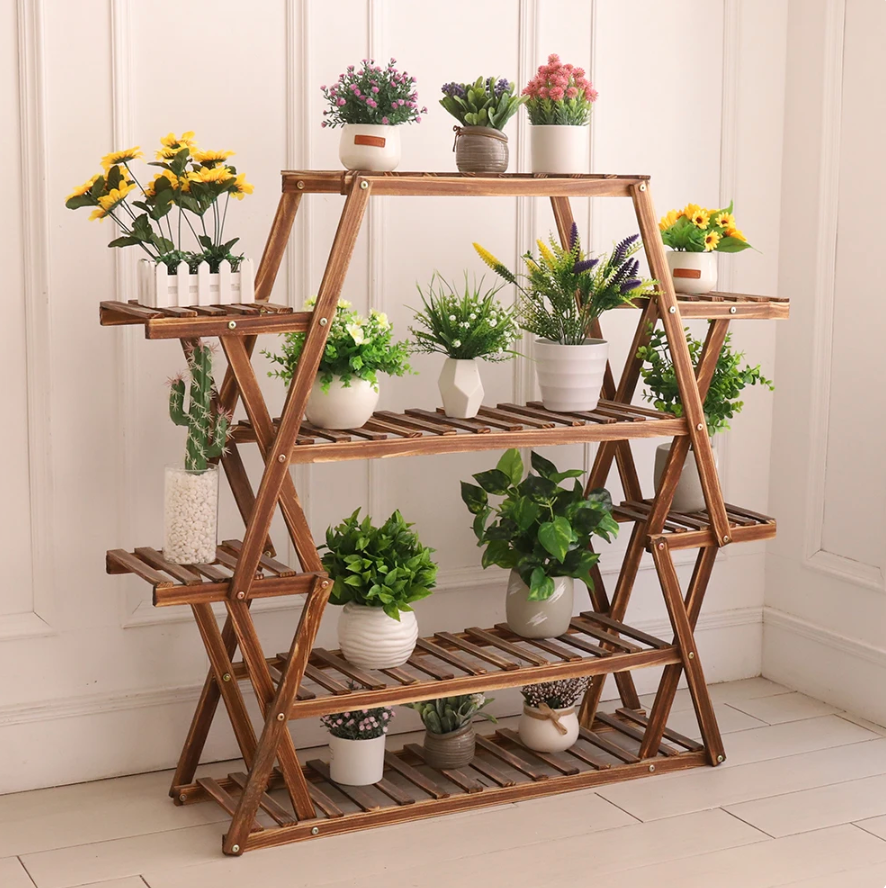
Ourreview the current size before planning your plant corner is well suited to reading nooks and living room corners in boho interiors. Its triangular form uses corner space efficiently, and its six tiers provide enough height range to build the layered, abundant display that the aesthetic calls for.
For a broader discussion of how boho, minimalist, and Hamptons styling each influence plant stand choices, our post on matching your plant stand to your home's design style walks through the distinctions and practical implications.
Keeping a Boho Display Feeling Fresh Over Time
Boho plant displays are living arrangements, and the aesthetic actually benefits from the changes that come with plant growth. A trailing plant that has grown longer since it was first positioned, a monstera that has pushed out a new fenestrated leaf, a terracotta pot that has developed the gentle white salt marks that come with regular watering - all of these are signs of a genuinely lived-in, cared-for plant display, which is exactly what boho interiors celebrate.
Resist the urge to replace plants the moment they show any sign of growth or change. The boho aesthetic is not about keeping things looking pristine and static. It is about embracing the organic quality of living things within a considered design framework.
At Metro Elegance, we believe that the right plant stand makes it easier to maintain that considered quality over time, because a stand that is well-designed and well-proportioned continues to work within its arrangement even as the plants around it change and grow. Ourplan a more practical indoor plant corner is built with exactly that longevity in mind.
If you are working on a boho plant display and would like some guidance on which stands would suit your specific space and style, our team is happy to help.
Get in touch with Metro Elegance here.
Frequently Asked Questions
What plant stands suit a bohemian interior?
Bamboo, natural timber, carbonised wood, and stands in warm-toned natural materials suit boho interiors most effectively. Woven rattan or cane elements also work well. Avoid high-gloss, chrome, or clinical white finishes, which tend to feel at odds with the warmth and organic quality that boho styling depends on.
Can I mix different plant stand styles in a boho display?
Yes, mixing is actively encouraged in boho styling. The key is to maintain some visual continuity across the stands - a shared material family, a consistent colour tone, or a similar design register - so that the mix reads as intentional rather than accumulated without thought.
What pots work best with boho plant stands?
Terracotta pots, woven basket pot covers, and textured handmade-looking ceramics in earthy neutral tones suit the boho aesthetic well. Avoid glossy finishes, bright colours, and perfectly matched sets. Some variety in pot size and slight irregularity in finish reinforces rather than undermines the aesthetic.
How many plants are appropriate for a boho display?
Boho styling is more permissive about plant quantity than minimalist approaches, but the display still needs structure. Cluster plants in defined areas rather than scattering them throughout the room, and use stands to create clear height variation within each cluster. The result should feel abundant but composed.
What trailing plants suit a boho plant stand display?
Pothos, heartleaf philodendron, string of pearls, tradescantia, and similar trailing varieties suit boho displays well. Their cascading growth creates the flowing, layered quality that the aesthetic is associated with, particularly when displayed on the upper tiers of tall or multi-tier stands.
Do boho plant stands need to match the rest of the furniture?
An exact match is not necessary or even desirable. Boho interiors embrace eclecticism. The stands should share a material logic or tonal range with the broader room - warm natural materials connecting with timber furniture and woven textiles, for example - but they do not need to match piece by piece.
How do I keep a boho plant display from looking cluttered?
Group plants in defined areas rather than distributing them across every surface. Maintain some tonal consistency in pot colours. Use stand height variation to create clear visual structure within each grouping. And leave some open space in the room - even a boho interior needs areas of relative calm to make the plant displays feel considered rather than overwhelming.