
Key Takeaways
Browse Plant Stands Australia for indoor, outdoor, wooden, metal, tall and corner options.
- Succulents are small and lightweight, which opens up a wide range of stand options - but the right choice still depends on light access, pot drainage, and the kind of display you want to create.
- Multi-tier stands are the most effective format for succulent collections, allowing multiple varieties to be displayed at different heights in a small floor footprint.
- Succulents need good light access, so stand placement near a window or bright indoor space is more important for plant health than for most other indoor plants.
- Small pot sizes in the 8-15cm range suit most succulent varieties, which means stand platform width is less of a structural concern and more of a proportional one.
- Drainage is critical for succulent health - always use pots with drainage holes and saucers, and choose a stand format that allows saucers to be used on every tier.
- explore design-led options for functional rooms carries a range of multi-tier and single-specimen plant stands suited to succulent displays, with free shipping across Australia.
Succulents are the plants that most people start with and never quite stop collecting. They are compact, varied, relatively forgiving, and come in enough shapes, colours, and textures to sustain a genuine collecting habit across years. Before long, windowsills are full, shelves are occupied, and every available flat surface has a pot on it.
A well-chosen plant stand changes that dynamic completely. It takes a scattered collection of individual pots and turns it into a deliberate display - something with structure, visual hierarchy, and a sense that it was arranged with intention rather than simply placed wherever there was room.
The good news for succulent enthusiasts is that succulents are among the most forgiving plants to display on a stand. They are light, their pots are small, and their compact scale suits the kind of detailed, layered arrangement that a multi-tier stand creates naturally. The main considerations are light access, drainage, and finding a stand format that suits both the scale of the pots and the visual character of the collection.
This guide covers all of that in practical terms, with specific stand recommendations suited to Australian homes and the succulent collections that live in them.
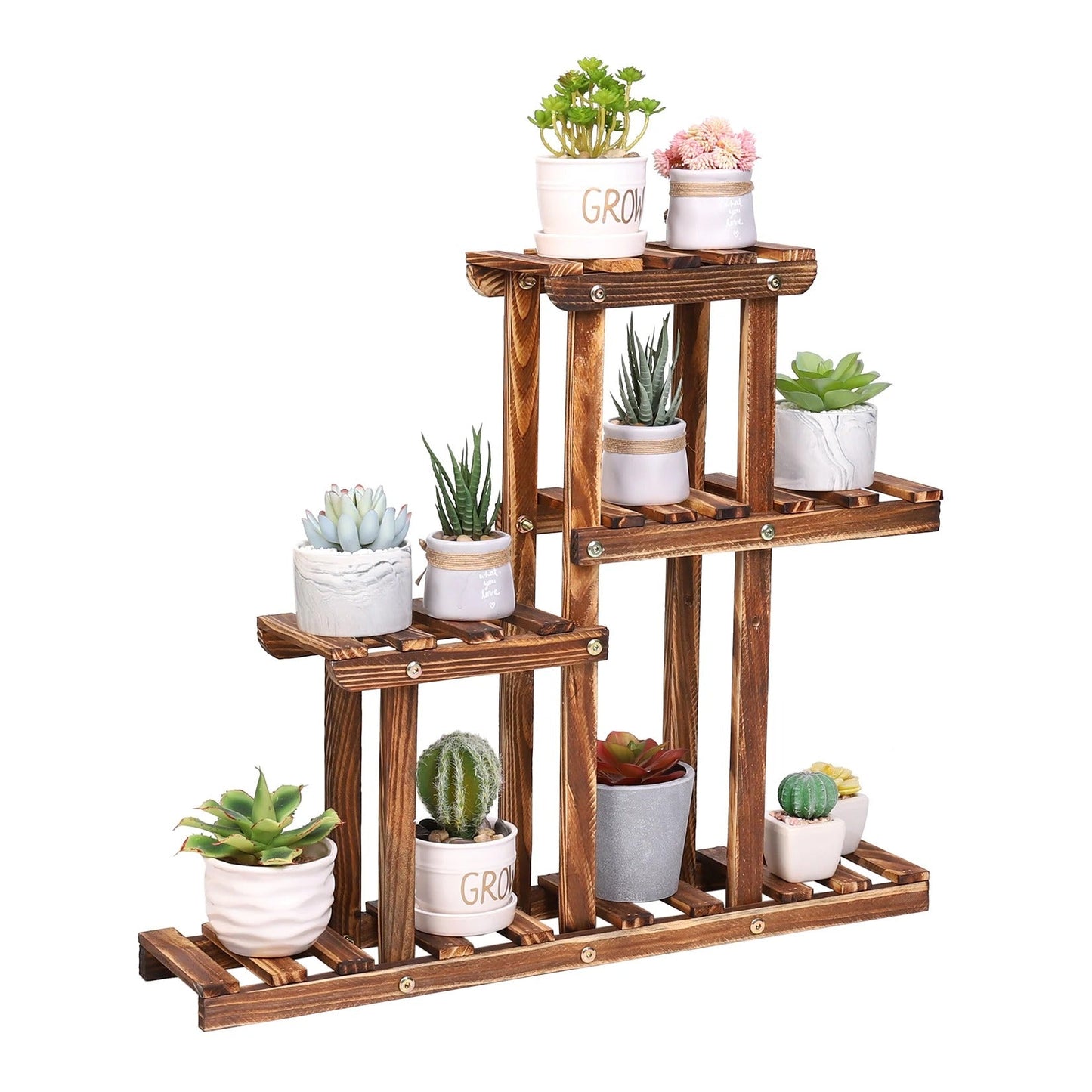
Why Succulents Deserve a Dedicated Display Structure
The appeal of a dedicated succulent display goes beyond tidiness. When succulents are arranged on a tiered stand rather than scattered across various surfaces, several things happen that improve both the look of the collection and the health of the plants.
Visual coherence is the most immediate benefit. A group of succulents on a tiered stand reads as a composed collection rather than an accumulation. The eye moves through the arrangement as a whole rather than registering each pot individually. The variety of forms and colours that makes succulents interesting becomes more apparent when they are displayed together with some visual structure.
Light distribution improves when pots are elevated on tiered platforms rather than sitting flat on a surface. On a windowsill or flat surface, pots at the back receive less light than those at the front, which creates uneven growth over time - the shaded plants reach and lean toward the light while the well-lit ones remain compact. On a tiered stand positioned at an angle to the light source, more pots receive relatively even light exposure, particularly if the stand is periodically rotated.
Drainage management is easier with proper stands. Succulents need to dry out completely between waterings, which means adequate drainage from the pot base is essential. On a stand with platform shelves that accommodate saucers, the drainage cycle is easy to manage - the saucer catches excess water, the pot drains fully, and the saucer is emptied before the next watering. This is considerably cleaner and more controlled than managing drainage on a flat surface or windowsill.
Space efficiency is the practical argument. A compact three-tier stand holding twelve small succulent pots takes up the floor space of a single pot placement, with the display capacity of a full shelf unit. For apartments, small living areas, or any home where indoor plant collection has outpaced available surface space, this is a genuinely useful conversion.
What to Look for in a Stand for Small Succulent Pots
Succulent pots are typically small - most common varieties are grown in pots ranging from 6cm to 15cm in diameter, with the most popular display sizes around 8-12cm. This changes several of the stand sizing considerations that apply to larger plants.
Platform width is less of a structural concern at this scale. A shelf that is 15-20cm wide comfortably accommodates most succulent pots with room to spare. The more important consideration is that the platform is deep enough front-to-back that the pot sits fully within it rather than overhanging the edge. On narrow ladder-style stands, check the depth of each rung or shelf rather than just the width.
Tier spacing is more important for succulents than for many other plants. Succulents with upright growth habits - columnar cacti, tall echeverias, aloes in compact forms - need clearance between the top of the pot on one tier and the underside of the shelf above. If the clearance is too tight, the plant has nowhere to grow and the display looks congested. A tier spacing of at least 20-25cm is appropriate for most common succulent varieties; taller-growing varieties need more.
Open platform formats support drainage better than solid, enclosed shelf surfaces. A slatted or widely spaced platform allows air to circulate around the base of the pot and reduces the risk of moisture sitting under the saucer between waterings. For succulents, where root rot from overwatering is a common cause of plant loss, this is a meaningful practical advantage.
Stability relative to load is not a major concern at this pot size - even a fully watered succulent collection on a multi-tier stand is unlikely to create significant structural demand on a reasonably built stand. The more relevant stability consideration for succulents is wind, particularly on outdoor balconies and patios where the lightweight pots can be dislodged by a gust more easily than heavier containers.
The Most Effective Stand Formats for Succulent Collections
Multi-tier bamboo and timber stands are the most popular and most practical format for succulent collections in Australian homes. Three to five tiers in a compact footprint provide enough capacity for a meaningful collection without occupying excessive floor or bench space. The natural material aesthetic of bamboo and timber complements the organic, earthy quality of succulents and their pots particularly well.
Ladder-format stands are especially effective for succulent displays. The leaning profile of a ladder stand allows multiple pots to be displayed at different heights with a graduated visual effect, and the open rung design ensures adequate airflow around the pots on every level.
Corner stands are a strong choice for succulent collections that have grown to the point where a dedicated display area makes sense. A triangular corner stand in bamboo or timber turns an often-underused corner into a feature display, and the contained geometry of the corner setting frames the collection without it spilling visually into the broader room.
Single-specimen elevated stands suit statement succulents - an unusually large aloe, a particularly sculptural cactus, or a rare variety that deserves its own display moment rather than being grouped with others. A small, well-proportioned single stand at 20-40cm height gives a special plant the visual focus it warrants.
Tiered step-style stands with wide, flat platforms and clear tier differentiation allow creative arrangement of pots by size, colour, or variety across levels - a more intentional, almost gallery-like approach to succulent display that suits contemporary Australian interiors well.
Light and Placement: The Most Important Factor for Succulent Health on a Stand
No matter how well-chosen the stand, a succulent collection will not thrive if the placement does not provide adequate light. Succulents are generally more light-hungry than most popular indoor plants, and this places real constraints on where a stand can be positioned effectively.
In most Australian homes, the best position for a succulent stand is within 1-2 metres of a bright window with direct or strong indirect light for a significant part of the day. A north or east-facing window is typically the most effective indoor position - north-facing windows in the southern hemisphere receive sun throughout the day, while east-facing windows provide gentle morning sun that suits most succulent varieties without the heat intensity of western afternoon sun.
For outdoor and semi-outdoor positions - covered balconies, verandahs, and patios - succulents can handle direct morning or filtered afternoon sun well, and outdoor positions often provide better light quality than indoor positions even near windows. A stand on a covered balcony in a bright position can be one of the most effective settings for a succulent collection in an Australian climate, provided there is some protection from heavy rain that could oversaturate the soil.
The stand's format also influences light distribution across the collection. On a ladder or tiered stand positioned directly beside a window, the pots closest to the window receive more direct light than those on the opposite side. Periodically rotating the entire stand - or individually rotating pots - helps equalise light exposure across the collection.
Specific Stands from Metro Elegance for Succulent Displays
When we look at the Metro Elegance range with succulent displays specifically in mind, several designs stand out for their tier format, platform dimensions, and visual character.
Thecompare the footprint with your balcony or room layout is a natural fit for succulent collections. Four tiers provide enough levels to create a genuinely interesting display with variety across heights, the bamboo construction suits the natural aesthetic of a succulent arrangement, and the compact footprint makes it appropriate for windowsills, benchtops, and small room corners where a larger stand would be impractical.
Thereview whether the arrangement suits changing plant heights adds an additional level for larger collections and suits both indoor placement near bright windows and covered outdoor positions on patios and balconies. Five tiers allow a more elaborate arrangement with gradient display by colour, size, or variety - the kind of intentional styling that makes a succulent collection look like a considered installation rather than an accumulation of pots.
For a corner arrangement that gives a growing succulent collection its own dedicated space, the 3-Tier Bamboo Corner Plant Stand provides a purpose-built format suited to both indoor and outdoor use. The corner footprint is particularly practical for succulent enthusiasts who want to create a concentrated display in a defined space without the arrangement spreading across multiple surfaces.
Ourcompare practical ways to organise potted plants includes a variety of tiered and single-specimen formats suited to small pot displays, and ourexplore space-aware supports for houseplants is worth browsing specifically for the natural material options that suit succulent aesthetics most naturally.
Styling a Succulent Display on a Tiered Stand
The difference between a succulent display that looks considered and one that looks like a collection of random pots is largely a matter of a few simple arrangement decisions.
Vary the heights within tiers. Within each shelf level, mixing pots of slightly different heights - some taller upright varieties, some low rosette forms - creates visual movement within the tier rather than a flat, uniform row. A tall columnar cactus beside a low flat echeveria on the same shelf creates interest that matching heights cannot.
Group by colour or texture rather than variety. Arranging succulents by visual characteristic rather than botanical category creates a more cohesive display. A tier of pale blue-green varieties beside a tier of darker green and burgundy creates tonal contrast that reads as intentional even to viewers who know nothing about the specific plants.
Use consistent pot materials. Mixing terracotta, ceramic, concrete, and plastic pots of different colours across the same stand creates visual noise. Using one pot material or at least a consistent colour palette across the pots on a stand creates cohesion that lets the plants themselves - rather than the containers - provide the visual variety.
Our post on how to mix and match plant stands for a layered, composed indoor display covers these arrangement principles in more depth, and our post on how to style plant stands for a fresh, green indoor look is also worth reading for its broader styling guidance that applies naturally to succulent displays.
Caring for a Succulent Stand Display Over Time
A succulent display on a stand requires a slightly different maintenance rhythm than a single plant on a windowsill.
Watering needs to be more deliberate when pots are stacked vertically. Watering pots on upper tiers can splash or overflow onto lower tiers if not managed carefully. The simplest approach is to remove each pot from the stand for watering, allow it to drain fully before returning it, and empty the saucers across all tiers after the watering session.
Check the stand itself periodically for moisture accumulation on the shelf surfaces, particularly if pot saucers overflow or if watering is done in place. For bamboo and timber stands, keeping the shelf surfaces dry between waterings preserves the material and prevents surface staining.
Rotate the entire stand or individual pots periodically to ensure even light distribution across the collection. Succulents that receive uneven light will grow toward the light source and lose their compact, symmetrical form over time. A quarter-turn rotation every few weeks is sufficient for most indoor positions.
Our post on the practical benefits of using plant stands for better drainage and air circulation explains in more detail why elevating pots on a proper stand supports plant health rather than just aesthetics - a point that applies with particular force to succulents, where drainage management directly affects survival.

Find the Right Stand for Your Succulent Collection
At Metro Elegance, our plant stand range includes compact tiered designs, corner formats, and single-specimen stands suited to every size and style of succulent collection. With free shipping across Australia and a range that spans natural bamboo, treated timber, and powder-coated metal, there is a format that suits every collection and every home style.
If you have a specific succulent collection in mind - a growing herb and succulent combination, a statement cactus in need of its own stand, or an apartment corner you want to turn into a dedicated display - we are glad to help you find the right fit. Get in touch through our contact page and we will give you a recommendation based on your specific situation.
Frequently Asked Questions
What type of plant stand is best for succulents?
Multi-tier bamboo or timber stands are the most practical and visually suitable format for succulent collections. They provide display capacity across multiple levels in a compact footprint, suit the natural aesthetic of succulents and their pots, and allow light to reach pots across the display more evenly than a flat surface arrangement. Corner stands and ladder formats are also effective choices.
Do succulents need a special plant stand?
No, succulents do not need a specialty stand, but they do benefit from stands with certain characteristics: adequate tier spacing for the plant's growth habit, open platform formats that support drainage and airflow, and placement near a strong natural light source. The most important factor for succulent health on a stand is light access, not stand type.
How many tiers should a succulent stand have?
Three to five tiers suits most succulent collections in Australian homes. Three tiers provides enough capacity for a small to medium collection with good visual structure. Five or more tiers allows a larger collection to be displayed in a single footprint. The specific number depends on how many pots you are working with and how much floor space you are prepared to allocate.
Can I use a plant stand for succulents outdoors?
Yes, and outdoor positions on covered balconies and patios often provide better light quality for succulents than indoor positions near windows. Choose a stand in a weather-appropriate material for the specific outdoor setting - powder-coated metal or sealed bamboo for covered outdoor areas. Ensure the stand has enough base stability to resist wind, as small succulent pots are lightweight and can be dislodged in gusty conditions.
What size platform does a succulent plant stand need?
Most common succulent varieties are grown in pots of 6-15cm in diameter. A platform or shelf with a depth and width of 15-20cm comfortably accommodates most succulent pots. The more important measurement for succulents is the clearance between tiers, which should be at least 20-25cm to accommodate upright-growing varieties and allow adequate light to reach pots on lower levels.
How do I water succulents on a tiered stand without making a mess?
The cleanest approach is to remove each pot from the stand for watering, water thoroughly, allow the pot to drain completely over a sink or outside, and return it to the stand once drainage has stopped. If watering in place, use a narrow-spout watering can and direct the water to the soil surface rather than overhead. Always check and empty saucers across all tiers after watering to prevent standing water under the pots.
Are bamboo plant stands suitable for succulent displays?
Yes, bamboo is one of the most popular and practical materials for succulent display stands. It is lightweight, visually warm, and complements the natural aesthetic of succulents and terracotta or ceramic pots. For indoor use in dry to moderately humid conditions, bamboo stands perform reliably. For outdoor use, carbonised or sealed bamboo is more appropriate than standard untreated bamboo.