
Key Takeaways
Compare every style in the full Plant Stands range.
- Trailing and hanging plants are best displayed on tall stands, arched frame stands with hooks, or elevated tiered designs that give cascading foliage room to fall naturally.
- Stands with integrated hanging hooks are particularly well suited to plants like pothos, string of pearls, and devil's ivy that look most impressive when their trails are fully extended.
- Height is the defining factor for hanging plant stands - the taller the stand, the longer the trail can develop before reaching the floor.
- Weight capacity and hook construction are practical safety considerations when using a stand to suspend a hanging pot rather than rest a pot on a shelf.
- Metro Elegance stocks plant stands with hanging hook features and tall arched designs suited to trailing and hanging plants in Australian homes.
Trailing plants present a design challenge that upright or compact plants do not. They need height to look their best. A pothos trailing from a pot on the floor has nowhere to go - it puddles awkwardly, touches surfaces it should not, and loses the flowing, cascading quality that makes trailing plants so visually compelling in the first place. The same pothos elevated on a tall stand, or suspended from a hook on an arched frame stand, can trail for half a metre or more in open air - which is exactly the display that does justice to the plant's growth habit.
Getting this right requires thinking about plant stands slightly differently from how most people approach the category. The questions are not just about height and material - though both matter. They are also about whether the stand has appropriate hooks or suspension points for hanging pots, whether those hooks are structurally adequate for the weight of a hanging plant including its pot and soil, and whether the stand's overall design creates the right visual frame for a trailing plant to be seen against.
This guide works through the key considerations and formats for hanging and trailing plant display in Australian homes, with practical guidance on what to look for and which designs tend to suit this specific display need.
Why Trailing Plants Need a Different Approach
Understanding the specific display requirements of trailing and hanging plants helps explain why standard plant stand selection criteria need some adjustment.
The Height Requirement
Trailing plants develop their characteristic look through downward growth. A string of pearls, for example, grows individual strands that can reach 80cm or more in length from the pot. A devil's ivy trained as a trailing plant can produce trails of well over a metre in ideal conditions. For these plants to be displayed at their full visual potential, the base of the pot needs to be elevated high enough that the trails can develop without touching the floor or a nearby surface.
For most trailing varieties, this means a stand height of at least 80cm from the floor to the pot platform or hook point. Stands of 100cm or more give the most dramatic trailing effect for fast-growing varieties with long strands. For slower or more compact trailing plants, a stand of 60 to 80cm may be sufficient depending on the variety and current trail length.
Hooks and Suspension Points
Some trailing plants are best displayed in hanging pots suspended from a hook rather than resting in a pot on a shelf. The hanging suspension allows the plant to be viewed from below, with the trails framing the pot from all sides, rather than trailing in one direction from a shelf edge.
For this display style, the stand needs an integrated hook or cross-bar from which a hanging pot can be suspended. Not all plant stands include this feature - it is specific to designs that are built to accommodate both standing and hanging display. When a stand description mentions hanging hooks, it is worth checking the hook construction and the maximum stated hanging weight to confirm it suits the pot you plan to suspend.
Visual Frame and Negative Space
A trailing plant displayed on a stand benefits from negative space around it - clear area beneath and around the trails where the cascading foliage can be seen without competing visual elements close by. Stands that are overly busy in their own design, or that are positioned too close to other furniture and plants, can undermine the visual effect of a trailing display.
Simple, well-proportioned stands with a clean profile tend to frame trailing plants better than complex or heavily ornamented designs. The stand should recede visually to let the plant's natural cascading form be the feature.
The Best Stand Formats for Hanging and Trailing Plants
Tall Arched Metal Stands with Hanging Hooks
The tall arched metal plant stand is the most purpose-specific format for displaying hanging plants on a freestanding structure. These stands feature a tall arched frame that rises above the pot platform, with hooks incorporated into the arch from which hanging pots can be suspended. The arch creates vertical clearance above the plant - both practical (allowing the hanging pot to swing freely) and visual (framing the plant with a defined overhead structure).
For trailing plants, the arched format works particularly well because it provides two display levels simultaneously: a hanging pot from the arch above, and a standing pot on the lower platform below. This combination allows different plant varieties to be displayed in a single stand position - a trailing pothos from the hook, a compact succulent or snake plant on the lower shelf, for example.
Thesee whether the footprint works beside your furniture from Metro Elegance is one of the most directly suited designs in our range for this kind of combined display. Its tall arched frame with integrated hanging hooks accommodates both suspended and resting plant arrangements, and the mixed metal and wood construction suits the warm, natural aesthetic that trailing plants typically call for.
Tall Single-Hook Frame Stands
A simpler version of the arched stand is a tall single-post or frame stand designed primarily to provide a hook point at height - essentially a freestanding macrame hanger alternative that does not require wall fixings or ceiling hooks. For renters or for rooms without a suitable wall or ceiling anchor point, this format provides hanging display capability without any permanent installation.
The structural requirement for this format is more demanding than for a standard platform stand, because the weight of a hanging pot creates a pendulum load rather than a direct downward load. The base of the stand needs to be wide and heavy enough to resist the lateral movement of a suspended pot, particularly in a position with air movement from open windows or air conditioning.
Tall Multi-Tier Stands for Cascading Display
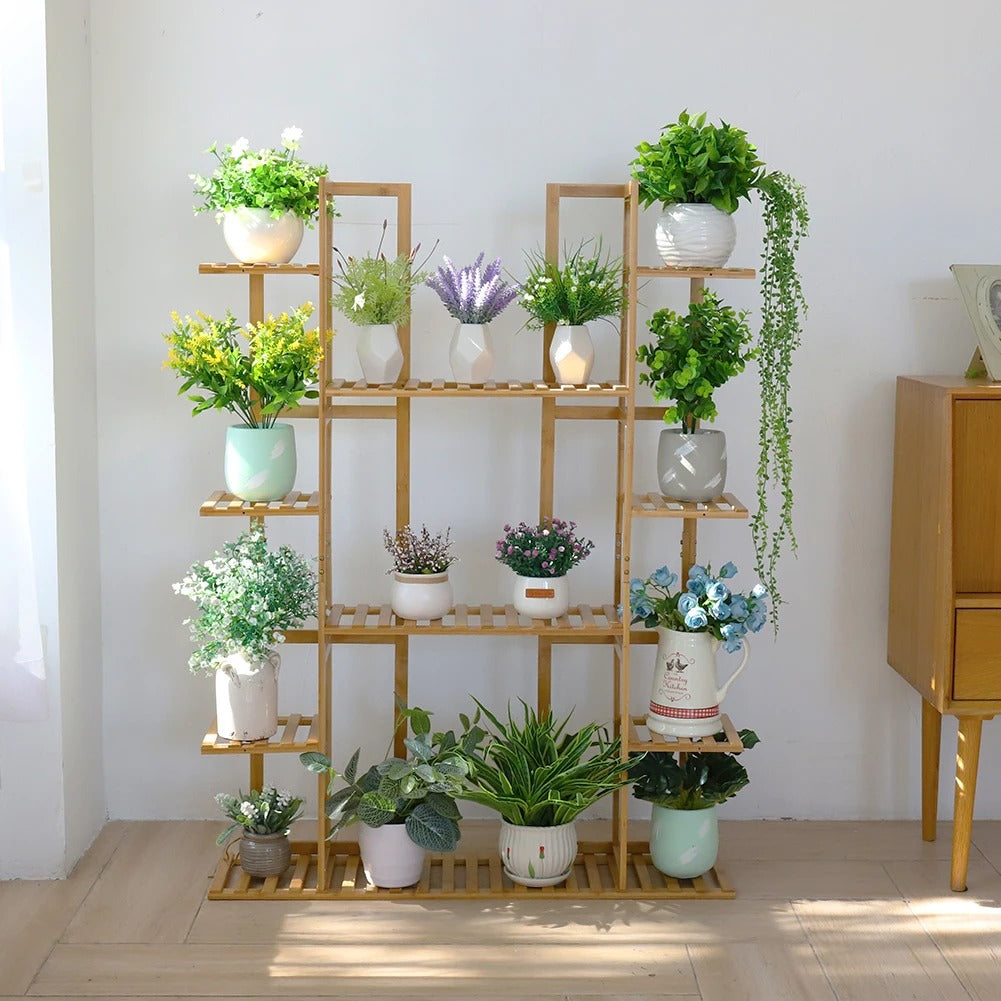
A tall multi-tier stand - particularly a nine or eleven-tier design with generous vertical height - can create an impressive cascading plant display without requiring individual hanging hooks. Trailing plants placed on upper tiers can cascade over the shelf edge and fall through open air toward the lower tiers, creating a layered waterfall effect when multiple trailing varieties are combined.
This approach requires a stand with adequate clearance between tiers for the trails to develop without resting on the tier below. Stands with 20 to 30cm of clear space between shelving levels provide enough clearance for most short to medium trailing varieties.
Thereview the support layout before arranging heavier pots from Metro Elegance offers this kind of generous vertical range in a natural bamboo construction. Placed against a wall or in a corner, a fully loaded stand of this height with trailing plants on the upper tiers creates a display that has a genuine visual impact without the structural complexity of a dedicated hanging stand.
Tall Corner Stands for Hanging Display
Corner stands can work well for trailing plants because the corner position provides a neutral backdrop - two plain walls - that allows the cascading foliage to be clearly seen. A tall corner stand with a trailing plant on the uppermost tier, allowed to cascade freely downward, uses the vertical space of a corner more effectively than most other furniture choices.
For this application, height is again the defining factor. A corner stand of 120cm or more in overall height gives long-trailing varieties enough vertical distance to develop a meaningful display. Stands with open shelving between tiers - rather than solid panels - also allow trailing growth to cascade more freely without being interrupted by shelf edges.
Our post on how to use tall plant stands in bedrooms for a calming and considered effect covers tall stand placement in detail, with guidance that applies well to trailing plants in bedroom and living room corner positions.
The Best Plants for Elevated and Hanging Stand Display
Not all trailing plants suit stand display equally. A few varieties that work particularly well with the stand formats described above:
Pothos (Epipremnum aureum). One of the most adaptable trailing plants for stand display. Fast-growing, tolerant of a range of light conditions, and capable of producing long, dramatic trails from elevated positions. Suited to arched hook stands, tall tiered displays, and elevated corner stands.
String of pearls (Senecio rowleyanus). The distinctive bead-like foliage of string of pearls is best appreciated when suspended and viewed from the side or below. Hanging hook stands or arched frame stands with overhead hooks display this variety particularly well.
Devil's ivy. A robust trailing variety that handles lower light better than many alternatives, making it well suited to indoor positions that do not receive direct sunlight. Works well on elevated tiered stands and arched frame designs.
Heartleaf philodendron. Fast-growing, adaptable, and visually appealing with its deep green heart-shaped leaves. Performs well on tall stands where it can trail freely over the pot edge.
String of hearts (Ceropegia woodii). A delicate trailing variety with distinctive patterned leaves. Best displayed from a hook or elevated position where the fine trailing stems can be fully appreciated.
Practical Considerations for Hanging Plant Stands
Hook Load Capacity
If a stand is being used to hang a pot from a hook, the hook's load capacity is the most important structural specification to verify. A hanging pot including pot, soil, and plant can weigh significantly more than a pot resting on a shelf, and the dynamic load of a swinging pot adds further stress to the hook connection.
Always check the stated hanging weight capacity for any stand with hooks, and factor in the realistic wet weight of your hanging pot - not just the pot weight alone. If no hook weight capacity is stated, contacting the retailer to confirm is a reasonable step before purchasing.
Stability with Hanging Weight
A hanging pot creates a pendulum effect that exerts lateral as well as downward force on the stand. The base of any stand used for hanging display needs to be wide and stable enough to resist this lateral movement without tipping. Heavy, wide-base designs are more appropriate for hanging display than slim, tall designs with narrow footprints.
For added stability in a position with significant air movement, placing heavier pots on the lower tiers or shelves of the stand brings the centre of gravity downward, which improves resistance to tipping.
Watering Access
Trailing plants in hanging pots need to be watered, and a hanging pot on a stand is more awkward to water than a pot on a shelf. Consider how you will access the pot for watering - either by removing it from the hook and watering at sink level, or by watering in place with drip control. A stand that allows the hook to be reached comfortably, or that is positioned close enough to a sink or watering source for easy removal, reduces the practical friction of the display.
Our post on how plant stands improve drainage and airflow for healthier plants covers how elevation affects plant health in practical terms that apply to hanging and trailing display as well as standard pot display.

Placement Tips for Trailing Plant Stand Displays
Use corners as a backdrop. A corner position with plain walls on two sides provides the cleanest visual context for a trailing plant display. The neutral backdrop lets the cascading foliage read clearly without competing visual elements nearby.
Position near indirect light sources. Most popular trailing plants - pothos, devil's ivy, heartleaf philodendron - perform well in bright indirect light. Positioning the stand within two to three metres of a north or east-facing window provides suitable light in most Australian homes.
Allow clearance below the pot. The entire purpose of elevated display for trailing plants is to give the trails room to develop. Positioning the stand over a clear section of floor - rather than directly over a coffee table or other surface that the trails would quickly reach - allows the plant to grow freely.
Combine with non-trailing plants on lower tiers. A tall tiered stand with trailing plants on the upper levels and upright or compact plants on lower tiers creates a varied, layered display that is more visually interesting than a uniform collection of a single plant type. The contrast between trailing foliage above and upright forms below adds the kind of visual dynamism that makes a plant display look genuinely designed.
For more guidance on how to build a layered plant display using stands of different heights and formats, our post on mixing and matching plant stands for a layered indoor jungle look covers the styling principles in practical terms.
Shop Tall and Hanging Plant Stands at Metro Elegance
Atcompare pieces around scale, placement and purpose, we stock a range of plant stands suited to trailing and hanging plant display - including arched metal designs with integrated hooks, tall bamboo tiered racks, and multi-tier ladder stands that provide the height and clearance that cascading plants need to look their best.
Ourcompare display formats for small and large pots covers a range of heights, materials, and formats suited to different room sizes and display styles, all with free shipping across Australia. Whether you are displaying a single trailing pothos in a hanging pot or building a full tiered display of cascading varieties, Metro Elegance has designs that suit the specific requirements of elevated plant display.
Thecompare the structure with your intended display position is also worth considering for trailing display - its curved oval format creates an interesting visual frame for cascading plants on upper shelves, with the curve directing the eye toward the trailing foliage in a way that a straight-backed stand does not.
Looking for the right stand for your trailing or hanging plant display? Get in touch with the Metro Elegance team and we will help you choose the right height, format, and material for your specific plants and space.
Frequently Asked Questions
What type of plant stand is best for hanging plants?
Tall arched metal or timber frame stands with integrated hanging hooks are the most purpose-built format for hanging plant display. These provide a freestanding hook point at height without requiring wall or ceiling fixings, which makes them particularly suitable for renters or rooms without an appropriate overhead anchor point. Tall tiered stands can also display trailing plants effectively when plants are placed on upper tiers and allowed to cascade over the shelf edge.
How tall should a stand be for trailing plants?
For most trailing varieties, a stand height of at least 80cm to the pot position or hook point allows meaningful trail development. Stands of 100cm or more suit faster-growing varieties like pothos and devil's ivy that can produce trails of 60cm or longer. The ideal height depends on the specific variety and the room's ceiling height.
Can any plant stand be used for hanging plants?
Not all stands include hooks suitable for hanging pots. Stands with integrated hooks or cross-bar designs with hook attachment points are specifically suited to hanging display. If hanging a pot from a hook on a stand, always check the stated hook load capacity and ensure the stand's base is wide and stable enough to handle the lateral movement of a suspended pot.
What plants are best for tall plant stand display?
Pothos, devil's ivy, string of pearls, heartleaf philodendron, and string of hearts are among the most popular trailing plants for elevated stand display in Australian homes. These varieties produce the long, cascading growth that makes tall or hanging stand display most effective, and all tolerate the indoor light conditions typical of most Australian rooms.
How do I water a plant in a hanging pot on a stand?
The most practical approach for most setups is to carefully remove the hanging pot from the hook, water it at a sink or outdoors, allow it to drain fully, and then rehang it once excess water has drained. Watering in place is possible with a small watering can and a drip tray beneath the pot, but requires more care to avoid drips.
Are metal or timber stands better for hanging plant display?
Both materials can be appropriate depending on the interior style. Metal arched frame stands with hooks are a common format for hanging display and suit contemporary or industrial interiors well. Timber and mixed-material designs suit warmer, more organic interiors. The more important factors than material are hook load capacity, base stability, and overall stand height relative to your specific trailing plant variety.
Can I use a tiered bamboo stand for trailing plants?
Yes - tall tiered bamboo stands work well for trailing plants when the plants are placed on upper tiers and allowed to cascade over the shelf edge toward lower tiers. Choose designs with at least 20 to 25cm of clear space between tiers to give trailing growth room to develop without resting on the shelf below. The open bamboo construction of most tiered racks allows trailing stems to move freely between tiers without obstruction.