
Key Takeaways
- Fiddle leaf figs are tall, heavy, and top-heavy - stand selection needs to prioritise weight capacity, base stability, and platform size above almost everything else.
- A stand height of 15cm to 40cm is appropriate for most fiddle leaf figs, adding visual elevation without pushing the plant's canopy into the ceiling.
- Wide, stable bases are non-negotiable for fiddle leaf figs - their tall, narrow trunk profile means a narrow-based stand creates real tipping risk.
- Natural timber and solid wooden stands suit the bold, tropical character of a fiddle leaf fig particularly well, though quality metal stands with wide platforms are also a practical option.
- Metro Elegance stocks a range of solid wooden and plant display stands suited to large indoor plants like fiddle leaf figs, with free shipping across Australia.
Few indoor plants generate as much conversation as the fiddle leaf fig. Its oversized, violin-shaped leaves, its tall architectural form, and its reputation as a somewhat demanding plant all contribute to a status that few other houseplants hold in Australian interiors. When a fiddle leaf fig is healthy and well placed, it is genuinely impressive - the kind of plant that makes a room feel professionally styled rather than casually furnished.
But getting that result requires more than the plant alone. The stand it sits on, the position it occupies in the room, and the pot it lives in all contribute to whether a fiddle leaf fig reads as a considered design choice or an expensive plant sitting awkwardly on the floor. Of these elements, the stand is the one that most people underinvest in - choosing something lightweight and inexpensive for a plant that, in a mature state, may weigh 15 kilograms or more in its pot.
This guide works through what a fiddle leaf fig actually needs in a plant stand - structurally and aesthetically - and which formats and materials at Metro Elegance are suited to displaying this plant well in Australian living rooms and interiors.
Understanding the Fiddle Leaf Fig's Specific Demands
Before selecting a stand, it helps to understand the plant's specific characteristics and how they shape the practical requirements.
Size and Weight
A fiddle leaf fig (Ficus lyrata) grown indoors in a container typically reaches 1.5 to 2 metres in height, though some specimens in large pots in high-ceilinged rooms can grow taller. The pot required for a mature plant is substantial - typically 30 to 45cm in diameter - and filled with moist potting mix and drainage material, the combined weight of pot, soil, and plant can reach 15 to 25 kilograms or more for a mature specimen.
This is a genuinely heavy load for a plant stand. Stands designed for small to medium houseplants are not appropriate for a fiddle leaf fig at maturity. The weight capacity of any stand considered for a large fiddle leaf fig is the first specification to check, and it should be verified against a realistic estimate of the fully watered, loaded weight of your specific plant and pot combination.
Top-Heavy Profile
The fiddle leaf fig grows as a single trunk with its leaf mass concentrated in the upper canopy. This creates a markedly top-heavy profile - most of the plant's weight and wind resistance is at the top, while the trunk below is relatively slim. On a stand, this top-heavy characteristic means that any lateral movement - a bump from a passing person, a draft from a nearby air conditioning vent, or a slight wobble when the stand is on a smooth floor surface - is amplified at the canopy level.
For this reason, the base stability of a fiddle leaf fig stand is as important as its weight capacity. A wide, heavy base with good floor contact provides the resistance to lateral movement that this plant's top-heavy form requires.
Sensitivity to Being Moved
Fiddle leaf figs are notably sensitive to changes in position. Once settled in a spot with a light source they respond to, they can drop leaves when moved - even rotated - significantly. This means the stand position you choose should be one you are comfortable maintaining for an extended period, rather than a temporary or experimental placement.
This sensitivity also affects how you choose a stand. A rolling stand with lockable wheels can make it easier to move the plant for watering or cleaning without the leaf-dropping stress of fully relocating it, while still allowing the plant to stay in its preferred position most of the time.
What Height Stand Works Best for a Fiddle Leaf Fig
This requires a more conservative calculation than for smaller plants, because a fiddle leaf fig's existing height means any stand elevation has a significant cumulative effect on total height.
For a fiddle leaf fig that is already 1.5 metres from soil surface to the top of its canopy, a stand of 20 to 30cm brings the combined height to approximately 1.7 to 1.8 metres - which suits most Australian living rooms with standard 2.4-metre ceilings comfortably. The base of the trunk is elevated, the plant reads as more prominent and deliberate, and there is still reasonable ceiling clearance.
For a plant that is 1.8 metres or taller, a stand of 10 to 20cm is more appropriate to avoid the canopy approaching the ceiling uncomfortably. In rooms with higher ceilings - raked ceilings, double-height living areas in newer Australian homes - a stand of up to 40cm can work well with a mature plant, creating a more dramatically elevated presentation.
For a younger, smaller fiddle leaf fig - one that is 80cm to 1.2 metres in height from the soil surface - a stand of 30 to 50cm brings the plant to a more visually prominent level and helps it fill the room proportionally while it continues to grow.
Our post on how to choose the right plant stand height and size for your plants provides a practical framework for working through these height calculations across different plant sizes and room proportions.
The Best Plant Stand Formats for Fiddle Leaf Figs
Low, Wide Platform Stands
The most structurally appropriate format for a mature fiddle leaf fig is a low, wide platform stand - one with a broad, flat surface that accommodates a 30 to 45cm diameter pot, a wide base for lateral stability, and a low profile that provides elevation without significantly increasing the overall combined height.
This format is less visually dramatic than a tall pedestal, but it is the most honest match for the practical requirements of the plant. The visual elevation of even 15 to 25cm makes a meaningful difference to how the plant is presented in a room, while the wide base keeps the top-heavy fiddle leaf fig stable in day-to-day conditions.
The multiple flower pots holder wooden plant stand from Metro Elegance provides a broad, solid timber platform that accommodates larger pot sizes with good structural stability. Its natural timber construction suits the bold tropical character of a fiddle leaf fig, and the open base design allows airflow beneath the pot.
Solid Wood Display Stands
Solid timber stands - particularly those with a robust frame construction and a wide, flat platform - suit fiddle leaf figs both aesthetically and structurally. Timber has the weight and structural rigidity to support substantial pot loads without flex or wobble, and its natural grain and warm tone create a cohesive visual pairing with the plant's large, tropical leaves.
For a fiddle leaf fig in a terracotta or natural stone-finish pot, a solid timber stand creates a fully natural material composition that suits most Australian interior styles - coastal, Japandi, organic minimalist, and earthy contemporary aesthetics all accommodate this combination naturally.
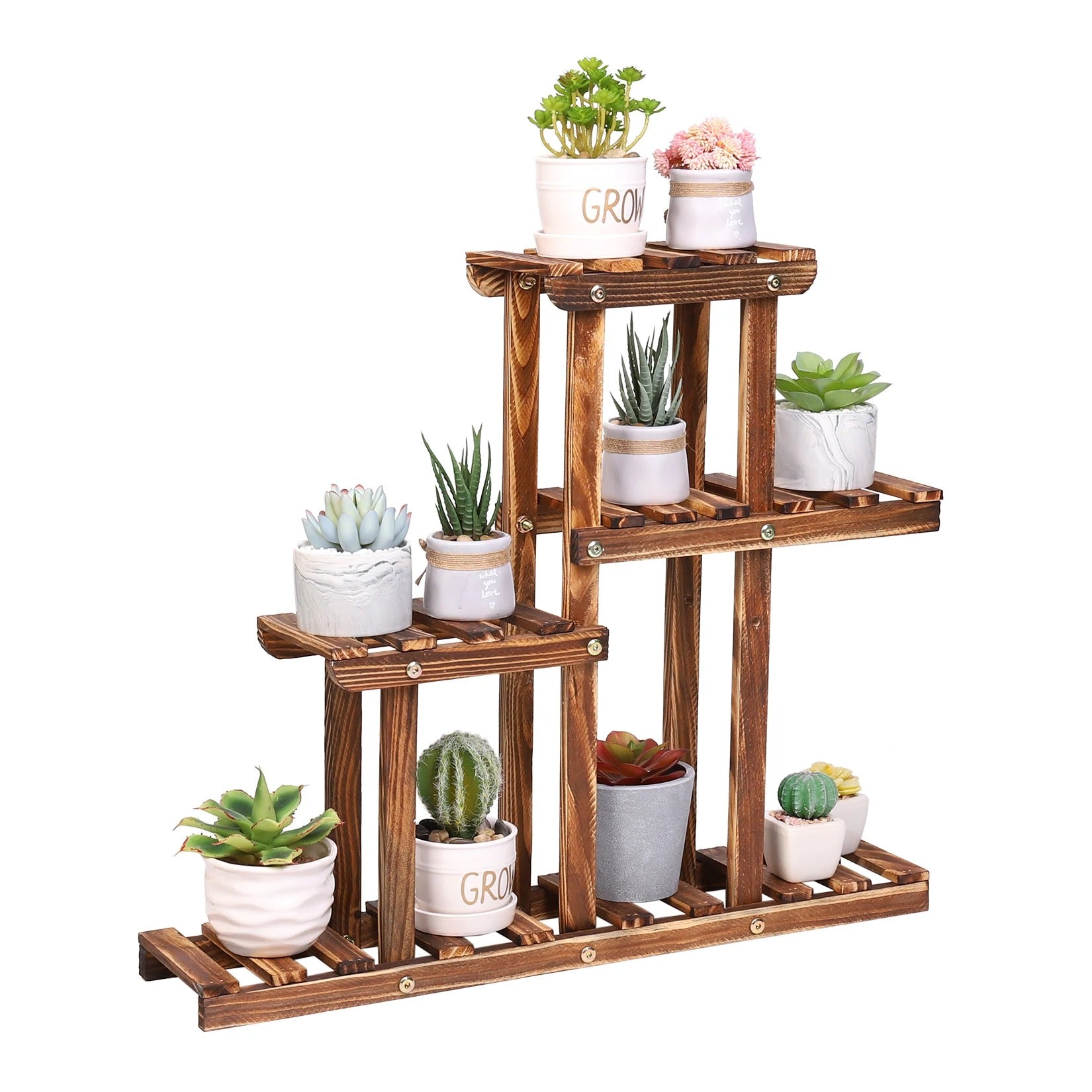
The solid pine wood multi-tier plant stand from Metro Elegance is worth considering where a solid timber construction with a flat display surface is the priority. Its pine construction handles weight reliably, and the natural timber finish provides the warm, organic aesthetic that suits fiddle leaf fig display.
Rolling Stands with Lockable Wheels
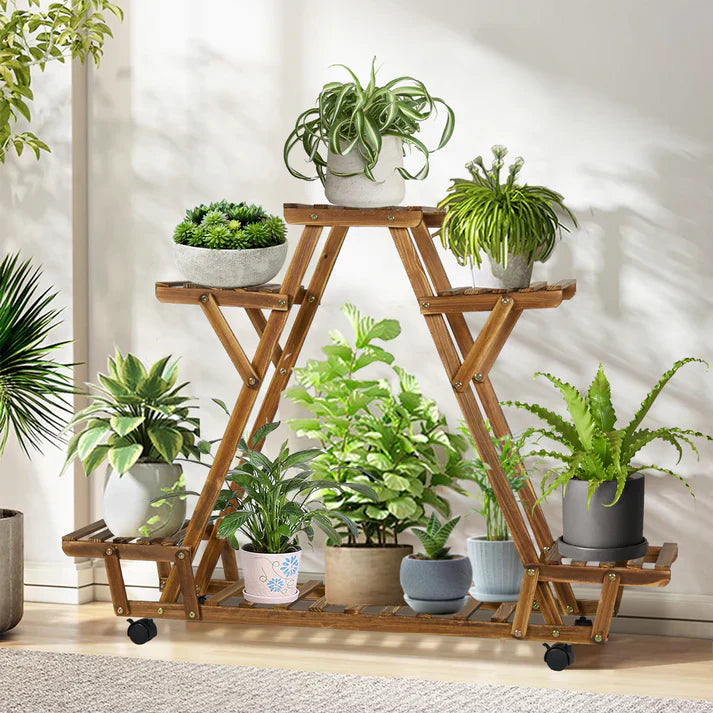
A rolling plant stand with lockable wheels has a specific practical advantage for fiddle leaf fig owners: it allows the plant to be moved for watering, cleaning, or rotating without the leaf stress that comes from fully relocating the plant to a new position. Rolling the plant to a sink or outdoor tap to water thoroughly, then rolling it back to exactly the same spot, reduces the disruption to the plant's settled orientation.
The 4-layer rolling plant stand with wheels from Metro Elegance offers this mobility advantage. The lockable wheel design ensures the stand stays fixed when stationary - important for the stability of a top-heavy plant in normal day-to-day conditions - while allowing controlled movement when needed for maintenance.
Material Considerations for Fiddle Leaf Fig Stands
Solid Timber
Solid timber is the most aesthetically fitting material for fiddle leaf fig stands in most Australian homes. The natural organic quality of real wood grain complements the bold, tropical character of the plant in a way that creates visual cohesion. Timber also has the structural weight and rigidity to handle heavy pots without deflection or instability under load.
For indoor use - which is the primary environment for fiddle leaf figs in most Australian homes - solid timber handles the conditions without significant maintenance. A light wipe with a damp cloth is generally sufficient for regular upkeep. The timber finish also benefits from positioning away from direct water contact around the base of the pot.
Metal
Powder-coated metal suits fiddle leaf figs in contemporary or industrial-influenced interiors. A clean black metal stand with a wide, flat platform and a heavy base can handle substantial pot weight and provide the lateral stability that a top-heavy fiddle leaf fig requires. Metal's rigidity is an advantage here - it does not flex under load, which means the stand remains stable even when the pot weight is significant.
For contemporary Australian interiors with a monochromatic palette, polished concrete floors, and modern furniture, a black metal plant stand beneath a fiddle leaf fig in a white ceramic pot creates a graphic, considered composition that suits the interior aesthetic well.
Avoiding Lightweight or Narrow-Based Designs
For fiddle leaf figs specifically, lightweight stands with narrow bases or small platforms are not appropriate regardless of material. A slim bamboo stand designed for small to medium pot sizes will not safely support a mature fiddle leaf fig in a substantial pot, and a narrow-based stand of any material creates tipping risk with a top-heavy plant.
Any stand chosen for a fiddle leaf fig should have both a platform that comfortably accommodates the pot diameter and a base footprint wide enough to resist lateral movement from the plant's canopy weight.
Placement Tips That Affect Both Plant Health and Visual Impact
Where a fiddle leaf fig is placed in a room affects how it grows and how it reads visually. Both dimensions matter for getting the most from the plant and its stand.
Consistent indirect light. Fiddle leaf figs prefer bright indirect light and can be sensitive to direct afternoon sun in Australian summers. A position within two to three metres of a north or east-facing window in most Australian homes provides suitable light without the risk of leaf scorch. Once settled in a good light position, the plant benefits from staying there rather than being moved.
Away from air conditioning vents. Direct cold or hot air from air conditioning can cause fiddle leaf fig leaf drop and stress. Positioning the stand away from ceiling vents and floor registers reduces this risk, which is relevant in most Australian homes where air conditioning is used for extended periods.
With clear space around the canopy. The broad leaves of a fiddle leaf fig benefit from space around them - not brushing against walls, furniture, or other plants. Positioning the stand where at least 60 to 80cm of clear space is available on the primary leaf-spread sides allows the canopy to develop naturally.
In a prominent visual position. A fiddle leaf fig is a statement plant. Positioning it in a corner or against a wall as a background element undersells it. Placing it where it is visible from the primary seating or entry direction - often in the corner diagonally visible from the main sofa, or beside a full-height window - gives it the prominence it warrants.
For guidance on arranging plant stands and large plant displays effectively in Australian living rooms, our post on styling indoor plant stands for a fresh, intentional look covers the placement and styling principles that apply to statement plants as well as smaller displays.
Pairing the Stand with the Right Pot
The stand, pot, and plant form a visual unit - and the pot choice shapes how the stand reads as much as the stand itself.
For fiddle leaf figs on timber stands, terracotta, natural stone-finish, and matte earthy ceramic pots create the most cohesive natural composition. These materials echo the warmth of the timber and reinforce the organic quality of the plant.
For fiddle leaf figs on metal stands, smooth white or charcoal ceramics, concrete-finish pots, or matte black glazed pots create a more contemporary pairing that suits the clean lines of a metal frame.
The pot base should also be clean - a drip tray that is emptied after watering prevents water pooling on the stand surface and staining the timber or leaving mineral deposits on a metal frame over time.
Shop Fiddle Leaf Fig Stands at Metro Elegance
At Metro Elegance, we stock plant stands in solid timber, bamboo, and metal finishes suited to large indoor plants like fiddle leaf figs. Our indoor plant stand collection includes robust platform designs with the weight capacity, base stability, and natural material quality that large tropical plants require - all with free shipping across Australia.
If you are styling a fiddle leaf fig in a living room, dining area, or bedroom, Metro Elegance has stand options that match both the structural demands and the visual character of this plant. Our team is happy to help you work through the specific dimensions, weight considerations, and aesthetic choices for your situation.
Looking for the right stand for your fiddle leaf fig? Contact the Metro Elegance team and we will help you find a stand that suits your plant, your pot, and your room.
Frequently Asked Questions
What size plant stand do I need for a fiddle leaf fig?
The platform of the stand needs to match or slightly exceed the pot diameter, which for a mature fiddle leaf fig is typically 30 to 45cm. The stand height should be calibrated to the current size of the plant and the room's ceiling height - a stand of 15 to 30cm suits a mature plant in a standard-height room, while a younger plant can accommodate a stand of 30 to 50cm.
How much weight can a plant stand hold for a fiddle leaf fig?
A mature fiddle leaf fig in a full-size ceramic or terracotta pot with moist soil can weigh 15 to 25 kilograms or more. Always check the manufacturer's stated weight capacity before purchasing a stand for a large fiddle leaf fig, and choose a stand rated comfortably above the realistic loaded weight of your specific plant and pot.
Do fiddle leaf figs need a special type of plant stand?
No specific stand type is exclusively suited to fiddle leaf figs, but the stand does need to meet practical requirements that not all stands satisfy: adequate weight capacity for a heavy pot, a platform wide enough for the pot diameter, and a base wide and stable enough to resist the tipping risk created by the plant's top-heavy profile.
Can I use a rolling plant stand for a fiddle leaf fig?
Yes - a rolling stand with lockable wheels can be particularly practical for fiddle leaf figs because it allows the plant to be moved for watering and maintenance without fully relocating it to a new position. The locking mechanism ensures the stand stays fixed when stationary, which is important for stability with a heavy, top-heavy plant.
What material plant stand suits a fiddle leaf fig best?
Solid timber is the most aesthetically cohesive material for fiddle leaf figs in most Australian interiors, complementing the plant's bold tropical form with natural warmth. Metal stands with wide bases suit contemporary interiors and handle heavy pot loads well due to their rigidity. The most important factors are structural - weight capacity and base stability - rather than material alone.
Should a fiddle leaf fig stand be placed in a corner?
Corner placement can work well for a fiddle leaf fig if the corner receives adequate indirect light. The corner position provides a wall backdrop that frames the plant and contains its spread on two sides. However, a fiddle leaf fig positioned where it is visible from the primary viewing direction in the room - typically from the main seating area or room entry - will have more visual impact than one tucked out of the main sightline.
How do I stop a fiddle leaf fig stand from wobbling?
Choose a stand with a wide, flat base and good floor contact across all base points. On smooth floor surfaces, rubber feet or adhesive rubber pads beneath the base points improve floor grip and reduce wobble. Placing heavier items lower and ensuring the pot is centred on the platform surface also helps maintain stability for a top-heavy plant.